

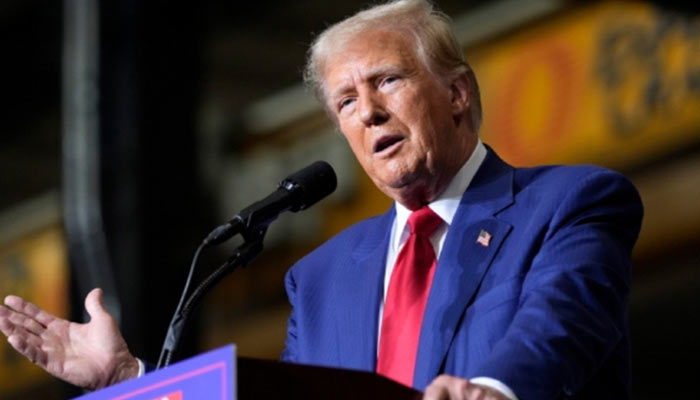
As Trump’s Tariff Deadline Nears, India Scrambles to Finalise Trade Deal with US.
India is racing against time to conclude a trade agreement with the United States ahead of the August 1 deadline for a new wave of tariffs announced by former President Donald Trump. Despite multiple rounds of talks, key issues remain unresolved, including duties on auto parts, steel, and agricultural products.
According to a senior government official quoted by Reuters, an Indian delegation is expected to travel to Washington in the coming days in a renewed effort to break the impasse. The talks are among the few still ongoing with the US, as most targeted nations have already been issued formal tariff notices.
India Still in Talks, but Pressure Builds
At least 14 countries have received written notifications about upcoming tariffs, ranging between 25% and 40%. India has not yet received such a letter—a sign that negotiations remain open—but the window to avoid penalties is rapidly closing.
Earlier this year, Indian officials visited Washington for trade discussions that ended without resolution. Major sticking points included US demands for greater access to Indian markets for agricultural goods and tariff cuts on high-value industrial exports. India, meanwhile, has sought relief for its own labour-intensive export sectors.
500% Tariff Threat Under Russia Sanctions Bill
Complicating matters further is the Sanctioning Russia Act of 2025, a bipartisan US bill introduced by Senators Lindsey Graham and Richard Blumenthal. The legislation proposes tariffs of up to 500% on countries that continue to import Russian oil and energy products—naming India and China among the key targets.
Though the bill hasn’t been enacted, the possibility of such steep penalties has raised fresh concerns in New Delhi.
“It’s totally my option,” Trump said when asked about the bill during a Cabinet meeting. “And I’m looking at it very strongly.”
Sankhanath Bandyopadhyay, chief economist at Infomerics Ratings, warned that such a move could be “catastrophic” for Indian exports if implemented. “This would hit sectors like pharmaceuticals, electronics, marine products, and steel—industries with heavy reliance on US markets. The financial impact could range from $7 to $10 billion in losses,” he said.
He added that India must stress its long-term energy needs and strategic autonomy in any negotiations. “The US itself continues to import Russian uranium. India must bring such realities to the table,” he said.
Glimmers of a Breakthrough
Despite the challenges, there are signs of progress. Bloomberg recently reported that Washington and New Delhi may be close to an interim agreement that would cap new tariffs below 20%—significantly lower than what some other countries are facing.
Trump’s tariff push has already hit several Asian economies: Vietnam and the Philippines face duties of up to 20%, while Myanmar and Laos are looking at 40% tariffs.
India, for its part, has offered to reduce the average tariff differential with the US from 13% to under 4%. The proposal includes zero tariffs on 60% of American imports and preferential access for nearly 90% of US goods.
In return, India is seeking greater market access for its textile, seafood, and fruit exports. But hurdles remain, especially in the agriculture and dairy sectors, where US requests for lower duties on apples, nuts, and genetically modified crops continue to face strong political and domestic resistance.
Whether a deal can be struck in time remains uncertain. But with the tariff clock ticking and the spectre of a 500% levy hanging in the background, the stakes for India’s export economy have rarely been higher.
Comments are closed.