

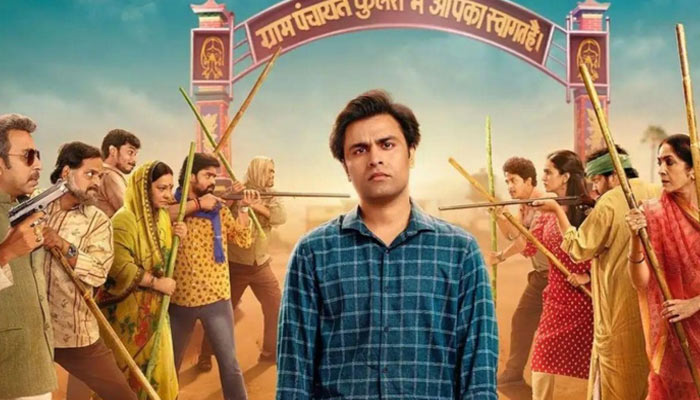
Panchayat Season 4 Review: A Scattered, Soulless Return That Lacks the Old Heart.
The much-loved Panchayat returns for a fourth season, rekindling hopes of revisiting the familiar warmth of Phulera. But what was once a heartfelt and humorous portrayal of rural India has now become a muddled political drama, weighed down by scattered storytelling and fading charm.
Let’s be honest—Panchayat stopped being a comedy a while ago. Season 2 hinted at a tonal shift, ending on a sombre note. Season 3 fully embraced the darker side of village politics, culminating in a dramatic shoot-out. Season 4 picks up from that very moment, with local elections becoming the central plotline.
This time, it’s Manju Devi vs Kranti Devi in the battle for the Pradhan seat, and while that premise promises intensity, the execution feels uninspired. The emotional fabric that once held the show together is thinner than ever.
A Shaky Start and Lost Focus
The season begins with Abhishek (Jitendra Kumar) visibly distressed, worried about the implications of being booked under IPC Section 323. From there, things spiral into a strangely joyless rhythm. His cousin is abruptly sent back, the banter is missing, and even the village seems quieter, but not in a thoughtful way—just less alive.
Instead of digging deeper into characters or relationships, the show spends too much time on long-winded, loosely structured political scenes. Many subplots lack payoff. Scenes like Bhushan cooking lauki in the middle of the village or the whole gang going to fetch an electrician feel absurd, not amusing. They stretch the episode runtimes without adding value.
Characters: Hits and Misses
If there’s a standout, it’s Neena Gupta’s Manju Devi. Her arc—from ceremonial figurehead to confident decision-maker—is the season’s highlight. Her growth is natural, empowering, and well-performed.
On the flip side, Raghubir Yadav’s Pradhan loses nuance. His motivations feel one-dimensional—obsessed with winning the election, even if it means cutting corners. A character that once held quiet depth now borders on caricature.
Abhishek, once the audience’s lens into Phulera, feels increasingly hollow. He’s emotionally unavailable, especially with Rinky, and disengaged from his work. His indecisiveness, passivity, and detachment render his presence almost irrelevant. He’s not just lost in the village—he’s lost in the plot.
Prahlad (Faisal Malik) remains the emotional anchor. Even with limited screen time, he conveys quiet grief and loyalty that still resonate. Meanwhile, Binod (Ashok Pathak) and Madhav (Bulloo Kumar) bring much-needed spark in otherwise dull scenes, adding brief glimpses of life and unpredictability.
Misfires and Missed Opportunities
There are moments that simply don’t land. Pradhan’s unprovoked outburst—throwing things around in a rage—feels completely out of sync with his character and the show’s tone. Manju Devi’s father is introduced in Episode 5, but his scenes feel misplaced and disconnected, offering little to her arc or the election narrative.
What’s most disappointing is how Panchayat now relies on political spectacle rather than the emotional subtlety that once defined it. The writing lacks the layered simplicity it was once praised for. The comedy has dried up, the emotional beats feel forced, and the show appears more focused on conflict than connection.
Verdict: A Filler Season Masquerading as a Full Chapter
Panchayat Season 4 feels like a placeholder—dragging the story forward without really knowing what it wants to say. While Manju Devi’s evolution offers a rare win, much of the show feels stuck in neutral. It borrows the setting, characters, and tone of its past seasons but forgets the soul.
There are still glimpses of what made Panchayat special, but they’re buried under uneven pacing, unconvincing arcs, and a story too caught up in its politics. As the show heads toward its expected finale in Season 5, it desperately needs to rediscover its original voice—grounded, warm, and deeply human.
Comments are closed.