
Shubhanshu Shukla Becomes Second Indian to Travel to Space After 41 Years

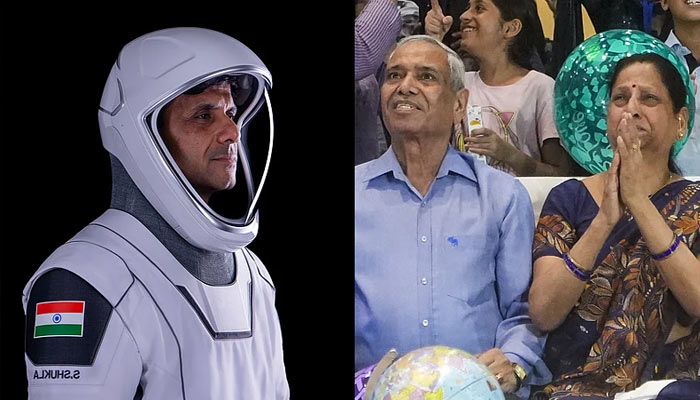
Shubhanshu Shukla Lifts Off: India Returns to Space After 41 Years.
In 1984, an Indian Air Force officer named Rakesh Sharma launched into space aboard a Soviet Soyuz capsule, making history as India’s first man in space. Now, more than four decades later, Group Captain Shubhanshu Shukla has reignited that legacy—becoming the second Indian to travel to space, and the first ever to journey to the International Space Station (ISS).
Born just a year after Sharma’s legendary flight, Shukla has gone from gazing at the stars to flying among them.
From Lucknow to Low Earth Orbit
On a warm Florida afternoon, Shukla launched aboard SpaceX’s Dragon spacecraft as part of Axiom Space’s Ax-4 mission. The Falcon 9 rocket roared to life beneath him, carrying a four-member international crew on a 14-day scientific journey aboard the ISS.
The historic moment marked not only a personal milestone for Shukla, but a major step forward for India’s aspirations in space.
Smooth Liftoff After Lengthy Delays
Originally scheduled for May 29, the launch was delayed multiple times due to weather constraints and technical issues across SpaceX, NASA, Axiom Space, and ISRO. In total, the crew endured seven postponements—each adding tension to a mission long in the making.
But when liftoff finally came, it was flawless. As the Merlin engines of Falcon 9 ignited, the Dragon spacecraft surged into orbit. Its first stage booster returned to Earth with trademark precision, while the capsule continued its journey to dock with the ISS 400 km above Earth.
Inside the Crew: A Global Team of Spacefarers
Shukla, known affectionately as “Shux” among his peers, is part of a diverse four-member crew:
Dr. Peggy Whitson (USA), mission commander, holds the record for most time spent in space by any American astronaut—675 days.
Sawosz Uznanski (Poland), a CERN-trained physicist representing the European Space Agency.
Tibor Kapu (Hungary), a polymer and radiation shielding specialist under Hungary’s HUNOR space program.
While Dragon is fully autonomous, Shukla serves as mission pilot, monitoring systems, orbital parameters, and assisting with docking procedures—skills honed through his years flying MiG-21s, MiG-29s, and Sukhoi-30 MKIs for the Indian Air Force.
Science at the Heart of the Mission
Once aboard the ISS, Shukla will conduct seven Indian-designed experiments, spanning biology, medicine, agriculture, and mental health. These include:
- Growing Indian superfoods like moong and methi in zero gravity
- Studying microbe mutations and cellular aging in space
- Research on screen-time effects on cognitive health
- Testing the viability of edible algae as a sustainable food source
These studies will contribute not only to global science but also to India’s human spaceflight preparations.
Why This Mission Matters for India
The Ax-4 mission provides India with hands-on experience in modern spaceflight operations, crucial for its upcoming Gaganyaan mission—which aims to send Indian astronauts to space from Indian soil.
Shukla is one of four astronauts shortlisted for Gaganyaan, and his role on Ax-4 is both symbolic and strategic. From pre-launch quarantine to international coordination and zero-gravity experiments, every step is shaping the roadmap for India’s space future.
A Nation Watches, a Dream Revives
As Shubhanshu Shukla’s capsule disappeared into the sky, cheers erupted not only at Florida’s Kennedy Space Center—but across homes, schools, and halls back in India. From his hometown Lucknow, to ISRO’s mission control, and classrooms where children now dream a little bigger—the pride was palpable.
Shukla isn’t just flying a mission. He’s carrying a message: India is back in space—and this time, it’s aiming even higher.
Comments are closed.