
Tibet Tensions Rise as Dalai Lama Counters Chinese Control with Reincarnation Plan

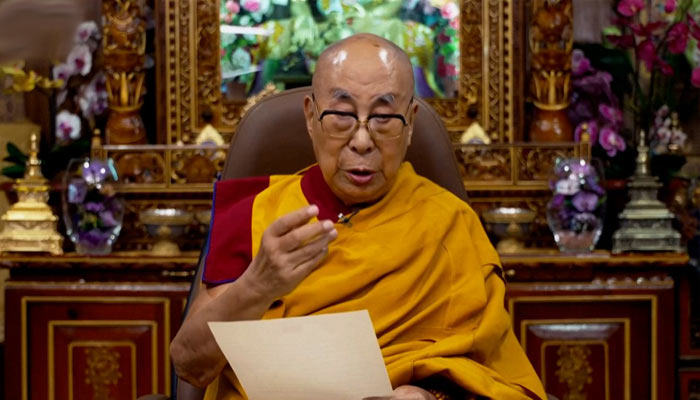
Dalai Lama’s Reincarnation Plan Throws Strategic Curveball at China’s Tibet Policy.
As the 14th Dalai Lama, Tenzin Gyatso, enters his 90th year on July 6, his recent decision to reincarnate has significantly altered the political and spiritual dynamics of Tibet. In a move that reinforces Tibetan identity and spiritual independence, the Dalai Lama has dealt a blow to Beijing’s long-standing efforts to reshape the religious landscape of Tibet through cultural assimilation and state-controlled succession.
Reincarnation: A Spiritual Revival, A Political Statement
By declaring his intent to reincarnate, the Dalai Lama has revived the centuries-old tradition of the reincarnating spiritual leader — and, in doing so, has breathed new life into a deeply symbolic institution that China hoped would fade after his passing. He has reaffirmed that the process of selecting the next Dalai Lama will be guided not by Beijing, but by the Gaden Phodrang Trust, the institution he established in exile and now led by his trusted confidant Samdhong Rinpoche.
This move guarantees that the 15th Dalai Lama will be born outside Chinese-controlled territory, most likely in India — ensuring freedom from Communist Party interference. It also sends a strong message to the Tibetan people, especially the six million Buddhists living under Chinese rule, that their spiritual future will not be dictated by authoritarian mandates.
Why This Matters to Beijing
The Chinese Communist Party (CCP) has consistently viewed Tibetan Buddhism — and particularly the Dalai Lama — as both a threat and a tool. Since passing a law in 2007 requiring government approval for all reincarnations of Tibetan lamas, China has sought to insert itself into religious matters to legitimize its control over Tibet.
But the Dalai Lama’s declaration cuts directly against that agenda. By firmly rejecting any role for the CCP in his succession, he has disrupted China’s playbook: the likely emergence of two rival Dalai Lamas — one selected freely in exile and another appointed by the state — will challenge Beijing’s ability to control the spiritual narrative.
Background: A Legacy Rooted in Resistance
The institution of the Dalai Lama began in 1578 with the alliance between the 3rd Dalai Lama, Sonam Gyatso, and Mongol ruler Altan Khan. It has since become not only a religious institution but also a symbol of Tibetan identity and nationhood.
In contrast, China’s “Golden Urn” method, introduced by the Qing dynasty in 1792 and recently promoted by President Xi Jinping, is viewed by Tibetans as a politicized attempt to hijack tradition. The 14th Dalai Lama himself was not selected using this method — and the Tibetan exile community continues to reject it as illegitimate.
Panchen Lama Precedent: A Battle Already Underway
This scenario is not without precedent. After the 14th Dalai Lama recognized Gedhun Choekyi Nyima as the Panchen Lama in 1995, Chinese authorities abducted the six-year-old boy — who has not been seen since. In his place, Beijing installed Gyaltsen Norbu, who remains largely unrecognized by the Tibetan public.
President Xi’s meeting with Norbu in June 2025 underscores China’s desire to control succession and religious legitimacy in Tibet. But the Dalai Lama’s reincarnation plan — unfolding outside China’s control — is set to complicate that strategy.
Steps Toward the 15th Dalai Lama
Born in Freedom: The next Dalai Lama will be born outside of China, likely in India, among refugee communities.
Guided by Gaden Phodrang Trust: The Trust will lead the search and recognition process.
Possibility of a Female Successor: His Holiness has expressed openness to a female Dalai Lama, breaking centuries of tradition.
Living Emanation Option: The 14th Dalai Lama may name a successor during his lifetime, minimizing Chinese interference.
Separation of Spiritual and Political Power: Since 2011, the Dalai Lama has devolved political authority to an elected Sikyong, focusing solely on spiritual leadership.
Rejection of China’s Religious Laws: China’s 2007 law requiring state approval for reincarnations is considered invalid by the Tibetan spiritual community.
What to Expect: Two Dalai Lamas, Global Stakes
A dual Dalai Lama scenario appears almost inevitable. Beijing will likely announce its own Dalai Lama using state-controlled clerics, while the Tibetan exile community will identify a child through spiritual signs and visions, as per tradition.
Tibetans inside Tibet and in exile are expected to recognize the Gaden Phodrang-endorsed successor.
Global Buddhist communities and democracies will likely support the exile-recognized Dalai Lama.
China’s version may struggle for legitimacy beyond its borders, particularly in countries like India, Nepal, Mongolia, and the West.
Conclusion: A Spiritual Counter to Geopolitical Control
The Dalai Lama’s decision to reincarnate is more than a religious act — it is a powerful act of defiance against cultural suppression. It ensures that China’s occupation of Tibet remains spiritually contested, and it protects a centuries-old tradition from being co-opted for political gain.
Comments are closed.