
Scientists Edge Closer to Creating Life Without Pregnancy Using Lab-Grown Gametes

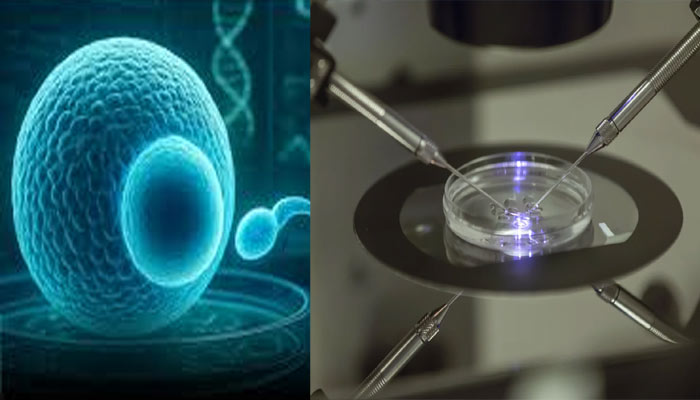
The End of Pregnancy? Scientists Edge Closer to Creating Life Without Womb.
What once seemed the realm of science fiction may soon become science fact. A new wave of cutting-edge research is bringing the idea of creating babies without traditional pregnancy closer to reality — thanks to a revolutionary process called in-vitro gametogenesis (IVG).
What Is IVG?
IVG is the process of creating human eggs and sperm from skin or blood cells. If successful, it could allow individuals — regardless of sex, age, or fertility status — to have genetically related children without needing a partner, donor, or even a uterus.
Leading the Race: Japan’s Breakthrough
At the forefront of this global scientific pursuit is Professor Katsuhiko Hayashi of Osaka University. In a recent interview with The Guardian, Hayashi said his lab could produce fully functional human eggs and sperm in under seven years.
- This opens up possibilities previously unimaginable:
- Two men becoming biological fathers of a child
- Single individuals creating children from their own DNA
- Women giving birth without ever being pregnant themselves — through artificial wombs or surrogacy
- While these scenarios might sound futuristic, they are quickly becoming plausible.
How It Works
The process begins with reprogramming ordinary skin or blood cells into stem cells, which are then guided to become reproductive cells. Hayashi’s lab has successfully developed testicular and ovarian “organoids” — lab-grown structures that mimic human reproductive organs.
These organoids are already generating early-stage sex cells. The key challenge now is growing them into mature, viable eggs or sperm while preventing genetic abnormalities.
In parallel, researchers in the U.S. and other countries are pursuing similar goals, with some private firms suggesting human applications could arrive in as little as five years.
U.S. Startups Push Boundaries
In California, Conception Biosciences, a biotech startup backed by major Silicon Valley investors, is aiming to bring IVG-based fertility solutions to clinics by the end of the decade. The startup is not just targeting infertility, but reimagining what family-building looks like.
Already, a groundbreaking mouse experiment has produced a female offspring using the DNA of two male mice — a proof of concept with enormous implications.
What Could This Mean?
IVG could unlock parenthood for people once left out of biological reproduction:
- Same-sex couples
- Single individuals
- Elderly people or those rendered infertile by illness or treatment
It could also mean embryos formed from more than two people’s DNA, or from someone long after their death (via preserved cells).
But with these advances come serious ethical dilemmas.
Ethics on Edge
The prospect of manufacturing human gametes raises thorny issues around identity, consent, eugenics, embryo selection, and what it means to be a parent.
IVG is currently banned in the UK, though both Japan and the U.S. are continuing research with fewer regulatory hurdles. Bioethicists worldwide are urging caution and demanding strong guidelines before the technology becomes publicly available.
“Just because we can do something doesn’t mean we should — not without understanding the long-term consequences,” one expert warned.
A Decade Away?
While no one can say for sure when the first human conceived through IVG will be born, many experts agree it could happen within the next 10 years. If that milestone is reached, it won’t just be a new chapter in fertility science — it will represent a fundamental shift in the human experience of creating life.
Comments are closed.