
Fuel Switch Module Replaced Twice on Crashed Air India Jet; Boeing Defends Safety

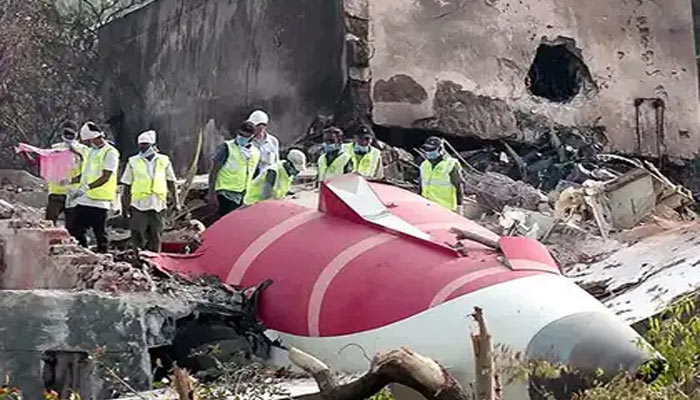
Air India Replaced Fuel Switch Module Twice Before Crash; Boeing, FAA Say No Safety Risk.
Air India replaced a key cockpit module twice on the Boeing 787-8 Dreamliner that crashed last month, even as Boeing and U.S. aviation regulators continue to defend the component’s safety, sources told PTI.
The module in question — the Throttle Control Module (TCM) — houses the aircraft’s fuel control switches. It was replaced in 2019 and again in 2023, following Boeing’s maintenance schedule that requires the part to be changed every 24,000 flight hours.
On June 12, the Dreamliner (registration VT-ANB) crashed shortly after takeoff from Ahmedabad, killing all 260 people on board. Investigators believe the aircraft’s engines shut down moments after becoming airborne — triggered by both fuel control switches being moved to the “CUTOFF” position just seconds apart.
Cockpit voice recordings captured one pilot asking, “Why did you cut off the fuel?” to which the other responded, “I did not do so.”
FAA, Boeing Stand by Design
Despite the fatal crash, both Boeing and the U.S. Federal Aviation Administration (FAA) have ruled out any immediate concerns over the TCM design. In a Continued Airworthiness Notification issued on July 11, the FAA said the component does not pose an unsafe condition. Boeing echoed this stance in a message to all 787 operators, advising that no further action is necessary.
The Aircraft Accident Investigation Bureau (AAIB), in its preliminary report, also noted that the TCM replacements were routine and not linked to any known defect. However, the agency is investigating why the switches were unexpectedly activated during takeoff.
Missed 2018 Advisory
The report referred to a 2018 FAA advisory recommending inspection of the fuel switch locking mechanisms to prevent accidental movement. The advisory was not mandatory, and Air India did not conduct the inspection.
While the engines briefly restarted after the switches were returned to “RUN,” the aircraft failed to gain enough altitude and crashed within minutes.
Maintenance records confirm Air India complied with all mandatory safety directives and bulletins. The full investigation report is expected in the coming months.
Comments are closed.