
Frozen Time Capsules: How Antarctic Ice Is Revealing Climate Secrets in Brussels

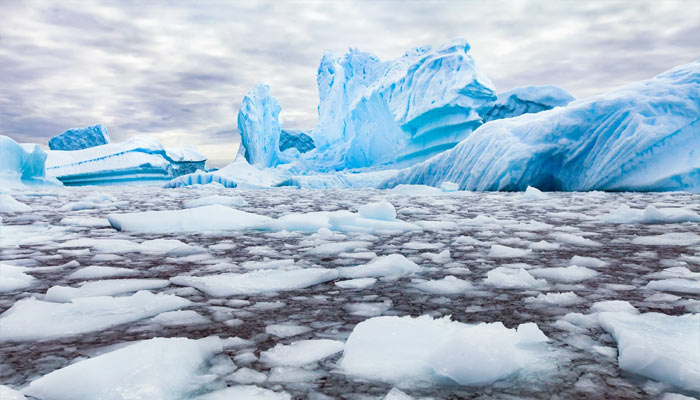
Unearthing Earth’s Climate Past: Belgian Scientists Hunt for Ancient Secrets in Antarctic Ice.
In a chilled lab tucked inside a Brussels university, scientists in heavy parkas are slicing through ancient Antarctic ice cores — relics that may hold critical clues about Earth’s climate history. These cylindrical samples, extracted from the frozen heart of the southern continent, contain tiny air bubbles — time capsules of the planet’s atmosphere stretching back tens of thousands of years.
“We study past climates to better understand what might happen in the future,” said Harry Zekollari, glaciologist at Vrije Universiteit Brussel (VUB). Zekollari was part of a four-member Belgian team that traveled to Antarctica last November in search of some of the oldest ice on Earth — but on a limited budget.
A Cost-Effective Search for Ancient Ice
Most of the Earth’s oldest ice lies deep beneath Antarctica’s surface, buried under kilometers of compacted snow and newer ice — and extracting it is a costly feat. A recent EU-funded expedition that recovered 1.2-million-year-old ice samples cost around €11 million (approximately $12.8 million).
To find more affordable access points, researchers from VUB and Université Libre de Bruxelles (ULB) turned to satellite imagery and geological indicators. They identified rare “blue ice areas” — patches where ancient ice surfaces due to unique environmental and topographic conditions.
The Mystery of Blue Ice
“Blue ice areas are very special,” said Maaike Izeboud, a remote sensing expert at VUB. Unlike most of Antarctica, where snowfall continuously buries old ice, these regions are scoured by strong winds, preventing new snow from settling and exposing ancient layers below.
The team focused on a site 2,300 meters above sea level and 60 kilometers from Belgium’s Princess Elisabeth Antarctica Research Station. The area had previously yielded ancient meteorites — a strong indicator that the surrounding ice was equally old.
They set up a small container camp and, after weeks of drilling and enduring extreme cold, returned in January with 15 ice cores totaling 60 meters. These cores were shipped via South Africa and arrived in Belgium by late June.
Now, inside a concrete facility at ULB, scientists are carefully cutting the cores into smaller samples, which will be sent to specialized labs in France and China for precise age dating.
Climate Clues and a Scientific Treasure Hunt
Zekollari hopes that some of the shallow cores, taken from just 10 meters below the surface, may be up to 100,000 years old. If confirmed, the team plans to return and drill deeper — potentially several hundred meters — in search of even older ice.
“It’s like a treasure hunt,” said Zekollari. “We’re mapping our ‘X marks the spot.’ In about a year and a half, we’ll go back and drill again — hopefully retrieving ice that’s three, four, even five million years old.”
Such ancient samples could fill key gaps in climate science, particularly around periods when global temperatures were much higher than today.
According to Etienne Legrain, a 29-year-old paleoclimatologist at ULB, the Earth is expected to reach temperature levels by the end of the century that mirror those from 2.6 to 3.3 million years ago. Yet, data on atmospheric CO₂ levels from that era is sparse.
“We don’t know the exact link between CO₂ concentration and temperature in a climate warmer than today,” said Legrain. “The air bubbles inside these ice cores are literally the atmosphere of the past. It’s like magic when you think about it.”
As climate models look to predict the planet’s future, the answers may be locked inside ancient ice — and Belgian scientists are racing to find them.
Comments are closed.