
INDIA Bloc Gears Up for Parliament Session: Focus on Pahalgam Huddle, Bihar List, and Trump Remarks

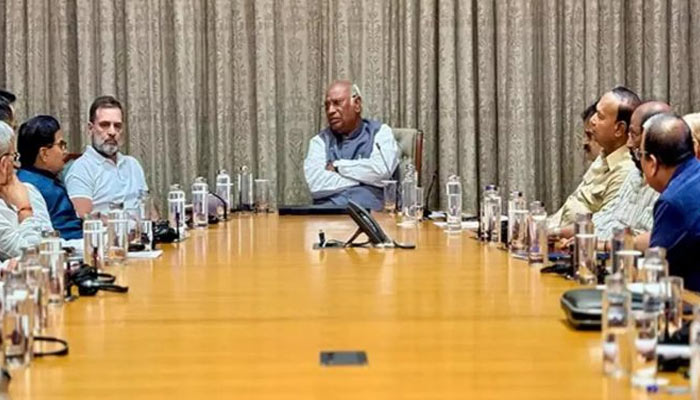
INDIA Bloc Outlines Monsoon Session Agenda: Pahalgam Attack, Trump Claims, Bihar Voter Roll Revision Among Key Issues
As the Monsoon Session of Parliament begins on July 21, the INDIA bloc—comprising 24 opposition parties—has outlined a comprehensive strategy to corner the government on a wide range of pressing issues, including the aftermath of the Pahalgam terror attack, US President Donald Trump’s remarks on brokering peace between India and Pakistan, and alleged voter suppression in Bihar.
In a virtual pre-session meeting, senior opposition leaders discussed eight major concerns they intend to raise during the session. These include:
National security lapses, particularly the Pahalgam attack
Foreign policy “failures”
The humanitarian crisis in Gaza
Electoral roll manipulation in Bihar
Delimitation concerns
Attacks on Scheduled Castes, Scheduled Tribes, women and minorities
The Ahmedabad plane crash
Institutional misuse of agencies like the Election Commission and ED
Focus on Accountability
Congress deputy leader in the Rajya Sabha, Pramod Tiwari, called the Pahalgam incident an “intelligence failure” and accused the Centre of failing to bring the perpetrators to justice. He urged the Prime Minister to be present in Parliament and engage with the opposition on critical national issues, remarking, “Parliament is more important than foreign trips.”
Congress general secretary K.C. Venugopal reiterated the bloc’s demand for the restoration of full statehood to Jammu and Kashmir. He also confirmed an in-person INDIA bloc meeting in August to firm up coordination ahead of upcoming state elections and the 2026 general election.
Bihar’s Special Revision Under Fire
One of the most contentious issues remains the Special Intensive Revision (SIR) of electoral rolls in Bihar. Opposition parties have alleged that the move is aimed at disenfranchising voters from marginalized communities. The bloc has likened the revision drive to “vote-bandi”—a reference to the sudden demonetisation of 2016—suggesting that it undermines electoral democracy.
TMC’s Abhishek Banerjee warned of an emerging pattern of institutional misuse, dubbing the Election Commission and the Enforcement Directorate as “E-square” tools—“EC for voters, ED for opposition.”
Dissent Within the Bloc
While key figures such as Congress president Mallikarjun Kharge, Sonia Gandhi, Rahul Gandhi, Sharad Pawar (NCP-SP), Uddhav Thackeray (SS-UBT), Hemant Soren (JMM), Tejashwi Yadav (RJD), and others attended, the meeting also highlighted visible cracks. The Aam Aadmi Party (AAP), a founding member of the bloc, skipped the meeting and has officially withdrawn from the alliance. West Bengal CM Mamata Banerjee and Tamil Nadu CM M.K. Stalin were also absent.
Judicial Integrity and Internal Critique
The bloc discussed recent judicial controversies, including the impeachment referral against Justice Yashwant Varma over the recovery of charred currency from his residence, and the pending motion against Justice Shekhar Yadav for allegedly delivering hate speech.
A minor discord also surfaced within the alliance over Rahul Gandhi’s recent comments in Kerala equating the Left with the RSS. CPI leader D Raja, without naming Gandhi, cautioned that such comparisons could demoralize the broader secular front.
Unified But Watchful
Despite differences, the bloc is expected to present a unified front in Parliament, pushing for accountability while upholding debate and discussion. The emphasis remains on defending constitutional values, civil liberties, and ensuring democratic institutions function without political interference.
Comments are closed.