

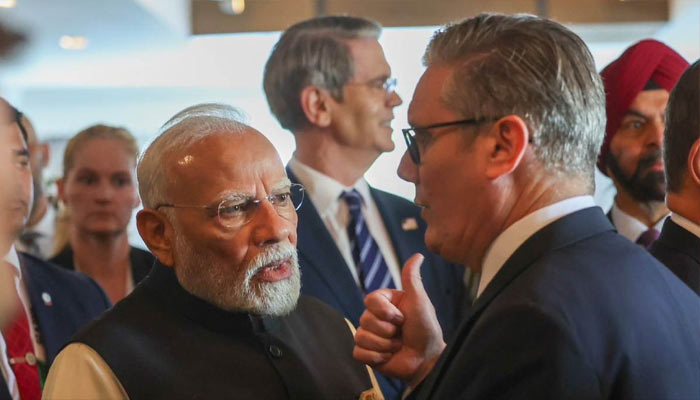
India-UK Free Trade Pact Approved, Signing Set for July 24 in London.
The Union Cabinet on Tuesday approved the long-awaited free trade agreement (FTA) between India and the United Kingdom, paving the way for its signing during Prime Minister Narendra Modi’s official visit to London on July 24, sources said.
Formally known as the Comprehensive Economic and Trade Agreement (CETA), the pact aims to double bilateral trade to $120 billion by 2030 by reducing tariffs and easing market access across a range of sectors. It will be signed by Commerce and Industry Minister Piyush Goyal and his UK counterpart during PM Modi’s four-day visit to the UK and the Maldives, which begins Wednesday.
Negotiations for the FTA were concluded on May 6. Once signed, the agreement must be ratified by the British Parliament before it can come into force.
Key Provisions
Tariff Cuts: The deal removes duties on India’s labour-intensive exports such as textiles, footwear, and leather goods, while also slashing import duties on premium UK products like Scotch whisky and automobiles.
Scope: The agreement includes chapters on trade in goods and services, government procurement, innovation, and intellectual property rights.
Labour Mobility: Alongside the FTA, both countries have concluded talks on a social security pact, or Double Contribution Convention Agreement, which will prevent Indian professionals working temporarily in the UK from paying into British social security funds.
Ongoing Talks
Discussions for a separate Bilateral Investment Treaty (BIT) are still in progress, officials said.
Trade Snapshot
In 2024–25, India’s exports to the UK rose 12.6% to $14.5 billion, while imports climbed 2.3% to $8.6 billion. Total bilateral trade reached $21.34 billion in 2023–24, up from $20.36 billion the previous year.
The FTA is expected to boost trade flows, attract investment, and strengthen economic ties between the two countries, making it one of India’s most significant trade deals in recent years.
Comments are closed.