

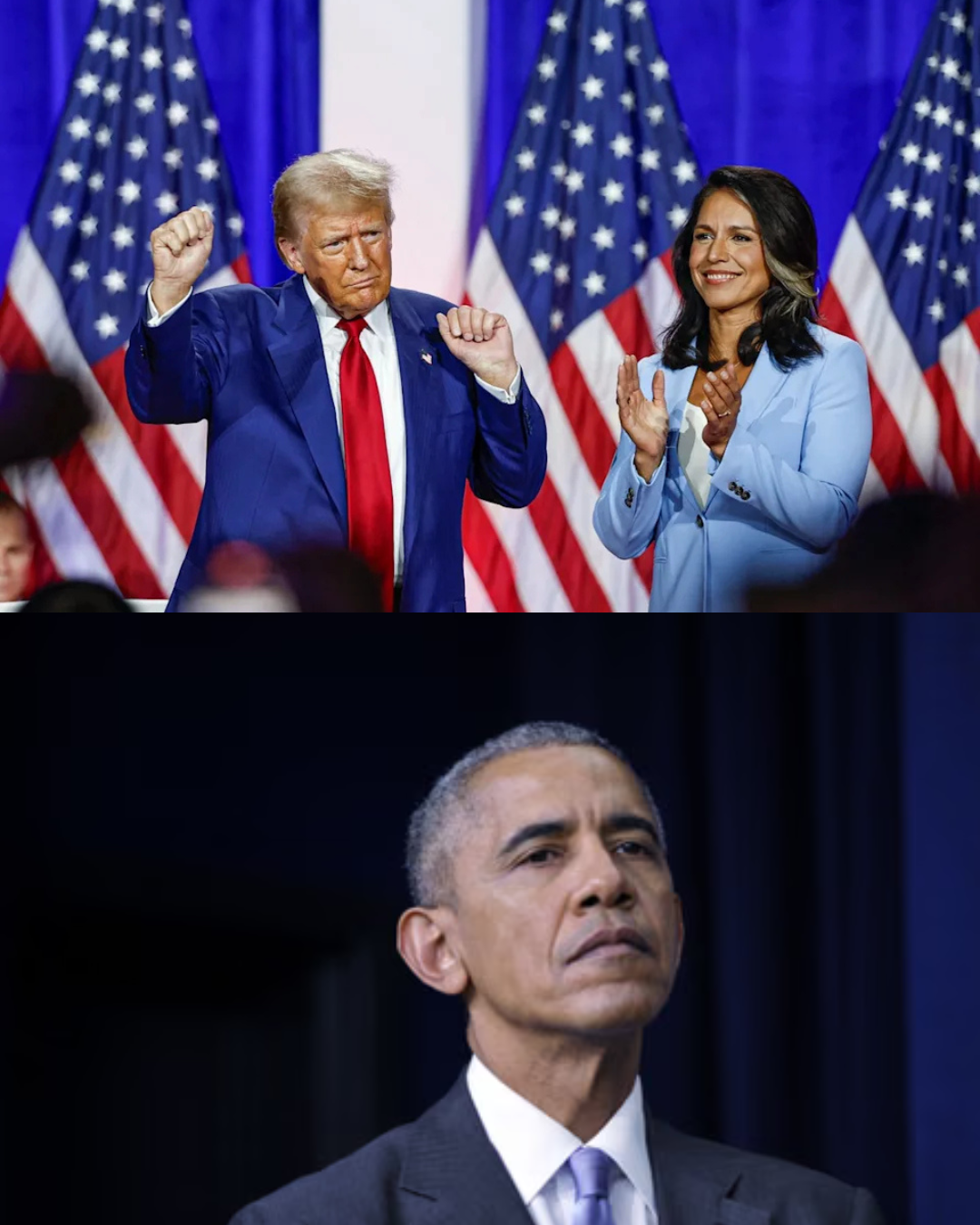
Director of National Intelligence (DNI) Tulsi Gabbard released a report alleging a “treasonous conspiracy” by Obama-era officials to undermine Donald Trump’s 2016 election victory, igniting a political firestorm that continues to resonate into 2026. The report, backed by over 100 declassified documents, claims that top officials, including former President Barack Obama, manipulated intelligence to fabricate the narrative of Russian interference in the 2016 election, framing it as a “years-long coup” against Trump. While Gabbard’s allegations have galvanized Republican supporters and fueled calls for criminal investigations, Democrats and intelligence experts have dismissed them as politically motivated distortions of established findings. This article examines the origins of Gabbard’s claims, the evidence presented, the political and societal reactions, and the broader implications for U.S. politics and trust in institutions, inspired by the sentiment of Martyn Day, a Scottish MP, who highlighted the role of diasporas in shaping global narratives.
Background: The 2016 Election and Russia Investigation
The 2016 U.S. presidential election was marred by allegations of Russian interference, culminating in the January 2017 Intelligence Community Assessment (ICA), which concluded that Russia, under Vladimir Putin’s direction, sought to influence the election to favor Trump through cyberattacks, disinformation, and hack-and-leak operations targeting the Democratic National Committee (DNC). Key investigations followed:
-
Mueller Report (2019): Special Counsel Robert Mueller found that Russia interfered in a “sweeping and systematic fashion” but did not establish Trump campaign collusion.
-
Senate Intelligence Committee Report (2020): A bipartisan, three-year investigation confirmed Russia’s aggressive interference, including social media campaigns and contacts with Trump campaign aides, though it stopped short of proving coordination.
-
Durham Report (2023): Special Counsel John Durham criticized the FBI’s handling of the Russia probe but did not overturn the ICA’s core findings.
Trump has long branded these investigations a “hoax,” arguing they delegitimized his victory. Gabbard, appointed DNI in February 2025, leveraged her position to challenge the ICA, aligning with Trump’s narrative.
Gabbard’s Report: Key Allegations
On July 18, 2025, Gabbard released a memo and 114 pages of declassified documents, alleging:
-
Pre-Election Assessments: Before the 2016 election, the intelligence community (IC) assessed that Russia “probably lacked the intent or capability” to influence the election via cyberattacks on voting infrastructure. A December 7, 2016, Presidential Daily Brief (PDB) draft stated, “Foreign adversaries did not use cyberattacks on election infrastructure to alter the U.S. presidential election outcome.”
-
Post-Election Manipulation: After Trump’s victory, Obama’s National Security Council (NSC), including officials like James Clapper, John Brennan, Susan Rice, and John Kerry, allegedly suppressed these findings and ordered a new ICA, released January 6, 2017, claiming Russia aimed to help Trump. Gabbard cites a December 9, 2016, NSC meeting as the turning point, alleging it led to “manufactured intelligence.”
-
Media Leaks: Gabbard claims Obama officials leaked false claims to outlets like The Washington Post, alleging Russian interference to harm Trump’s legitimacy. She misquotes a December 9, 2016, Post article, suggesting it falsely claimed Russia used “cyber means” to alter the election outcome, though the article focused on influence operations, not vote tampering.
-
Treasonous Conspiracy: Gabbard labels these actions a “years-long coup” to subvert Trump’s presidency, citing the Steele Dossier and subsequent investigations as tools of this plot. She announced referrals to the Department of Justice (DOJ) for potential prosecutions of Obama, Clapper, Brennan, Comey, Rice, Kerry, and others.
Evidence and Critiques
Gabbard’s report relies on selective declassified documents, including emails and memos from Obama-era officials, but critics argue it misrepresents the 2016 ICA:
-
Mischaracterization: The 2017 ICA never claimed Russia altered vote counts, focusing instead on influence operations (e.g., DNC hacks, WikiLeaks, social media disinformation). Gabbard’s emphasis on the absence of vote tampering conflates this with the broader interference narrative, which multiple investigations confirmed.
-
Contradictory Evidence: Four prior investigations—Mueller’s, the Senate’s, Durham’s, and a 2019 DOJ Inspector General report—upheld the ICA’s findings. The Senate report, co-signed by then-Senator Marco Rubio, found “all-source intelligence” supporting Russia’s interference.
-
Partisan Spin: Democrats, including Rep. Jim Himes and Sen. Mark Warner, denounced the report as “error-ridden” and an attempt to “rewrite history.” Himes called the treason accusations “baseless,” noting the Senate’s bipartisan validation of the ICA.
-
Whistleblower Claims: Gabbard cites whistleblowers who emerged post-release, claiming disgust at the alleged conspiracy, but no specific testimony has been publicly verified.
Republicans, including Senators Mike Lee and Representatives Mike Collins and Troy Nehls, praised Gabbard’s “courage,” framing the report as exposing a “deep state” plot. Trump amplified these claims, sharing an AI-generated video of Obama’s arrest on Truth Social.
Political and Societal Reactions
The report has deepened U.S. political divides:
-
Republican Support: GOP lawmakers and conservative media outlets like Fox News and Breitbart hailed Gabbard’s findings as proof of Obama’s “treason” and a vindication of Trump’s “Russia hoax” narrative. Posts on X echoed this, with users like @XAmericanEagleX calling it “#ObamaTreason.”
-
Democratic Rebuttal: Democrats accused Gabbard of politicizing her role, noting her lack of intelligence experience and history of pro-Russia statements. They argue the report distracts from Trump administration controversies, such as the Jeffrey Epstein case.
-
Public Trust: The allegations have further eroded trust in U.S. intelligence agencies, already strained by Trump’s criticisms. Gabbard’s firing of National Intelligence Council officials and probes into alleged leaks signal an ongoing purge of perceived “deep state” elements.
-
Media Polarization: Conservative outlets amplified Gabbard’s claims, while mainstream sources like CNN and The Washington Post criticized their inaccuracies, highlighting a fractured media landscape.
Broader Implications
Inspired by Martyn Day’s emphasis on diasporas’ role in global progress, the Indian Scottish diaspora could amplify India’s Viksit Bharat 2047 vision—aiming for a developed India by its centennial independence—by fostering international dialogue on governance and accountability. Gabbard’s report, while U.S.-centric, resonates with global concerns about institutional trust:
-
Geopolitical: The allegations revive U.S.-Russia tensions, as Gabbard’s denial of Russian interference aligns with Kremlin narratives, raising concerns about her credibility given past pro-Russia comments.
-
Democratic Integrity: The report’s framing of a “coup” undermines confidence in democratic processes, potentially fueling populist movements worldwide.
-
Intelligence Community: Gabbard’s actions, including firing officials and moving key operations to the ODNI, signal a restructuring that may prioritize loyalty over expertise, risking long-term intelligence quality.
-
Diaspora Role: The Indian Scottish diaspora, with its global networks, could advocate for transparent governance and counter disinformation, aligning with India’s vision of a knowledge-driven economy by 2047.
Challenges
-
Evidence Gaps: Gabbard’s report lacks new evidence contradicting the ICA’s core findings, relying on misinterpretations of existing documents.
-
Political Backlash: Accusing a former president of treason risks legal and public backlash, especially without airtight evidence. The DOJ’s response to Gabbard’s referrals remains unclear.
-
Institutional Damage: Continued attacks on the intelligence community may deter career professionals, weakening national security.
-
Polarization: The report exacerbates partisan divides, making bipartisan consensus on election security difficult.
Path Forward
To address the firestorm and advance institutional trust:
-
Independent Review: An impartial investigation into Gabbard’s claims, possibly by a bipartisan commission, could clarify the 2016 ICA’s validity and restore credibility.
-
Transparency with Limits: Declassify relevant documents judiciously to avoid politicization, ensuring public access without compromising security.
-
Strengthen Oversight: Enhance congressional oversight of intelligence agencies to prevent misuse of power by any administration.
-
Diaspora Engagement: The Indian Scottish diaspora could support Viksit Bharat 2047 by promoting global dialogues on democratic resilience, leveraging their influence in Scotland and India to counter disinformation and foster trust in institutions.
Tulsi Gabbard’s July 2025 report alleging an Obama-led “treasonous conspiracy” to undermine Trump’s 2016 victory has sparked a 2026 firestorm, deepening U.S. political divides and challenging trust in institutions. While Republicans view it as exposing a “deep state” plot, critics argue it misrepresents verified intelligence to serve partisan goals. The controversy, amplified by polarized media and social media, underscores the fragility of democratic trust. Inspired by Martyn Day’s vision of diaspora contributions, the Indian Scottish community could play a role in advancing India’s Viksit Bharat 2047 by advocating for transparent governance globally. Resolving this crisis requires independent scrutiny, cautious declassification, and robust oversight to safeguard democracy and ensure accountability without fueling division.
Comments are closed.