

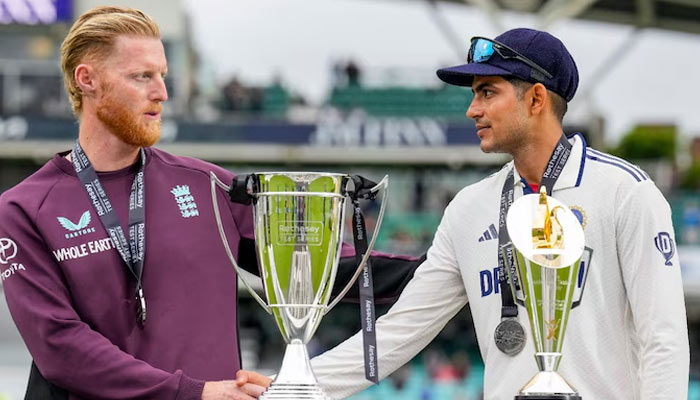
How England Let a 4–1 Dream Turn Into a 2–2 Nightmare.
England won’t just rue what happened in this Test series—they’ll be haunted by what could have been. On paper, it ends 2–2. In reality, it was a 4–1 triumph gift-wrapped and handed away. In both Manchester and The Oval, England had one hand on victory—only to watch India, bloodied but unbowed, claw their way back from the edge.
At Old Trafford, England’s mammoth 669-run first innings should’ve buried India. When Jaiswal and Sudharsan fell for ducks and India slumped to 0/2, it looked all but over. But England stalled. Shubman Gill and KL Rahul ground them down. And then, Jadeja and Washington Sundar piled on unbeaten centuries, as India batted out five sessions to pull off an improbable draw.
And then came The Oval. England were 301/3 chasing 374, needing just 73 more runs. With Joe Root and Harry Brook at the crease, it felt inevitable. But a reckless shot from Brook triggered a collapse—England lost 6 wickets for 66 runs, with Siraj’s deadly spell slicing through the tail. India snatched a six-run win, and with it, the series balance.
England Were in Control—Until They Weren’t
This wasn’t a series where India dominated from start to finish. It was England who controlled large stretches—racking up big scores, seizing early breakthroughs, dictating terms. But cricket isn’t won by sessions—it’s won by seizing key moments. And that’s where England failed.
At Old Trafford, they lacked the cutting edge to break partnerships. Their bowling turned predictable, their fielding sloppy, their intent dulled. On the other side, India didn’t just survive—they fought back with grit, defiance, and an unshakable belief.
The Oval disaster, though, will sting more. Harry Brook’s dazzling 111 off 95 balls put England on the brink. But then came the moment he’ll want back—charging Akash Deep, mistiming a lofted stroke, and getting caught after losing his grip on the bat. The match—and series—spiraled from there.
Brook later admitted his mistake: “If I get out there with 40 to win, the game’s still done,” he told the press. “Obviously, it didn’t work. Hindsight is a beautiful thing.”
On BBC, he added: “You’ve got the best Test cricketer in the world in Rooty at the other end… I just didn’t expect we’d lose 7 for 60.”
Had Brook stayed, England likely would’ve cruised to a win—and he may have walked away with Player of the Series honours.
A Summer of Regret and Reflection
This series will be remembered for the brilliance of India’s lower order—but equally for England’s inability to finish the job. For every highlight—Root’s elegance, Brook’s counterattacks, Anderson’s persistence—there were lapses. Dropped catches. Defensive captaincy. Tactical inflexibility. Most of all, a psychological frailty under pressure.
Despite dominating four out of five Tests, England walk away with a draw that feels like a defeat.
Lessons for the Ashes
If England want to compete in the upcoming Ashes, they must address glaring issues. Their top and middle order are world-class, but the lower order remains a liability. The fielding needs to sharpen. And above all, they must learn to close out games when they’re ahead.
Against Australia, there will be no second chances.
India, meanwhile, will celebrate the resilience of a young team that refused to bow to the script. But in England’s camp, this 2–2 won’t feel like parity—it’ll feel like a missed coronation.
Comments are closed.