
Space: The New Battlefield of the 21st Century with Hijacked Satellites and Orbital Weapons

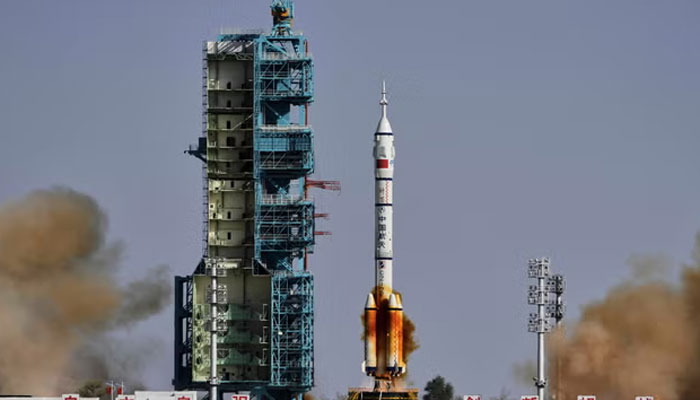
Space: The New Battleground of the 21st Century.
When Russians marked Victory Day this year, Ukrainians tuning into TV satellites didn’t see their usual programming. Instead, they were force-fed Moscow’s military parade—tanks, missiles, and marching troops—after Kremlin-linked hackers hijacked an orbiting satellite.
It was a show of intimidation, but also a signal: 21st-century wars are being fought in cyberspace and outer space.
Satellites: The Weakest Link
More than 12,000 satellites orbit Earth today, enabling GPS, communications, intelligence, and global supply chains. Disabling even a fraction of them could cripple economies and militaries. “Imagine if a population lost GPS and the confusion it would cause,” said Tom Pace, a former U.S. Marine now leading cybersecurity firm NetRise.
Hackers don’t always target satellites directly—they often strike outdated software or ground systems. In 2022, a cyberattack on U.S.-based Viasat disrupted Ukraine’s networks and knocked out service across Europe, an operation Kyiv blamed on Russia.
Moscow’s Space Weapon Gambit
Washington has warned that Russia is developing a nuclear space weapon that could wipe out nearly all satellites in low-Earth orbit. Representative Mike Turner compared the threat to Sputnik:
“If deployed, it would be the end of the space age. This is the Cuban Missile Crisis in space.” Though not yet operational, U.S. officials say the weapon could leave orbit unusable for a year, exposing the U.S. and allies to economic and military shocks.
Racing to the Moon
Beyond defense, nations are vying for control of extraterrestrial resources. The moon’s helium-3 reserves could one day power nuclear fusion reactors, making lunar dominance a strategic prize. NASA has unveiled plans to send a nuclear reactor to the moon. “We’re in a race with China,” said acting administrator Sean Duffy. Beijing and Moscow, meanwhile, are pursuing their own lunar power projects.
“This isn’t sci-fi,” said cybersecurity analyst Joseph Rooke. “If you dominate Earth’s energy needs, that’s game over.”
China Pushes Back
Beijing insists it is the U.S.—not China—that seeks to weaponize space. “Washington is attempting to turn space into a war zone,” said Liu Pengyu, spokesperson for China’s embassy in Washington.
America’s Response
The U.S. created the Space Force in 2019 to defend satellites and protect national interests. Its classified X-37B spaceplane continues to test technologies, while officials weigh new strategies to deter attacks. “Space is a warfighting domain,” the Space Force said. “Our job is to contest and control it.”
For decades, U.S. dominance in orbit went unchallenged. But with Russia experimenting with space weapons and China eyeing lunar control, the frontier once seen as a symbol of progress is now a battlefield in waiting. “You have to pay attention to these things so they don’t happen,” Turner warned.
Comments are closed.