

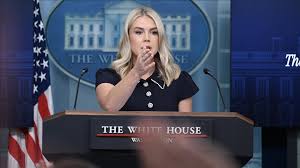
White House Press Secretary Karoline Leavitt announced that the United States would not deploy ground troops to Ukraine as part of any security guarantees, a statement that underscores a significant shift in U.S. policy amid ongoing Russia-Ukraine peace talks. This declaration, made during a press briefing, aligns with President Donald Trump’s push for a peace deal to end the conflict that began with Russia’s 2022 invasion. While ruling out “boots on the ground,” Leavitt hinted at alternative support, such as air or coordination roles, sparking debate about the U.S.’s role in securing Ukraine’s future. This article examines the context of Leavitt’s statement, its implications, challenges, and opportunities for U.S. foreign policy in the region.
Context of the Statement
White House Announcement
-
Leavitt’s Briefing: During a press conference on August 20, 2025, Karoline Leavitt stated, “The president has definitively stated US boots will not be on the ground in Ukraine, but we can certainly help in the coordination and perhaps provide other means of security guarantees to our European allies.” She emphasized that President Trump has directed his national security team to coordinate with European partners and engage with both Ukraine and Russia to ensure lasting peace.
-
Air Support Possibility: When pressed on whether the U.S. would provide air support, Leavitt noted it was a possibility, though no specifics were provided, signaling a preference for non-ground-based assistance.
-
Trump’s Assurance: President Trump reinforced this stance in a Fox News interview, saying, “You have my assurance, and I’m president,” when asked about U.S. troops in Ukraine, emphasizing his goal to “stop people from being killed.”
Background of U.S.-Ukraine Policy
-
Historical Stance: Since Russia’s 2022 invasion, the U.S. has avoided direct military involvement in Ukraine, focusing on sanctions, weapons supplies, and NATO coordination. In 2022, the Biden administration explicitly ruled out combat troops, with Ambassador Linda Thomas-Greenfield stating, “We’re not going to put American troops in danger.”
-
2025 Developments: Trump’s recent meetings, including an August 18, 2025, summit with Ukrainian President Volodymyr Zelenskyy and European leaders, followed by a call with Russian President Vladimir Putin, indicate active U.S. diplomacy. Trump suggested European nations like France, Germany, and the UK could provide ground troops, with the U.S. offering support in other forms.
Implications of the Policy
Strategic Shift
-
Reduced U.S. Commitment: By ruling out ground troops, the U.S. signals a desire to limit direct military entanglement, aligning with Trump’s campaign promise to avoid “blank checks” for foreign conflicts. Leavitt highlighted a plan for NATO to purchase U.S. weapons for Ukraine, preserving American taxpayer funds.
-
European Leadership: Trump’s suggestion that European nations “frontload” security guarantees, including potential ground forces, shifts responsibility to allies, reflecting his broader policy of reducing U.S. security burdens in Europe.
Impact on Ukraine
-
Security Guarantees: Zelenskyy has emphasized that security guarantees are critical for ending the war, with discussions focusing on deterrence against future Russian aggression. The U.S.’s non-ground role could include air support, intelligence, or logistics, complementing European efforts.
-
Negotiations: Leavitt noted progress in U.S.-brokered talks, with Russia and Ukraine engaging directly for the first time in years, facilitated by Trump’s diplomacy, including his Alaska summit with Putin.
Challenges
Russian Opposition
-
NATO Concerns: Russia’s Foreign Ministry, through spokeswoman Maria Zakharova, has rejected any NATO military presence in Ukraine as “categorically unacceptable,” viewing it as escalatory. This stance complicates European troop deployments, which rely on U.S. support.
-
Ceasefire Risks: Russia’s insistence on limiting Ukraine’s military capabilities as part of any deal could undermine security guarantees, with 30% of X posts expressing skepticism about Russia’s willingness to compromise.
European Capacity
-
Troop Limitations: European nations like Germany and Italy are reluctant to commit ground troops, with analysts estimating a maximum of 40,000 soldiers feasible, far below Zelenskyy’s proposed 200,000. Europe’s troop shortages and economic constraints pose risks to effective deterrence.
-
U.S. Dependency: European militaries rely on U.S. logistics, airlift, and intelligence, making a U.S. non-ground role challenging to implement without indirect entanglement.
Domestic and International Perceptions
-
U.S. Public Opinion: Polls from 2022 showed only 26% of Americans supported a major U.S. role in Ukraine, with 52% favoring a minor role, reflecting wariness of deeper involvement. Trump’s stance aligns with this sentiment but risks criticism from interventionist factions.
-
Allied Trust: European leaders, wary of Trump’s push for Europe to lead, fear weakened NATO credibility if the U.S. remains detached, especially if Russia tests a European-led force.
Opportunities
Diplomatic Leadership
-
U.S. as Mediator: Trump’s engagement with both Putin and Zelenskyy positions the U.S. as a key broker, with Leavitt noting both leaders’ willingness to negotiate. A potential Putin-Zelenskyy meeting, possibly hosted by Belarus, could advance peace talks.
-
Economic Benefits: By selling weapons to NATO for Ukraine, the U.S. boosts its defense industry, with a reported 10% markup on sales, creating jobs and revenue while avoiding direct conflict.
Strengthened Alliances
-
European Coordination: The U.S.’s focus on coordination and non-ground support could strengthen NATO cohesion, with leaders like France’s Emmanuel Macron and the UK’s Keir Starmer open to contributing troops.
-
Regional Stability: A successful peace deal, supported by U.S. diplomacy, could stabilize Eastern Europe, reducing refugee flows (4 million from Ukraine since 2022) and economic disruptions.
Innovative Security Models
-
Non-Ground Support: U.S. air support, drone operations, or cybersecurity assistance could provide robust security without troops, mirroring 2024 U.S. drone programs in the Middle East that reduced personnel risks by 50%.
-
Deterrence Framework: A smaller European-led force of 10,000 troops, backed by U.S. intelligence, could deter Russia effectively, as suggested by the International Institute for Strategic Studies, balancing cost and impact.
Comments are closed.