

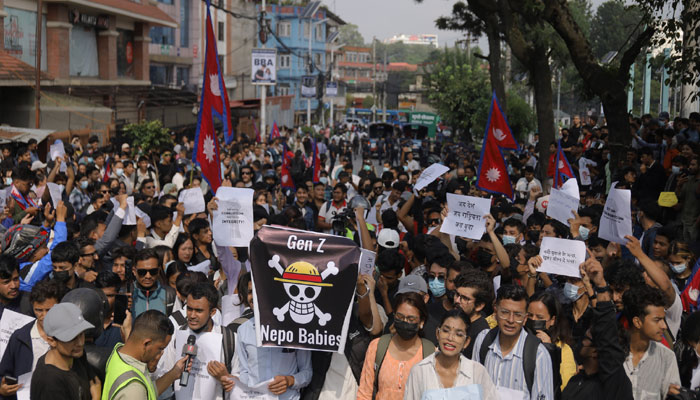
From Bhagat Singh to Nepal’s Gen Z: Why Youths Rebel.
Youth has always been the spark behind social and political movements. Anirudh Narayan Singh, now 72, recalls his days as a student leader at Banaras Hindu University during India’s Emergency in 1975. “I was 23 when JP’s call for sampoorna kranti reached BHU. My name was on the police list of key student leaders. If caught, I would have faced indefinite detention,” Singh told India Today Digital. To evade arrest, he hid for months at his uncle’s home and even grew a beard to avoid recognition.
Kallan Yadav, a former revolutionary from Muzaffarpur, echoes this sentiment. “Though a revolutionary spirit never dies, age and responsibilities would have grounded me even back then,” he says. Both men highlight a timeless truth: youth, by nature, is wired for risk-taking, idealism, and challenging authority.
Gen Z: The New Face of Rebellion
Fast forward to today, and Gen Z is claiming its place in global activism. In Nepal, young people recently forced Prime Minister KP Sharma Oli to resign following protests triggered by a social media ban, corruption, and nepotism. Using Instagram Reels, TikTok videos, and hashtags, they mobilized effectively, even amid chaos in the streets of Kathmandu. Their methods may be modern and flashy, but the impulse is the same: question authority and demand change.
History Repeats Itself
Throughout history, youth has been at the forefront of revolutions. Bhagat Singh and Sukhdev were just 23 when martyred; Lenin became politically active at 22; Che Guevara began his revolutionary journey at 23; Nelson Mandela joined the ANC at 24. From Beijing’s Tiananmen Square to Dhaka in 2024, it is young adults who often lead social change.
Why the Young Rebel
Sociologists and psychiatrists point to both biology and circumstance. Chandra Shekhar, former sociology professor at JNU, notes that teens and young adults are exploring their identities and beliefs, making them more willing to challenge authority. Dr Zirak Marker explains that the brain’s frontal cortex, which governs risk assessment and impulse control, isn’t fully developed until around 25, making youth more prone to risk-taking and emotional impulsivity.
Additionally, young adults occupy transitional social positions—they are often students or early-career workers, with fewer responsibilities and greater freedom to act. “Without mortgages or dependents, societal change feels attainable,” Shekhar adds. In developing nations, protests can also serve as a legitimate outlet to challenge corruption or demand resources.
A Pattern Across Generations
While tools and tactics change—from letters and newspapers to social media—the pattern remains constant. Millennials had personal computers; Gen X had cable TV; Boomers, the transistor. Gen Z grew up immersed in digital technology, but like all youth before them, their energy, idealism, and willingness to take risks drive activism.
From the JP Movement in India to the streets of Kathmandu, the impulse to rise, resist, and challenge authority is a hallmark of youth. Whether through peaceful protest or fiery rebellion, young people continue to shape history, proving that age, energy, and idealism remain a potent force for change.
Comments are closed.