

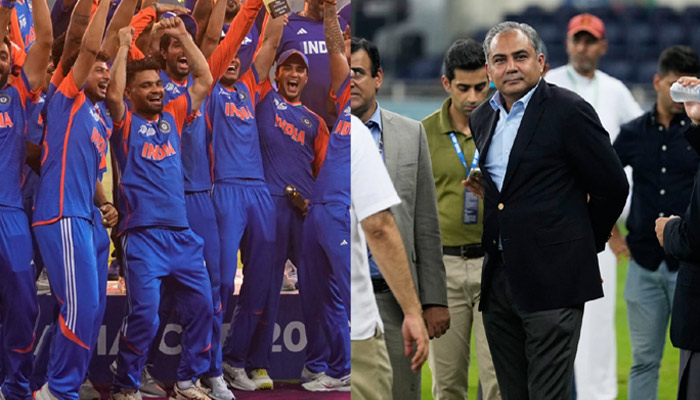
The Asia Cup trophy remains in limbo — unreturned, unpresented, and unresolved. For India, what should have been a moment of triumph instead ended in awkward silence.
The victory, clear on the scoreboard, was never crowned in ceremony. The absence of a presentation became the presence of a statement — one layered in politics, power and perception.
And yet, Indian cricket moves on. With remarkable speed, the BCCI has begun preparations for another continental outing — the Rising Star Asia Cup — a tournament once again featuring Pakistan. The timing is telling: India is not stepping back; it is stepping forward, intent on showing steadiness in the face of provocation.
The previous Asia Cup, led by Suryakumar Yadav, saw India and Pakistan meet three times — in the group stage, the Super Four, and the final. What unfolded was as much about rivalry as about the shifting politics of Asian cricket. The tension peaked when ACC Chairman and PCB President Mohsin Naqvi opted not to hand over the trophy to India. What should have been a sporting formality turned into a diplomatic moment — one that questioned governance and intent within the Asian Cricket Council (ACC) itself.
The ICC later intervened, disciplining players from both teams for excessive celebration and confrontation. But beyond fines and demerit points, the core issue — respect and transparency in administration — was left untouched. The trophy, symbolically and literally, stayed where it was.
Now, the stage is set once again. The Rising Star Asia Cup, beginning November 16 in Doha, brings India and Pakistan back into the same group. The ACC could easily have kept them apart. It chose not to. The possibility of another India–Pakistan clash, even in a developmental event, feels deliberate — and politically charged.
For India, this tournament is not about player exposure. It doesn’t need it. The country’s domestic ecosystem — the Ranji Trophy, Syed Mushtaq Ali, Vijay Hazare, and IPL — remains unmatched in scale and quality. Regular India A tours abroad already provide structured growth for emerging cricketers. From a pure talent-building standpoint, India gains little here.
But cricket, as always, operates on more than one level. India’s participation is a signal — of continuity, composure and command. By playing, India retains its centrality in Asian cricket’s narrative. It ensures the event’s commercial and competitive weight. Without India, the Rising Star Asia Cup fades to the margins; with India, it becomes a talking point across global cricket.
It’s also about image and influence. India’s long-term ambition to position itself as a global sporting hub — and possibly as a future Olympic host — requires a demonstration of stability and reliability. Refusing to participate could have been read as weakness; showing up projects strength.
So, when India’s young squad walks out in Doha, it won’t just be to gain experience. It will be to underline presence — to remind the cricketing world that India’s role in the sport isn’t reactive, it’s defining.
Comments are closed.