
Bhutan: The Harmonious Blend of Spirituality and Sustainable Living

Few destinations in the world allow spirituality, sustainability, and serenity to coexist as seamlessly as they do in Bhutan.
Life here moves to the rhythm of fluttering prayer flags, and happiness isn’t a goal — it’s a lived philosophy. From cliffside monasteries whispering centuries of wisdom to mist-covered valleys where black-necked cranes glide in winter, Bhutan offers travellers a rare harmony between nature, culture, and inner stillness.
Journeys across the Kingdom often trace its five key valleys — Thimphu, Punakha, Gangtey, Bumthang, and Paro — each one revealing a distinct facet of Bhutan’s heritage and landscape. In these regions, retreats such as Six Senses Bhutan curate deeply immersive experiences, allowing visitors not just to witness the country’s mindful traditions but to participate in them.
Each valley feels like a chapter in Bhutan’s unfolding story — from Thimphu’s “Palace in the Sky” and Punakha’s “Flying Farmhouse” to Gangtey’s “Birdwatching Bridge,” Bumthang’s “Forest in a Forest,” and Paro’s “Stone Ruins.” Together, they illuminate Bhutan’s unique commitment to collective well-being and spiritual balance.
Crafting Momos and Exploring Bhutanese Cuisine
Food is Bhutan’s warmest welcome. At Six Senses, travellers join local chefs to learn the delicate art of making momos — soft dumplings filled with fresh vegetables and cheese. It becomes less a lesson and more a joyful exchange of stories, flavours, and community.
Hand-Printing Prayer Flags
In Paro Valley, family-run farmhouses keep alive the ancient tradition of hand-printing prayer flags. Guided by artisans, visitors print their own flags, each symbol and mantra reflecting personal intentions before they are released into the Himalayan wind.
Sharing Butter Tea and Stories
No Bhutanese journey is complete without a cup of suja, the traditional butter tea. Guests learn the ritual of churning yak butter, salt, and tea leaves — a practice as comforting as the conversations that follow with locals who share folk tales and the rhythm of everyday life.
Immersing in a Traditional Dotsho (Hot Stone Bath)
The dotsho is a centuries-old Bhutanese healing ritual. River stones heated until they glow are plunged into a wooden tub infused with medicinal herbs. As the minerals disperse, the body unwinds and the mind settles — an invitation to pause after a day of mountain exploration.
Breakfast with Monks
A trek through Punakha’s terraced rice fields leads to a 16th-century hilltop monastery. Here, visitors share a simple monastic breakfast alongside young monks, accompanied by soft morning chants. It is one of Bhutan’s most grounding and quietly profound encounters.
Exploring Ancient Dzongs and Monasteries
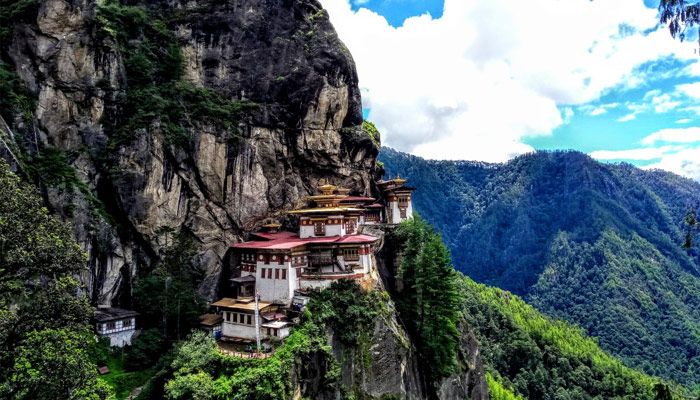
From Thimphu’s stately Tashichho Dzong to Paro’s iconic Tiger’s Nest, Bhutan’s sacred architecture reflects generations of devotion. Visits may include lighting butter lamps, receiving blessings, or listening to stories that reveal the foundations of Bhutanese spirituality.
Meeting the Black-Necked Cranes of Gangtey
In the untouched Phobjikha Valley, spirituality and wilderness meet. The arrival of the endangered black-necked cranes — revered as symbols of harmony — is a deeply moving spectacle, celebrated by both locals and travellers.
The Pilgrimage to Tiger’s Nest
The ascent to Paro Taktsang, or Tiger’s Nest, is a transformative experience in itself. The trail winds through pine forests and prayer-flag-lined pathways before opening to the iconic monastery clinging to a cliff. At the summit, the world below fades, replaced by a sense of quiet transcendence.
Whether you’re sharing a homemade meal in a farmhouse, lighting a butter lamp in a centuries-old shrine, or watching the Himalayan stars dissolve into the night sky, Bhutan encourages a gentle return to oneself. Here, every moment feels like a silent dialogue between the inner and the divine — a reminder that happiness, when rooted in simplicity, is already complete.
Comments are closed.