

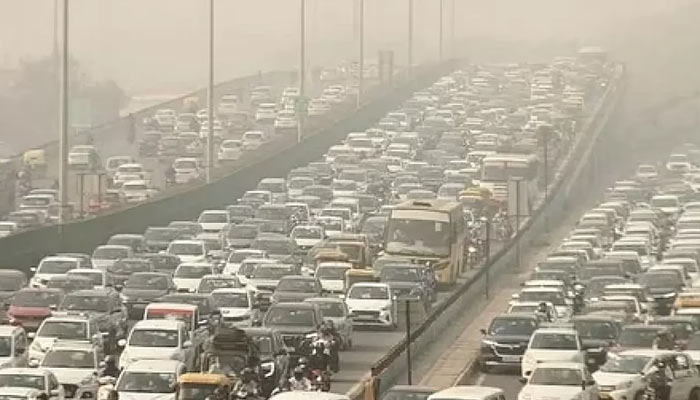
The ban on the entry of non-Delhi private vehicles that do not meet BS-VI emission norms.
Along with the enforcement of the ‘No PUC, No Fuel’ rule, came into effect in the national capital on Thursday as authorities intensified measures to rein in worsening air pollution amid dense fog across the National Capital Region (NCR). Poor visibility disrupted flight operations and surface transport.
The restrictions coincided with a scheduled discussion on the pollution crisis in the Lok Sabha under Rule 193. The debate is set to feature Congress leader Priyanka Gandhi Vadra, BJP’s Bansuri Swaraj and Nishikant Dubey, and Samajwadi Party’s Dimple Yadav.
Under the new enforcement framework, petrol pumps across Delhi have stopped supplying fuel to vehicles without valid Pollution Under Control (PUC) certificates. Authorities are using automatic number plate recognition (ANPR) cameras, voice-alert systems at fuel stations, and on-ground support from Delhi Police to ensure compliance.
Officials said about 580 police personnel have been deployed at 126 checkpoints, including key border entry points, to strictly enforce the restrictions. Teams from the Transport Department have also been stationed at petrol pumps and border locations to monitor violations and take action against non-compliant vehicles.
The ban on non-BS-VI vehicles does not apply to CNG- and electric-powered vehicles, public transport, vehicles carrying essential commodities, or those engaged in essential services. Vehicles transporting construction materials have been barred from entering the city under the stringent GRAP IV restrictions currently in force.
The stepped-up enforcement follows the Delhi government’s announcement earlier this week of stricter anti-pollution measures, including denial of fuel to vehicles without valid or updated PUC certificates and restrictions on the entry of non-Delhi vehicles that fail to meet BS-VI emission standards.
Earlier, Delhi Environment Minister Manjinder Singh Sirsa said vehicles without valid PUCC would not be supplied fuel from December 18, with compliance monitored through camera-based systems.
Comments are closed.