
Japanese citizens file lawsuit alleging unconstitutional climate inaction

Hundreds of citizens across Japan will file a lawsuit against the central government on Thursday, seeking damages over what they describe as “unconstitutional” inaction on climate change, marking the country’s first compensation claim against the state on the issue.
The plaintiffs — around 450 people nationwide — argue that Japan’s climate policies are “grossly inadequate” and violate their constitutional rights by endangering health, livelihoods and the ability to live safely amid worsening heatwaves.
Construction worker Kiichi Akiyama said rising temperatures have already caused serious economic harm. The 57-year-old told AFP that extreme heat has slowed outdoor work dramatically, leading to “huge losses” for his business. “There have been cases where people collapse out in the field, or even die after they return home,” Akiyama said. “I can barely dig with a shovel for 10 minutes without sitting down to rest.”
Japan has previously seen five climate-related lawsuits, including cases targeting coal-fired power plants, according to Kyoto University assistant professor Masako Ichihara. However, she and lawyers involved in the case say this is the first lawsuit seeking compensation from the state itself over climate inaction.
“The defendant’s climate change measures are grossly inadequate, and as a result, the plaintiffs’ rights to a peaceful life and to the enjoyment of a stable climate are being violated,” the complaint summary, obtained by AFP, states.
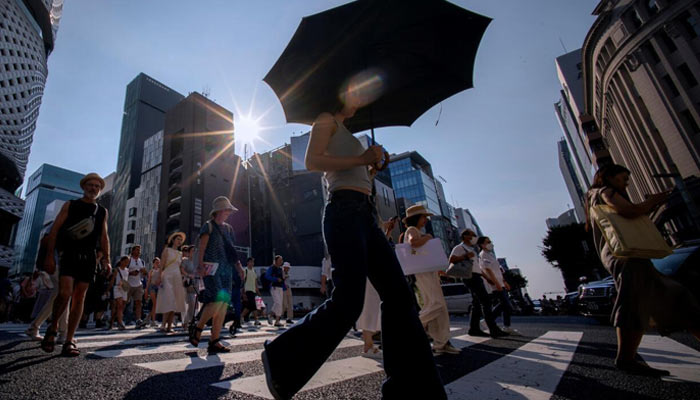
Japan recorded its hottest summer on record this year, with temperatures exceeding all previous highs since records began in 1898. The plaintiffs argue that intensifying heatwaves are already causing financial losses, damaging agriculture and exposing people to serious health risks, including heatstroke.
Akiyama said construction projects now take nearly three times longer than before. “We wouldn’t be in this situation if the government had taken stronger policy action,” he said. Similar climate lawsuits have emerged globally. In South Korea, a court last year ruled that parts of the country’s climate framework were unconstitutional following a case brought by young activists. Germany’s top court issued a comparable ruling in 2021.
The Japanese plaintiffs are seeking damages of 1,000 yen (about $6.50) per person. Lead lawyer Akihiro Shima said the amount was symbolic and intended to highlight state responsibility rather than secure financial compensation.
“This case is about accountability,” Shima said.
Ichihara said the lawsuit is bolder than earlier climate cases in Japan because it directly challenges the government’s role in addressing climate change. While the chances of winning in court may be limited, she said the case could still have impact by raising public awareness due to its “very relatable” claims.
Another plaintiff, identified only by her surname Saito, said concerns for her six-year-old son prompted her to join the lawsuit. She said extreme heat has increasingly restricted children’s outdoor activities, with public pools sometimes closed due to heat warnings.
“Playing outside in summer is becoming difficult,” Saito told AFP. “The playground equipment gets burning hot, and that really scares me.” The lawsuit also challenges Japan’s current emissions targets, arguing they are incompatible with the Paris Agreement’s goal of limiting global warming to 1.5 degrees Celsius.
Japan has pledged to cut greenhouse gas emissions by 60 percent by 2035 and 73 percent by 2040 compared with 2013 levels. The plaintiffs argue the targets fall well short of reductions recommended by the UN’s Intergovernmental Panel on Climate Change and are not legally binding.
“This legislative omission is unmistakably unconstitutional,” the complaint summary states.
Comments are closed.