
With -60°C Cold and 300 km/h Winds, What Is the Most Dangerous Place on Earth?

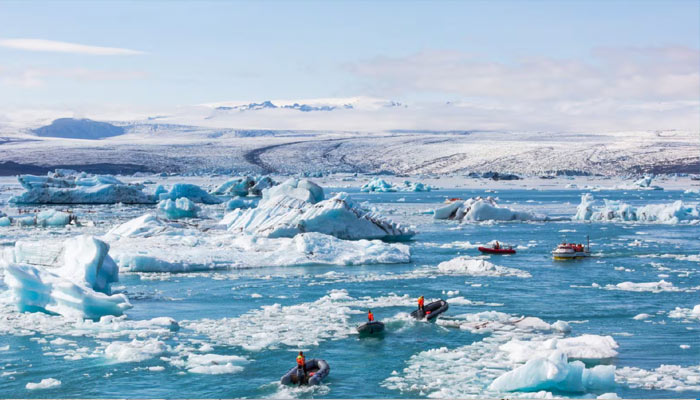
The Greenland Ice Sheet is one of the most perilous places on Earth, blanketing roughly 80% of the island in an icy expanse.
Beneath its seemingly pristine surface lie hidden crevasses, jagged ridges, and treacherous meltwater systems that can turn a simple trek into a deadly gamble. Crevasses, some hundreds of feet deep, are constantly forming as the ice shifts. Many are masked by thin “snow bridges,” making them nearly invisible — one misstep, and explorers can vanish into a bottomless blue void.
Adding to the danger are piteraqs, violent katabatic winds that roar down from the ice sheet’s summit at speeds up to 300 km/h, powerful enough to flatten structures and hurl heavy equipment like toys.
In summer, meltwater carves vertical shafts called moulins, spiraling hundreds of meters to the bedrock below. Anything falling in — human or machine — is irretrievably swept away. Surface meltwater lakes can form suddenly and vanish overnight. When cracks beneath these lakes give way, entire bodies of water can drain in hours, releasing energy that shatters the ice across miles.
Blinding “whiteout” conditions are another constant threat. With the horizon erased, explorers lose all sense of direction, sometimes wandering into hidden crevasses or other hazards.
Polar bears, usually hunters on sea ice, increasingly roam the ice sheet’s edges. Shrinking coastal habitats due to climate change have forced these 500-kg predators inland, where they can pose a deadly risk to anyone nearby.
Stretching some 2,400 km with no infrastructure, the Greenland Ice Sheet is brutally remote. Rescue is often hours — or even days — away, meaning a minor injury or equipment failure can quickly become fatal.
Comments are closed.