

Carbon sits at the centre of life on Earth — and increasingly at the centre of the global climate challenge.
While the element underpins everything from DNA to modern industry, burning fossil fuels releases carbon dioxide (CO₂), the primary greenhouse gas driving global warming. For industrial economies like India, cutting these emissions without stalling growth has become a defining policy challenge.
Carbon Capture, Utilisation and Storage (CCUS) has emerged as a key part of India’s answer.
India’s big CCUS push
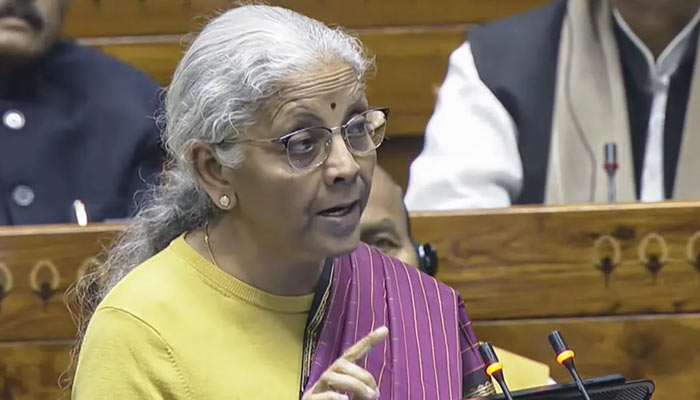
In a major policy signal, the Union Budget 2026–27 announced an allocation of Rs 20,000 crore over five years to scale up CCUS technologies. The funding, unveiled by Finance Minister Nirmala Sitharaman on February 1, targets hard-to-abate sectors such as steel, cement, refineries, chemicals and power — industries where emissions cannot be eliminated through renewables or electrification alone.
The move aligns with India’s Net Zero by 2070 pledge and builds on the national CCUS R&D Roadmap released by the Department of Science and Technology (DST) in December 2025. The roadmap outlines a long-term goal of capturing 750 million tonnes of CO₂ annually by 2050, while prioritising indigenous technology development, demonstration projects, global partnerships and private-sector participation.
Why CCUS matters for India now
India’s industrial expansion — vital for infrastructure, exports and employment — remains heavily dependent on coal, steel and cement. These sectors generate process emissions, where CO₂ is released through chemical reactions rather than fuel combustion, making them difficult to decarbonise using clean power alone.
Failure to address these emissions could also hurt export competitiveness. Mechanisms such as the European Union’s Carbon Border Adjustment Mechanism (CBAM) impose levies on high-emission imports, raising the cost of Indian steel, cement and chemicals in key markets.
CCUS offers a pragmatic bridge: enabling deep emission cuts without deindustrialisation. The Rs 20,000 crore allocation aims to move beyond pilot projects to commercial-scale deployment, including shared pipelines, storage infrastructure and risk-sharing mechanisms to attract early private investment.
How CCUS works
CCUS involves three main stages:
1. Capture
CO₂ is separated from other gases at the emission source.
-
Post-combustion capture removes CO₂ from flue gas in existing plants, but is energy-intensive due to low CO₂ concentration.
-
Pre-combustion capture removes CO₂ from fuel before combustion, making separation easier and cheaper.
-
Oxy-fuel combustion burns fuel in pure oxygen, producing a CO₂-rich exhaust stream.
Emerging approaches include solid adsorption, membranes, cryogenic separation and Direct Air Capture (DAC), though DAC remains expensive.
2. Transport
Captured CO₂ is compressed and transported via pipelines, ships or trucks to storage or utilisation sites.
3. Storage or utilisation
-
Storage involves injecting CO₂ into deep geological formations such as saline aquifers or depleted oil and gas fields — a method proven at scale globally.
-
Utilisation converts CO₂ into products such as fertilisers, building materials, chemicals or synthetic fuels, often locking carbon away permanently through mineralisation.
Global context and India’s position
Globally, CCUS deployment is accelerating. By early 2026, around 77 commercial facilities were operating worldwide, capturing roughly 64 million tonnes of CO₂ per year, with dozens more under construction. If current pipelines materialise, global capacity could reach over 300 million tonnes annually by 2030.
North America leads deployment, followed by China, the Middle East and Australia, increasingly through shared “hub” models that reduce costs.
India remains behind large-scale leaders but is moving quickly. Budgetary support, a national roadmap and pilot projects — including CCU initiatives in cement involving IITs and companies such as JSW, Dalmia and UltraTech — point to growing seriousness. Key challenges remain, including high costs, energy penalties, regulatory clarity on long-term storage liability and mobilising private capital.
The debate around CCUS
Supporters argue CCUS is indispensable for meeting 1.5–2°C climate targets, especially for heavy industry and legacy emissions. The IPCC and International Energy Agency both see it as a critical pillar of decarbonisation pathways.
Critics counter that CCUS risks prolonging fossil fuel dependence, has historically seen slow uptake and can impose high energy and cost penalties. A 2025 World Resources Institute report flagged sluggish deployment and concerns over continued health and social impacts near polluting facilities.
For India, however, CCUS is not positioned as a substitute for renewables but as a complement — a solution for sectors with few immediate alternatives. As Abinash Mohanty, Global Sector Head for Climate Change and Sustainability at IPE Global, notes, the government’s commitment reflects recognition that CCUS is essential where electrification or fuel switching remains unviable.
If executed effectively, the Rs 20,000 crore push could help India cut emissions, protect export competitiveness, build domestic clean-tech capabilities and support industrial growth while staying aligned with its long-term climate goals.
Comments are closed.