
IND-PAK clash could happen if Bangladesh reinstated at T20 World Cup: ex-PCB chief

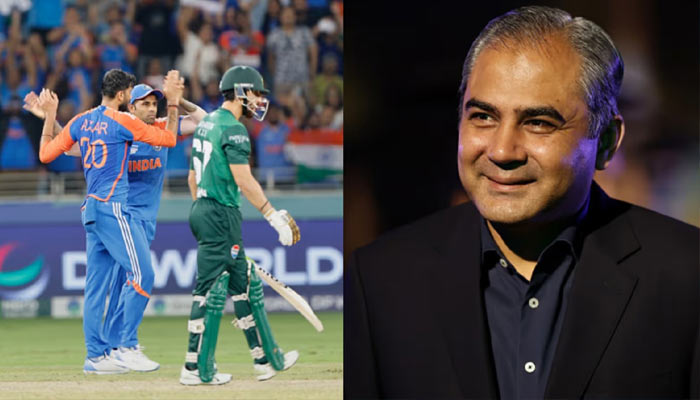
The uncertainty surrounding a potential India–Pakistan clash at the T20 World Cup continues, with former Pakistan Cricket Board (PCB) chairman Najam Sethi saying the marquee fixture could still be salvaged if Bangladesh are reinstated into the tournament.
Sethi’s comments come amid Pakistan’s threat to boycott the competition — a move that has already drawn warnings of possible sanctions from the International Cricket Council (ICC). Pakistan’s position, communicated through an official government statement, is being viewed largely as a political protest rather than a sporting decision. The stance stems from Bangladesh’s removal from the tournament after the ICC rejected its request to shift matches from India to Sri Lanka, citing security considerations.
The situation has placed the tournament under pressure, with the India–Pakistan fixture — the most commercially significant match in international cricket — now in doubt.
The ICC has reportedly cautioned the Pakistan Cricket Board that refusing to participate in the fixture could result in punitive action. While the governing body has not detailed specific penalties, it has stressed that a boycott would not serve the broader interests of the game.
Sethi outlines a possible compromise
Sethi believes there is still room for resolution. “From my point of view, if Bangladesh can be invited to Sri Lanka, it’s not too late. There are many matches being played there,” he said in an interview with India Today, suggesting a logistical compromise.
He added that if Bangladesh declined to participate even after such an option was offered, then the onus would shift to addressing deeper governance concerns. “Everyone wants to see India versus Pakistan. It’s the gold standard,” Sethi said.
According to Sethi, the current PCB leadership has evaluated the legal and administrative implications. “They’ve consulted lawyers here and abroad. They’re comfortable with the decision,” he said, indicating the move has been carefully considered.
Why Pakistan is pushing back
Responding to criticism over the timing of Pakistan’s stance — given that Bangladesh is the directly affected party — Sethi accused the Board of Control for Cricket in India (BCCI) of wielding excessive influence. “The issue is the BCCI’s attitude,” he said. “Earlier, Pakistan was isolated and everyone sided with India. That is now changing.”
Looking back to move forward
Sethi pointed to Pakistan’s earlier resistance to the “Big Three” revenue model, which concentrated power among India, Australia and England. “Nine boards signed up; we stood alone because it was inequitable,” he said. He also recalled the collapse of a proposed bilateral series with India despite prior agreement. “On the eve of the series, the BCCI pulled out without even meeting us in Mumbai,” Sethi said.
According to Sethi, the current standoff represents a broader stand alongside Bangladesh. “Together, Pakistan and Bangladesh represent 400 million people. This is the moment to stand up,” he said. Sethi acknowledged the possibility of short-term losses, including the risk of losing cricket’s biggest rivalry, but said the objective was structural reform. “There may be losses, but the goal is a reformed ICC,” he said.
Legal route remains open
Sethi conceded that the dispute could escalate if no compromise is reached. “Worst-case scenarios end up in courts,” he said. As the ICC weighs its options, the fate of the India–Pakistan match — and the wider debate over governance and power within world cricket — remains unresolved.
Comments are closed.