
From UP’s Buddhist heartland to Japan’s temples: Inside the modern Buddhist Circuit

At a time when global diplomacy is increasingly dominated by shifting alliances, trade negotiations and military calculations.
The growing partnership between Uttar Pradesh and Japan’s Yamanashi Prefecture offers a rare and refreshing alternative. It is a relationship anchored not in strategic compulsion, but in a shared civilisational memory that stretches back more than two millennia.
At the centre of this engagement lies the Buddhist Circuit—a sacred network of sites that runs from the fertile plains of Uttar Pradesh to the ancient temples of Japan. Far from being a conventional tourism initiative, the circuit represents one of Asia’s deepest philosophical and cultural linkages, shaping societies, values and worldviews across the continent.
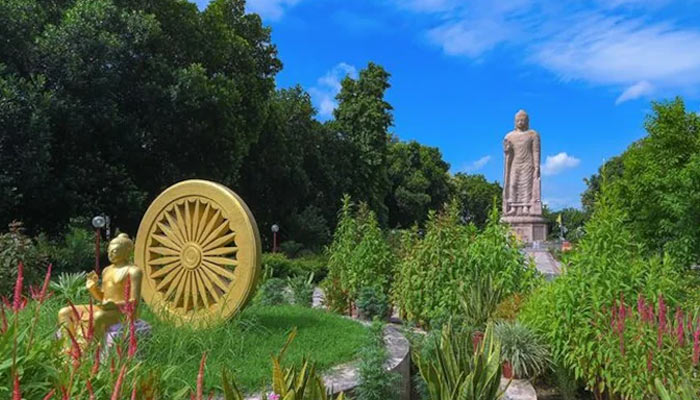
Uttar Pradesh occupies a foundational place in the Buddhist story. Sarnath, where Lord Buddha delivered his first sermon, marks the birth of Buddhist philosophy. Kushinagar, where he attained Mahaparinirvana, symbolises the end of his earthly journey. Along with Bodh Gaya in neighbouring Bihar—historically connected through ancient monastic routes—these sites form a spiritual ecosystem that continues to influence millions across Asia.
For Japan, where Buddhism has flourished for over 1,400 years, these locations are not distant relics of history but the wellspring of a living tradition. Japanese visitors who travel to India do so not merely as tourists, but as pilgrims seeking a deeper connection with the origins of their faith and cultural identity. This pilgrimage-driven engagement creates a powerful form of people-to-people diplomacy—one that operates beyond official agreements and political cycles.
The economic implications of this spiritual bond are substantial. Unlike conventional tourism, spiritual travel generates consistent, year-round footfall. Uttar Pradesh has already witnessed the economic multiplier effect of faith-based tourism in Ayodhya following the Ram Mandir pran pratishtha. Buddhist tourism carries similar potential, particularly in eastern Uttar Pradesh.
Japanese tourists are known for longer stays and higher per-capita spending, offering sustained benefits to local economies. The development of infrastructure around Buddhist sites—transport, accommodation, cultural centres and local enterprises—creates employment while ensuring the preservation of heritage. If fully leveraged, Buddhist tourism from Japan alone could transform the economic prospects of the region.
Japan’s expertise in heritage conservation adds another strategic dimension to this partnership. Its model—combining reverence for tradition with advanced technology—offers valuable lessons for India. Collaborations in digital reconstruction, interpretive museums and sustainable site management could elevate India’s Buddhist landmarks to global standards of heritage presentation.
The proposed Centres of Excellence at Banaras Hindu University and other institutions will further deepen this engagement. By focusing on Buddhist studies, archaeology and conservation, these centres can institutionalise academic exchange while nurturing a new generation of scholars and practitioners committed to sustaining this civilisational dialogue.
More broadly, the Uttar Pradesh–Yamanashi partnership presents a template for cultural diplomacy in the 21st century—one that other Indian states could replicate by tapping into their own historical and spiritual connections with Asia and beyond.
In an era marked by polarisation and geopolitical uncertainty, the Buddhist Circuit stands as a reminder of shared values and the enduring human quest for wisdom and compassion. By investing in this sacred heritage, Uttar Pradesh—under Chief Minister Yogi Adityanath—and Japan are not merely safeguarding the past, but building a quieter, deeper foundation for a more connected future.
Comments are closed.