

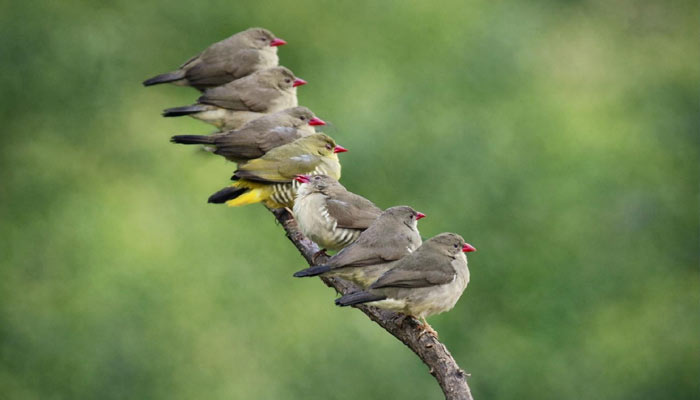
Through the Smog, Delhi Is Looking Up at the Birds Again
“My home overlooked a marshy land. As a child, I would spend afternoons by the window watching birds hop from branch to branch. They pecked at twigs, chirped, drank water, and flew away — only to return the next day. Somewhere along the way, I realised how deeply I was drawn to those movements. Watching them calmed me,” recalls Saptaparna Bhattacharyya, 55, a Delhi-based birdwatcher who says nature eventually became her life’s purpose.
For Bhattacharyya, that quiet joy is incomparable.
Birdwatching has always existed in India — from the wetlands of Keoladeo National Park to the forests of Jim Corbett National Park. But Delhi? It isn’t the first city that comes to mind — not when headlines often focus on pollution and the declining presence of migratory birds.
And yet, quietly and somewhat unexpectedly, birdwatching walks are taking flight in the capital.
Much like heritage or food walks, guided birding trails are filling up — even in a city synonymous with smog. Curiosity led me to join one. What I discovered was both surprising and refreshing.
Delhi’s Surprising Birding Boom
“Bird diversity in Delhi is actually very high compared to many other places. Among cities, it’s a major hotspot,” says Mansi Lodhi, a nature-based learning facilitator and birding guide.
As birds migrate from southern India and other continents, many make stopovers in Delhi’s wetlands and forest patches — creating remarkable seasonal diversity.
Data from the Birding Bharat Mission reveals that in less than a year, bird walks have engaged over 3,900 participants nationwide, with interest spiking nearly 40% during peak migration season (October to January).
“Metro cities show the strongest participation,” says Aksheeta Mahapatra, project head of the Birding Bharat Initiative at Ataavi Bird Foundation. “We conduct five to eight walks per month in urban hubs like Delhi, Mumbai, Bengaluru, Kolkata and Goa. Tier-2 and Tier-3 cities are growing steadily, but metros lead in repeat demand.”
In Delhi alone, participation has risen 30–35% from early summer to peak winter walks.
Popular trails include the wetlands of Okhla Bird Sanctuary, the green expanse of Sanjay Van, and even the heritage surroundings of Qutub Minar Complex.
For a first-timer like me, the fully booked walk was the first surprise. The second was the crowd — a mix of seasoned birders, curious professionals, families, photographers, and Gen Z participants armed with binoculars instead of brunch plans.
Pollution, Reality and Resilience
Of course, in Delhi, pollution is never far from the conversation.
According to Lodhi, bird numbers are declining due to multiple factors — pollution, shrinking habitats, and human interference such as feeding grains that alter natural food behaviour.
Yet neither the birds nor the birders seem deterred.
“Pollution has never stopped me completely,” says Supraja Iyer, 39, a regular birder. “There are a few bad days, yes. But Delhi also has significant green cover — gardens and forest areas. That’s our saving grace.”
Landscape photographer Arundhati noticed something else: younger participants.
“Four days ago, I spent an entire weekday at Okhla from 7:30 am to 5:30 pm. I was happy to see so many Gen Z youngsters trying to identify birds. They could have gone to malls — but they chose this.”
- Birdwatching as Wellness
- Beyond biodiversity, birdwatching is increasingly framed as a wellness practice.
- Participants often describe feeling calmer, more mindful, and “digitally detoxed” after walks, says Mahapatra.
The concept is simple: pause, observe, and let nature recalibrate your senses.
“Birdwatching requires focused attention — noticing how birds look, move, and sound,” explains Dr Himani Narula Khanna, developmental behavioural paediatrician and co-founder of Continua Kids. “This ‘mindfulness in motion’ improves concentration, emotional regulation, and overall mental well-being.”
Spending time outdoors has long been linked to lower stress and anxiety. But birding adds another layer — active, curious engagement.
A Reset for Screen-First Generations
For Gen Alpha — children born between 2010 and 2025 — screens dominate daily life. Nature walks offer an alternative rhythm.
“Observing birds improves attention span, patience and observational skills. It sparks curiosity and reduces stress,” says Dr Narula.
Aayushi Pareek, an environmental lawyer-turned holistic wellness coach, brings her son along on walks.
“In Delhi, kids often live in ‘fight or flight’ mode,” she says. “Birdwatching demands silence. We teach them a ‘soft panoramic gaze’ — scanning leaves gently to spot movement. It shifts them from thinking to feeling, which helps regulate a developing nervous system.”
During the walk, I met a young participant whose knowledge rivalled that of adults — confidently identifying species while explaining migration routes.
The Healing Sound of Birdsong
Birdsong — the rhythmic chattering and chirping heard at daybreak — does more than fill silence.
From an evolutionary perspective, it signals environmental safety, while urban noise triggers stress responses.
“Birdsong has measurable psychological benefits,” says Dr Ashish Bansal, psychiatrist and co-founder of House of Aesthetics. “It lowers perceived stress, reduces anxiety, improves mood, and promotes relaxation by activating the parasympathetic nervous system.”
Fun fact: the Jungle Babbler, often nicknamed the “Seven Sisters,” is famously noisy — its constant chatter making it one of the most recognisable calls in north India.
In a city of honks and sirens, such sounds feel almost radical.
Community in a Fast-Paced City
Birdwatching offers something else Delhi often lacks — unhurried connection.
You begin with, “Did you spot it?” and end up sharing life stories over a common sighting.
Suraj, a finance professional, says many in his social circle today are people he met on bird walks.
Even when I lagged behind during the trail, fellow participants helped me identify species. Days later, the WhatsApp group remains active — photos exchanged, species debated, new walks planned.
Strangers become acquaintances. Acquaintances become friends.
Taking Flight
Delhi is known for politics, street food, heritage, and — unfortunately — pollution. Birdwatching rarely makes that list.
Perhaps it should.
Through the haze, people are lifting their gaze skyward again — binoculars in hand, phones tucked away, listening for chirps instead of notifications.
The birds flew off by mid-morning.
But the group chat? It hasn’t stopped chirping since.
Comments are closed.