
Climate Crisis May Drive 1.1 Billion Into Hunger by 2100, Study Warns

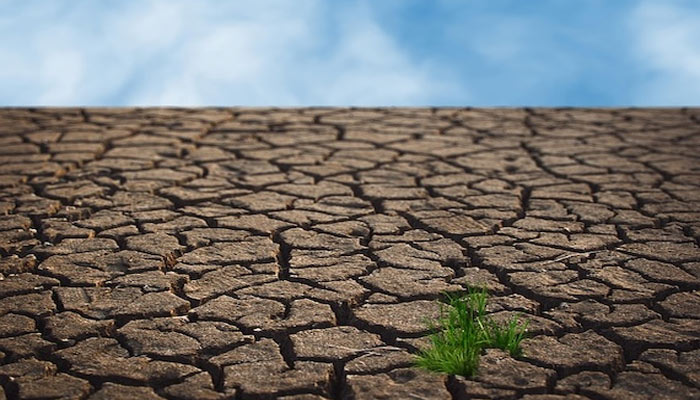
In 2025, more than 295 million people around the world faced acute hunger. Conflict, displacement, economic shocks and extreme weather events all played a role. But the deeper concern is not just today’s crisis — it is how much worse it could become.
New modelling suggests that climate change alone could expose more than 1.1 billion people to at least one episode of severe food insecurity by 2100. That figure includes both those alive now and future generations who may experience famine-related conditions during their lifetimes.
Isolating the Climate Signal
As a quantitative ecologist, I use computational tools to examine how environmental stressors affect human systems. To understand the long-term risk of hunger, I built an artificial intelligence model designed to isolate the role of climate change in triggering food crises.
The model was calibrated using food security assessments from the Famine Early Warning Systems Network and linked them with temperature data from the National Oceanic and Atmospheric Administration and rainfall data from the Climate Hazards Center.
Rather than relying heavily on long-range economic forecasts — which are inherently uncertain — the model focused on how shifts in temperature and precipitation patterns correlate with past food crises. It then projected those relationships into the future under different emissions pathways.
What the Projections Show
If greenhouse gas emissions remain high, more than 1.1 billion people — including over 600 million children — could face at least one severe food crisis by the end of the century.
The geographic concentration of risk is striking. Africa is projected to carry a disproportionate burden. By 2099 alone, over 170 million people on the continent could be exposed to severe food insecurity, including famine-level conditions. Parts of central Africa, where climate impacts are intensifying and populations are expanding rapidly, are expected to be especially vulnerable.
Children are likely to bear the greatest cost. The projections suggest that more than 600 million children may encounter their first severe food crisis before the age of five, while over 200 million newborns could face risk within their first year of life.
The trend is already moving in the wrong direction. Between 2011 and 2020, the number of people exposed to severe food insecurity nearly tripled — rising from around 50 million to almost 150 million.
A Narrowing Window for Action
The future, however, is not fixed. The model indicates that decisive global action could dramatically change the trajectory. Nearly 780 million people could be spared from severe food crises if the world rapidly reduces carbon emissions and pursues inclusive, sustainable development.
Under aggressive decarbonisation scenarios, the annual number of people facing food crises could drop by more than half by 2100 compared with high-emission pathways. In Africa especially, reductions in conflict and stronger development policies could significantly lower exposure after mid-century, potentially offsetting some of the climate-driven risks.
Beyond Food Production
Climate change intensifies vulnerability, but it does not operate in isolation. Governance, inequality, agricultural resilience and infrastructure all determine whether climate stress translates into famine. Food security is not simply about increasing crop yields. It depends on resilient supply chains, equitable access, climate adaptation strategies and long-term investment in sustainable farming systems.
The projections deliver a clear warning: today’s policy choices will determine whether future generations inherit a world of escalating hunger — or one where catastrophic food crises are largely prevented. The difference between those futures lies in decisions made now.
Comments are closed.