
US Commerce Secretary Howard Lutnick makes unscheduled India visit after Trump tariffs ruling; holds ‘productive’ lunch with Piyush Goyal

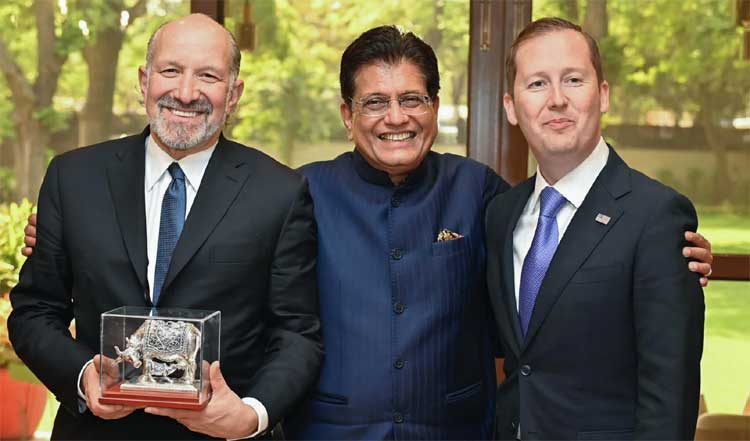
Days after the Supreme Court of the United States struck down President Donald Trump’s sweeping global tariffs, US Commerce Secretary Howard Lutnick made an unscheduled visit to New Delhi, where he held what was described as a “highly productive” lunch meeting with Commerce Minister Piyush Goyal on Thursday. The discussions focused largely on trade and strengthening economic ties.
US Ambassador to India Sergio Gor and Goyal confirmed the meeting in separate posts on X, sharing a photograph of the three. “A highly productive lunch with @howardlutnick and @PiyushGoyal. So many areas of cooperation for our two nations!” Gor wrote. Goyal said he had engaged in “very fruitful discussions to expand our trade and economic partnership.”
In a statement, the US Commerce Department said both sides “discussed ways to deepen the trade and economic relationship between the United States and India.” India’s commerce ministry did not immediately respond to requests for further details.
Later in the day, Lutnick traveled to Jodhpur to attend the wedding of Ayesha Arora, daughter of tech executive Nikesh Arora, and ice hockey star Jack Hughes, according to people familiar with the matter.
The meeting comes at a pivotal moment in India-US trade relations. The Supreme Court invalidated Trump’s use of emergency powers under the International Emergency Economic Powers Act to impose sweeping tariffs on February 20, compelling his administration to explore alternative legal routes.
Trump subsequently invoked Section 122 of the Trade Act of 1974 to introduce a fresh 10% global tariff, announcing less than 24 hours later that he intended to raise it to the statutory ceiling of 15%. As of Thursday, the tariff remains at 10% for all trading partners, in addition to prevailing most-favoured-nation rates, and is valid for 150 days.
The ruling has disrupted a carefully negotiated timeline between New Delhi and Washington. India’s chief negotiator Darpan Jain had been scheduled to travel to Washington from February 23 to finalise the legal text of an interim bilateral trade agreement based on a February 6 joint statement. That statement envisaged the US reducing additional tariffs on India — which had reached as high as 50% when combining reciprocal and punitive levies — to 18%, in exchange for India curbing purchases of Russian crude and granting preferential access to select American goods.
Following the court’s decision, both sides postponed talks, saying they needed time to assess the implications. Experts noted that the February 6 framework would likely need revision, as the country-specific tariff structure it proposed has now been replaced by a uniform baseline applied to all trading partners.
Abhishek Rastogi, founder of Rastogi Chambers, said any bilateral tariff arrangement must comply with constitutional constraints reaffirmed by the Supreme Court. “The authority of the executive to agree on tariff rates is not unfettered; it remains subject to judicially enforceable constitutional constraints. Any tariff commitment that exceeds statutory delegation or violates constitutional limits would be legally unsustainable and liable to be struck down,” he said.
Under the US constitutional framework, tariff-setting authority ultimately rests with Congress, not the executive branch, Rastogi added.
Comments are closed.