

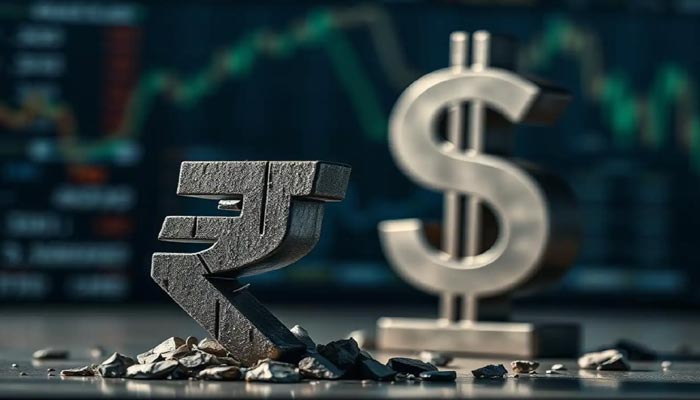
The Indian rupee fell past the ₹91-per-dollar level on Monday, marking its weakest point in nearly a month, as escalating tensions in the Middle East triggered a broad risk-off wave across global markets.
Dealers said the currency came under pressure from a combination of surging crude oil prices, strong safe-haven demand for the US dollar and heightened geopolitical uncertainty stemming from the conflict involving the United States, Israel and Iran. If volatility persists, analysts expect the rupee to drift toward ₹91.50 and potentially test fresh lows.
For India, higher oil prices present a twin risk — widening the trade deficit and adding to inflationary pressures. As one of the world’s largest crude importers, the country remains particularly sensitive to sustained spikes in energy costs. The strengthening dollar has compounded the pressure, as investors reduce exposure to emerging markets and rotate into safer assets.
Currency traders anticipate choppy movements through the week, with sentiment closely tied to developments in West Asia and the trajectory of global oil prices.
Precious metals, meanwhile, rallied sharply on safe-haven buying.
On the Multi Commodity Exchange (MCX), gold futures for April delivery climbed 3.16 per cent to ₹1,67,221 per 10 grams. Silver futures for May surged 3.43 per cent to ₹2,92,347 per kilogram, reflecting strong investor demand amid heightened uncertainty.
Market participants said sustained geopolitical tensions could keep volatility elevated across asset classes, with the rupee and other emerging-market currencies likely to remain under pressure in the near term.
Comments are closed.