

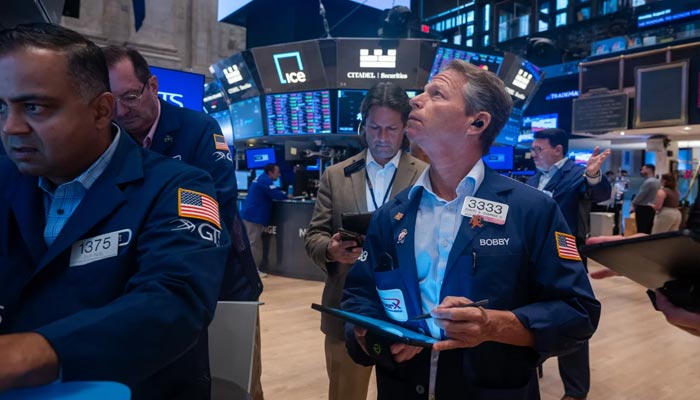
U.S. stocks fell sharply on Friday as disappointing labour market data and escalating tensions in the Middle East rattled investor sentiment. The main indexes on Wall Street declined, with the Dow Jones Industrial Average slipping to its lowest level in more than three months.
Fresh economic data showed the U.S. economy unexpectedly shed jobs in February, while the unemployment rate rose to 4.4%, pointing to potential weakness in the labour market. Analysts said the slowdown partly reflected a strike by healthcare workers as well as severe winter weather in parts of the country.
The weaker jobs report prompted traders to increase bets that the Federal Reserve may cut interest rates sooner than expected. According to data compiled by London Stock Exchange Group, markets are now pricing in roughly even odds of a 25-basis-point rate cut by June, compared with about 35% earlier in the day.
Jeff Schulze, head of economic and market strategy at ClearBridge Investments, said the soft labour data has shifted expectations for monetary policy.
“Given the developments in the Middle East and the spike in energy prices, I initially expected the first rate cut to come in September,” he said. “But the renewed weakness in the labour market brings both sides of the Fed’s mandate — inflation and employment — into focus. At this point, July looks more likely.”
Oil prices surge amid Middle East conflict
Market concerns were also fuelled by rising energy prices as the conflict in the region disrupted key shipping routes. Oil prices posted their biggest weekly jump since the Russian invasion of Ukraine, with shipping through the strategic Strait of Hormuz reportedly halted.
Benchmark Brent crude climbed to around $90 per barrel, raising fears that higher fuel costs could add to inflationary pressures globally. The surge in oil prices weighed on airline stocks, with the passenger airlines subindex of the S&P 500 heading for a steep weekly drop.
Concerns about energy supply also intensified after Qatar indicated that restoring normal natural gas deliveries could take weeks or even months, even if a ceasefire is reached soon. Some reports suggested that Gulf energy exporters could halt shipments within weeks if tensions escalate further, potentially pushing oil prices towards $150 per barrel.
Financial stocks under pressure
By late morning trading in New York, the Dow Jones Industrial Average had fallen more than 570 points, while the S&P 500 and the Nasdaq Composite were also trading lower. Losses were widespread across sectors, with banking stocks under pressure amid concerns in the private credit market.
Shares of BlackRock dropped after the asset manager restricted withdrawals from one of its major private credit funds following a surge in redemption requests, a move that came days after similar action by Blackstone. Meanwhile, Western Alliance Bancorporation plunged after filing a lawsuit against Jefferies Financial Group over unpaid loans tied to bankrupt auto parts supplier First Brands Group.
Investor nervousness was also reflected in the CBOE Volatility Index, often called Wall Street’s “fear gauge,” which climbed to a four-month high.
Some bright spots remain
Despite the overall sell-off, a few stocks managed to rally. Semiconductor company Marvell Technology surged after forecasting stronger-than-expected revenue growth by fiscal 2028.
Even with Friday’s decline, U.S. equities have still performed relatively better than many Asian and European markets this week. Analysts say the country’s position as a net exporter of oil and continued strength in technology stocks have helped cushion the impact of global uncertainty.
Meanwhile, Christopher Waller, governor at the Federal Reserve, said in a television interview that the recent surge in oil prices may not necessarily lead to sustained inflation or require a change in the central bank’s policy stance. However, market breadth remained weak, with declining stocks far outnumbering advancing ones across both major U.S. exchanges, highlighting the cautious mood among investors.
Comments are closed.