

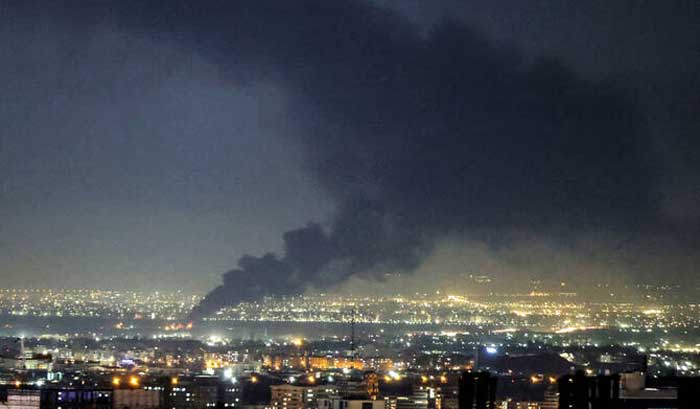
Donald Trump’s threat to target Iran’s power plants and bridges could trigger a humanitarian crisis and provoke strong retaliation from Tehran, experts warn.
What could be targeted?
Previous strikes by the United States and Israel during the weeks-long conflict have focused on energy infrastructure such as gas facilities, oil depots and transport routes. But hitting any of Iran’s roughly 90 power plants would mark a sharp escalation, with immediate consequences for civilians and the economy.
Iran generates about 79% of its electricity from gas, according to the International Energy Agency. Its power plants are concentrated around major urban and industrial hubs, especially near Tehran and along the Gulf coast close to key gas reserves.
Major facilities include the Damavand Power Station, which supplies the capital, as well as Shahid Salimi Neka in Mazandaran and Shahid Rajaee in Qazvin, according to Iranian energy group MAPNA Group.
Experts note that Iran was already facing a severe energy crunch before the conflict. “Iran has chronic shortages in electricity, natural gas and refined oil products,” said Brenda Shaffer of the US Naval Postgraduate School.
Would targeting power help militarily?
Analysts say such strikes would have limited military value. According to the Atlantic Council, Iran’s military is not heavily dependent on the national electricity grid, relying instead on fuels like diesel and jet fuel.
Strikes on power infrastructure would therefore primarily hurt civilians and industry, with minimal impact on military capabilities.
Volker Turk has warned that deliberate attacks on civilian infrastructure could amount to war crimes.
Energy experts say disruptions could trigger widespread blackouts, crippling sectors like steel, cement, petrochemicals and automotive manufacturing. Essential services such as hospitals would depend on diesel generators, while banking and telecom networks—often with limited backup power—could quickly be affected.
How might Iran respond?
Despite relatively weaker conventional capabilities, Iran has sought to mirror attacks by targeting similar assets. After a strike on its South Pars gas field, Tehran retaliated by hitting a key liquefied natural gas facility in Qatar.
The Islamic Revolutionary Guard Corps has warned that any escalation could extend beyond the region, including attacks aimed at disrupting oil and gas supplies linked to the US and its allies.
Iran has also hinted at targeting critical desalination infrastructure in Gulf states—vital for drinking water in countries such as the United Arab Emirates, Saudi Arabia, Oman and Kuwait.
In a broader escalation scenario, Tehran could activate allies like the Houthis in Yemen, who have previously disrupted shipping in the Red Sea and could target regional infrastructure and Western bases.
Comments are closed.