
CSIR-National Institute of Oceanography study links climate change to increased underwater volcanic activity

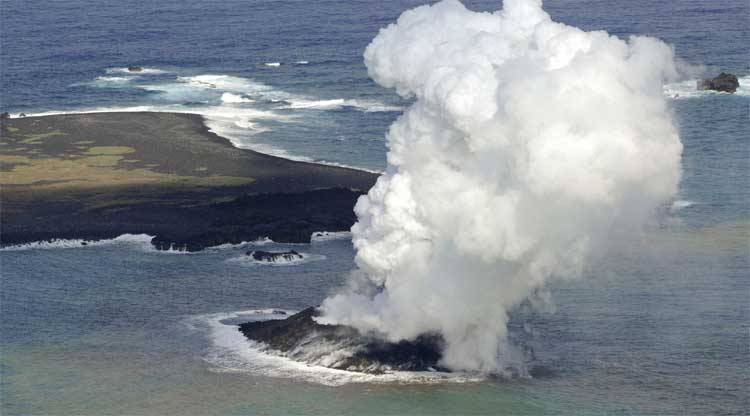
Scientists from CSIR-National Institute of Oceanography have uncovered how long-term climate shifts influence underwater volcanic activity along mid-ocean ridges (MORs), shedding light on a little-understood link between ice ages and deep-sea processes.
Mid-ocean ridges are vast underwater mountain chains where tectonic plates drift apart, allowing molten magma to rise and create new seafloor. This activity also drives hydrothermal systems—where seawater seeps into cracks, heats up, and resurfaces through mineral-rich vents.
The researchers focused on the Carlsberg Ridge in the Indian Ocean, a slow-spreading ridge where volcanic activity occurs in intermittent bursts. To reconstruct its past behaviour, they analysed sediment cores containing thin, rust-like coatings of iron and manganese (Fe-Mn oxyhydroxides). These layers act like chemical recorders, capturing signatures from both magma and external sources such as airborne dust.
By studying lead isotopes in these coatings, the team was able to distinguish between volcanic and terrestrial inputs. When hydrothermal vents were more active, the deposits showed a stronger magma-derived signature.
Comparing these chemical records with past climate cycles, the scientists identified a clear pattern over the last 49,000 years. During glacial periods, when large volumes of water were locked in ice and sea levels dropped, reduced pressure on the seafloor triggered increased volcanic and hydrothermal activity. This, in turn, released more heat and carbon dioxide into the ocean.
The study highlights two key mechanisms driving this response: a delayed increase in magma production due to pressure changes, and more immediate fracturing of the crust that allows fluids to circulate more rapidly.
These findings suggest that hydrothermal systems at slow-spreading ridges are highly sensitive to global climate changes. Beyond geology, they may also influence ocean chemistry by releasing trace metals such as cobalt, nickel, and chromium—nutrients that support deep-sea ecosystems.
Overall, the research indicates that such underwater systems not only record past climate variations but may actively shape the chemical balance of the oceans during glacial and interglacial cycles.
Comments are closed.