
US Navy tightens chokehold on Iran via Strait of Hormuz blockade, global economic strain intensifies

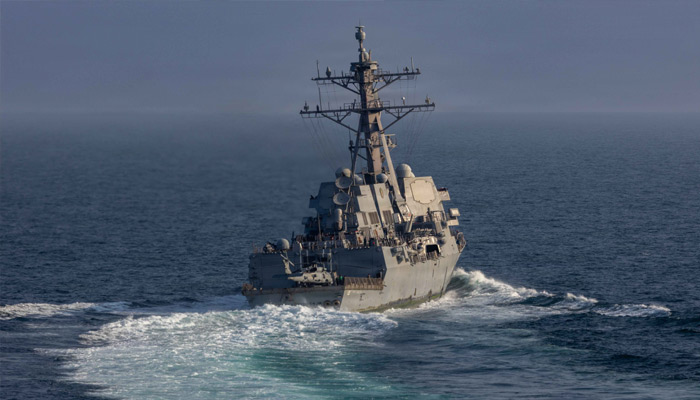
The United States has intensified pressure on Iran by rolling out a naval blockade targeting ships linked to its ports, effectively turning the Strait of Hormuz into the centre of a high-stakes economic confrontation.
The move follows stalled negotiations in Pakistan, leaving both sides bracing for uncertainty ahead of a ceasefire deadline on April 22. The primary objective is clear—disrupt Iran’s oil exports, a key revenue stream sustaining its economy amid ongoing tensions.
While Donald Trump initially suggested a sweeping clampdown on all vessels transiting the strait, US authorities later clarified that enforcement is focused on ships connected specifically to Iranian ports, allowing neutral shipping to continue.
Hormuz becomes an economic battleground
The Strait of Hormuz remains one of the most critical arteries for global energy trade, handling a significant portion of the world’s oil shipments. Any disruption here has immediate global consequences. Markets reacted swiftly, with oil prices crossing $100 per barrel amid fears of supply constraints. Reports indicate that millions of barrels of crude and refined fuel are already backed up in the Gulf, intensifying concerns about price volatility.
Beyond oil, the route is crucial for transporting industrial commodities like fertilisers, aluminium and helium—expanding the potential economic fallout well beyond the energy sector. By tightening control over this chokepoint, Washington is aiming to directly squeeze Tehran’s financial capacity and limit its strategic flexibility.
Rising military risks
Despite its economic rationale, the blockade carries significant operational dangers. The narrowness of the strait restricts naval movement, exposing US forces to threats such as sea mines, missile systems and drone attacks. This geography increases the risk of confrontation or accidental escalation.
Iran has already warned of retaliation, signalling that threats to its ports could put wider regional shipping infrastructure at risk—raising the possibility of a broader conflict across the Gulf.
Targeting Iran’s economic lifeline
The blockade strategy is designed to weaken Iran without escalating into a full-scale military engagement.
By restricting oil exports, the US seeks to cut off critical revenue flows. Analysts argue this approach may be more effective than targeting fixed infrastructure like export terminals, as it directly impacts the country’s ability to sell oil in global markets.
However, the global implications are significant. Reduced supply could keep oil prices elevated, adding to inflationary pressures and increasing costs for countries dependent on energy imports.
Diplomacy still in play
Even as tensions rise, diplomatic efforts have not completely collapsed. Observers suggest the situation may settle into a phase of prolonged strategic pressure rather than immediate escalation. The central sticking point remains Iran’s nuclear programme. Tehran maintains its activities are civilian, while the US and its allies remain unconvinced.
Trump acknowledged the deadlock, noting that while discussions made progress, the nuclear issue remains unresolved.
A global ripple effect
The Hormuz blockade highlights a shift toward economic pressure as a primary tool of US strategy. By leveraging control over a vital maritime chokepoint, Washington is attempting to force concessions without direct conflict. Yet the costs are already being felt globally—through rising energy prices, supply chain disruptions and growing geopolitical uncertainty.
With the ceasefire deadline approaching, the situation remains finely balanced, with the risk that economic pressure could either bring about negotiations—or push the crisis into a more dangerous phase.
Comments are closed.