
Southern Europe Battles Deadly Wildfires As Portugal, Spain, Greece Fight Flames

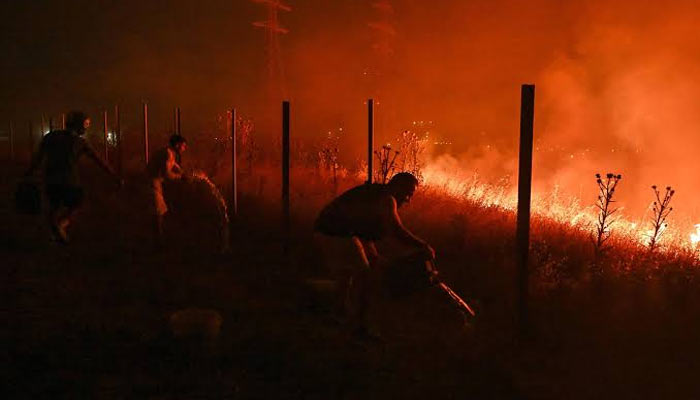
Wildfires continued to sweep across southern Europe on Sunday, with Portugal battling one of its largest blazes of the season and Greece grappling with toxic smoke from a fire that engulfed a recycling plant near Thessaloniki.
Firefighters remained on high alert as extreme heat, dry weather and gusty winds hampered containment efforts across the region.
Portugal’s Largest Blaze Draws International Support
In central Portugal, more than 1,200 firefighters, assisted by nearly 400 vehicles and 15 aircraft, continued efforts to contain a wildfire in the Vouzela area that has been burning since Thursday.
The European Union’s Copernicus satellite mapping service estimated that the fire has already scorched around 12,000 hectares, prompting Portugal to seek assistance through the EU Civil Protection Mechanism.
Spain deployed 120 firefighters and 45 vehicles to support operations on the ground, while Spain and Italy also sent firefighting aircraft to help tackle the rapidly spreading blaze.
Greece Warns Residents Over Toxic Smoke
In Greece, authorities issued public health warnings after a wildfire tore through a recycling facility near the northern city of Thessaloniki, sending thick smoke across surrounding neighbourhoods. Residents in affected areas were advised to remain indoors, keep windows and doors shut, and avoid unnecessary outdoor activity as emergency teams worked to contain the fire.
The blaze erupted on Saturday evening near Oraiokastro and spread quickly in strong winds, forcing evacuation alerts in three nearby suburbs and at a care facility housing 157 people with special needs. Around 160 firefighters battled the flames overnight before aerial firefighting operations resumed at daybreak.
Police arrested a 76-year-old man suspected of accidentally starting the fire after his vehicle allegedly ignited roadside vegetation. He is expected to appear before prosecutors.
The latest incident comes just days after another wildfire in Greece killed a 12-year-old boy and his father.
Longer, More Intense Fire Seasons
Greek officials estimate that nearly 85 per cent of wildfires are caused by human activity, including carelessly discarded cigarettes, agricultural machinery and outdoor cooking. As Mediterranean countries continue to face hotter summers and prolonged dry spells, authorities say climate change is making wildfire seasons longer, more frequent and more destructive.
To strengthen preparedness, Greece is expanding its wildfire surveillance network by integrating four newly launched low-Earth orbit satellites, a move aimed at improving early detection and speeding up emergency response.
Comments are closed.