

Ceuta Explained: Why Spain’s Tiny African Enclave Has Become Europe’s Migration Flashpoint
A massive migrant influx into Spain’s North African enclave of Ceuta has pushed the tiny territory into the global spotlight once again, exposing the complex mix of geography, politics and migration that has long defined the city.
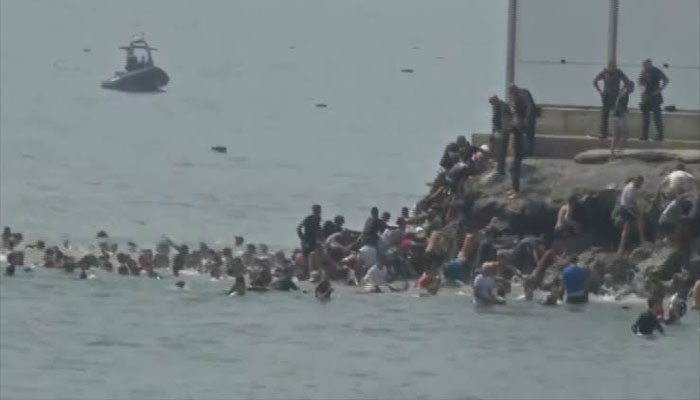
The latest crisis has claimed at least 57 lives, with thousands of migrants attempting to enter Ceuta from neighbouring Morocco in one of the largest border crossings witnessed in recent years. Spanish authorities say the sudden surge overwhelmed local infrastructure and prompted an emergency response.
Spanish Prime Minister Pedro Sánchez described the influx as “a violation of Spain’s territorial integrity” and accused human trafficking networks of encouraging the mass movement after a recent court ruling altered how migrants intercepted near Ceuta and Melilla could be handled.
Authorities have since established temporary reception centres to process arrivals while stepping up efforts to identify and deport those without legal grounds to remain in Spain.
What Is Ceuta?
Ceuta is an autonomous Spanish city located on the northern coast of Africa. Although geographically separated from mainland Spain by the Strait of Gibraltar, it is sovereign Spanish territory and forms part of the European Union.
Together with Melilla, Ceuta represents the EU’s only land border with Africa, making it one of Europe’s most strategically important external frontiers.
The city covers just around 19 square kilometres and has a population of approximately 85,000. Its residents include Christians, Muslims, Hindus and Jews, reflecting centuries of cultural exchange between Europe and North Africa.
Why Does Morocco Claim Ceuta?
Spain has controlled Ceuta for centuries, but Morocco has consistently maintained that both Ceuta and Melilla should be returned to Moroccan sovereignty.
Madrid, however, considers the enclaves an integral part of Spain, rejecting any suggestion of negotiations over their status. While the dispute has remained largely diplomatic, it has periodically strained relations between the two countries.
Why Is Ceuta a Migration Hotspot?
Ceuta’s unique location makes it one of the shortest land routes into the European Union from Africa.
The territory is separated from Morocco by a heavily fortified border featuring high security fences, surveillance systems and regular patrols. Even so, migrants continue to attempt crossings by scaling the fences, swimming around coastal barriers or entering during periods of reduced border enforcement.
For many migrants fleeing conflict, poverty or instability, reaching Ceuta means setting foot on European Union territory and the possibility of applying for asylum or seeking legal protection.
Migration and Political Pressure
Migration has repeatedly become a diplomatic flashpoint between Spain and Morocco.
In 2021, thousands of migrants entered Ceuta after Morocco relaxed border controls during a political dispute with Madrid, demonstrating how migration can become intertwined with broader bilateral tensions.
The latest surge has once again highlighted the strategic importance of cooperation between the two countries on border management, security and migration.
A Gateway Between Two Continents
Ceuta occupies a unique place in history and geography. Perched on the African coast at the entrance to the Strait of Gibraltar, it has served for centuries as a military outpost, trading hub and gateway between Europe and Africa.
Today, that same strategic location places the city at the centre of one of Europe’s most pressing challenges. Every major migration surge in Ceuta not only tests Spain’s border management but also reignites wider debates within the European Union over asylum policy, border security and burden-sharing.
For that reason, Ceuta remains far more than a small Spanish enclave—it has become one of the defining frontlines of Europe’s migration crisis.
Comments are closed.