
13 Years Later, Survivor’s Letter to Tehelka Gains New Significance After Tarun Tejpal Conviction

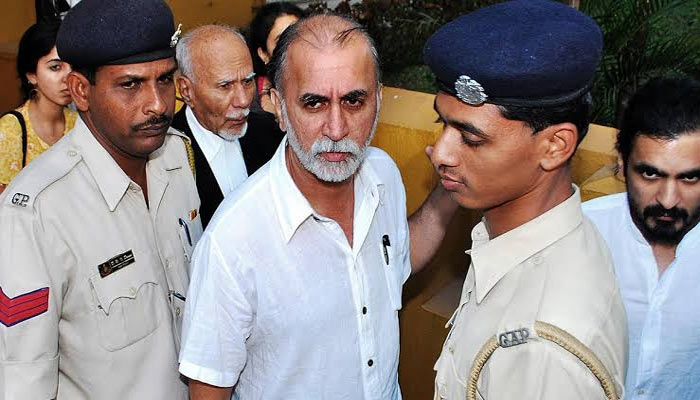
Tarun Tejpal Conviction Revives Survivor’s 2013 Letter Alleging Institutional Failure at Tehelka
The Bombay High Court’s decision to convict former Tehelka editor-in-chief Tarun Tejpal for the 2013 rape of a junior colleague has also brought renewed focus on the survivor’s resignation letter, written more than a decade ago, in which she accused the magazine’s leadership of failing to support her and attempting to dilute the seriousness of her allegations.
On Thursday, the High Court sentenced Tejpal to 10 years’ imprisonment, setting aside a 2021 trial court verdict that had acquitted him. Tejpal has said he will challenge the conviction before the Supreme Court.
High Court Rejects ‘Perfect Victim’ Approach
In its detailed judgment, the Bombay High Court came down heavily on the trial court’s reasoning, observing that it had relied on stereotypes about how a sexual assault survivor is expected to behave.
The court said the lower court had wrongly assessed the complainant’s credibility through the lens of a so-called “perfect victim”, noting that trauma manifests differently in different people and cannot be measured against preconceived notions of ideal behaviour.
The High Court also criticised the manner in which the survivor was questioned during the trial, observing that the defence repeatedly focused on her personal life while the trial court failed to intervene to prevent what it described as harassment and humiliation during cross-examination.
A Letter That Echoes 13 Years Later
The judgment has once again drawn attention to the survivor’s resignation letter addressed to then Managing Editor Shoma Chaudhury, in which she alleged that the organisation had responded to her complaint in a manner that undermined her account.
In the letter, the survivor expressed anguish over what she described as efforts to portray the alleged assault as an “untoward incident” rather than acknowledging the gravity of her allegations. She also questioned attempts to suggest that there were competing versions of events, saying such arguments sought to cast doubt on her complaint.
The letter further alleged that the response from the publication’s leadership contradicted Tehelka’s long-standing public stance on women’s rights, workplace safety and opposition to victim-blaming.
Calling the experience deeply disappointing, she wrote that the publication had failed not only her as an employee but also the values it claimed to uphold. She subsequently resigned from the organisation.
Power Dynamics Highlighted
The High Court observed that Tejpal was in a position of authority over the complainant, noting that the unequal power relationship between a senior editor and a junior employee was a significant aspect of the case.
The Case
The allegations stem from an incident during a Tehelka event in Goa in November 2013, where the complainant accused Tejpal of sexually assaulting her inside a hotel elevator.
The trial court acquitted Tejpal in 2021, citing insufficient evidence. However, the Bombay High Court overturned that verdict, holding that the acquittal was legally unsustainable and based on an erroneous appreciation of evidence.
The ruling marks a major turning point in one of India’s most high-profile workplace sexual assault cases, while also bringing renewed attention to the survivor’s long-standing allegations of institutional failure in the aftermath of the incident.
Comments are closed.