

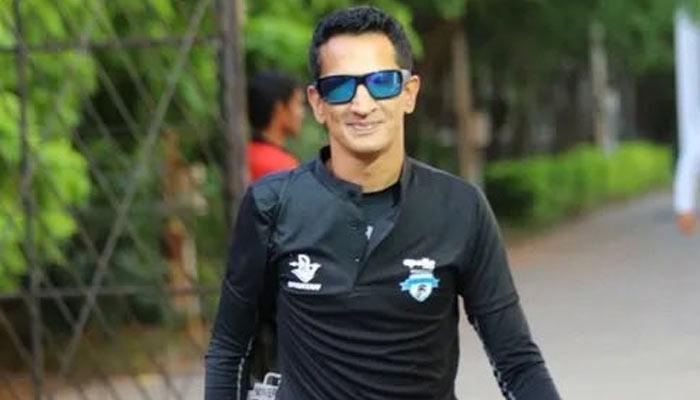
The All India Football Federation’s ambitious plan for India’s FIFA U-15 World Cup campaign has been thrown into uncertainty almost as soon as it was unveiled.
Just hours after the AIFF announced Ranjit Bajaj as manager of the India U-15 team for the tournament in Azerbaijan, the Minerva Academy owner made it clear that he is unlikely to accept the role. His objections are not aimed at the appointment itself, but at the manner in which it was made, the structure of the proposed setup, and what he believes is yet another example of poor planning within Indian football.
Speaking exclusively to India Today, Bajaj revealed that he had no prior knowledge of the appointment and first learned about it through phone calls from well-wishers and journalists.
“I had absolutely no idea. I found out only after I started getting calls asking me whether I had been appointed. That’s how I got to know. Nobody from the AIFF had spoken to me before the announcement.”
As congratulatory messages poured in, Bajaj said he was left trying to understand what had happened because the federation had not contacted him.
“People started congratulating me. Reporters were calling me for quotes and reactions, and I was sitting there wondering what exactly had happened because nobody from the AIFF had even informed me.”
Only after reaching out to AIFF officials himself did he receive confirmation that the appointment was genuine.
“I had to call the officials myself to ask whether it was true. Only then they told me, ‘Yes, this is going to happen. We’ll send you the letter in a while.'”
For Bajaj, the episode highlighted a larger issue.
“This is not how a professional federation works. Unfortunately, this has become a repeated pattern. These are the things that are hurting Indian football.”
Soon after, he released a video on social media indicating that he was unlikely to take charge of the team.
A Partnership That Raised Questions
The AIFF’s announcement had initially been viewed as an attempt to bring together two of the most influential figures in Indian youth football.
Bibiano Fernandes, who has guided India to multiple SAFF youth titles and AFC youth tournament qualifications, was retained as head coach. Bajaj, meanwhile, has built Minerva Academy into one of India’s most successful football academies, winning several AIFF Youth League titles and international youth tournaments while producing numerous national-team players.
On paper, the combination appeared to blend continuity within the national setup with one of the country’s strongest grassroots development programmes.
Bajaj, however, questioned the logic behind the arrangement.
“I don’t see the logic behind appointing me as manager and Bibiano as coach together.”
Related Posts
He stressed that his reservations were not directed at Bibiano personally, whom he described with respect, but at the lack of clarity over how the partnership would function.
According to Bajaj, he would have been expected to work with an unfamiliar coaching staff rather than the support team with whom he has developed players over many years.
“With absolutely no disrespect to Bibiano or his coaching staff, I don’t know them. If I don’t know the people around me, how am I supposed to work in complete sync with them?”
Drawing a comparison from elite football, he added:
“It’s like appointing Mourinho and Pep together. I’m not comparing our stature, but our styles are different. They have different ideas, different ways of working. It just doesn’t make sense.”
Questions Over Planning
The controversy has also revived scrutiny of the AIFF’s planning ahead of India’s first FIFA U-15 World Cup appearance.
Bajaj believes the federation has acted far too late.
“The tournament is only a couple of months away. What scouting can you do now? What planning can you do now?”
He argued that preparing a youth national team is a long-term process requiring years of scouting, player monitoring and tactical development rather than decisions taken weeks before a major tournament.
“Youth football is about long-term planning. You don’t start building a World Cup team two months before the tournament.”
His criticism also extends to the federation’s decision-making process. Regardless of whether the AIFF intended to combine Bajaj’s grassroots expertise with Bibiano’s experience in the national setup, the execution has drawn attention away from India’s World Cup preparations.
The more immediate question is why one of the federation’s most significant youth football appointments was announced before one of the individuals involved had even been informed officially.
Focus Shifts Away from the World Cup
What was meant to signal a fresh direction for India’s U-15 World Cup campaign has instead become another debate over governance, communication and long-term planning.
Bajaj insists the issue goes beyond his own involvement.
“This isn’t about me. This is about the way Indian football continues to function. If we keep doing things like this, we’ll keep getting the same results.”
With the FIFA U-15 World Cup only weeks away, the AIFF now finds itself facing uncomfortable questions—not only over whether Bajaj will eventually join the project, but also over whether the planning behind one of Indian football’s biggest youth assignments was in place before the announcement was made.
Comments are closed.