
Gopichand the Coach, Not the Father, as Daughter Clinches World Championships Medal

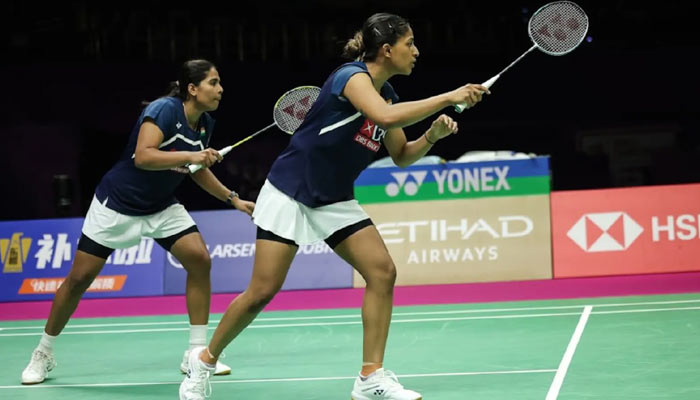
Gopichand Stays Coach First as Daughter Gayatri Wins Historic World Championships Medal
Pullela Gopichand had every reason to celebrate on Saturday at New Delhi’s Indira Gandhi Stadium. His daughter Gayatri Gopichand, alongside Treesa Jolly, had secured India’s first women’s doubles medal at the World Championships in 15 years.
Yet even in a deeply personal moment, Gopichand found it difficult to step away from his role as coach.
Speaking to reporters after the quarter-final victory, he was visibly more relaxed than usual. He smiled, joked and patiently answered questions about the pair’s tactics, their preparation and the road ahead.
The achievement was significant for Indian badminton and deeply meaningful for Gopichand. He has guided World champions and Olympic medallists, but this was the first World Championships medal won by one of his own children.
Still, when asked what it meant to watch Gayatri win, his first instinct was to give the answer of a coach.
He said he had always felt the same emotions whenever his players competed and did not see any reason to make an exception for Gayatri.
But the father eventually came through.
Gopichand said he was “very proud” of Gayatri, pointing out that the family now has two Arjuna Awardees. He also praised her performance, results and conduct throughout the tournament.
The decision to move to doubles
Gayatri’s journey to the podium was not straightforward. She began as a singles player and showed considerable promise as a junior, but injuries repeatedly interrupted her progress.
Eventually, she told her father she wanted to switch to doubles. Gopichand supported the decision, and time has proved it to be a crucial turning point.
Gayatri was paired with Treesa in 2021 after the Covid-19 disruption. The combination made sense from a technical perspective: Treesa was comfortable operating from the backcourt, while Gayatri had the instincts required at the front.
Their partnership needed time to develop. Injuries and inconsistent results slowed their progress, while Gayatri also had the additional pressure of being Gopichand’s daughter.
Treesa had her own challenges, having come through a modest background in Kerala and carrying significant expectations from home.
Slowly, their games evolved. Gayatri became increasingly effective from the backcourt, while Treesa developed into a stronger presence at the net.
Turning around a difficult quarter-final
The pair arrived at the World Championships after a disrupted season. Treesa’s injury had kept them out of action for almost three months and affected their ranking.
They responded with an intense 45-day preparation period under Gopichand and coach B Sumeeth Reddy. Some days involved two or even three training sessions.
Their biggest test came against Jia Yifan and Zhang Shu Xian in the quarter-finals. India’s pair had lost all three previous meetings against the Chinese duo.
The match appeared to be following the same script when Gayatri and Treesa fell 0-6 behind.
Instead, they fought back spectacularly.
After winning the final point, Treesa immediately ran towards Gopichand and hugged him. Gayatri first congratulated the Chinese players before making her way towards her father and Sumeeth.
Gopichand kissed his daughter on the forehead.
For Sumeeth, the moment captured what the previous 45 days had been about.
After the quarter-final, he turned to Gopichand and said, “You’ve done it, Bhaiya.”
The medal eventually remained bronze after Gayatri and Treesa lost their semi-final to top seeds Tan Ning and Liu Sheng Shu.
But the historic milestone had already been achieved.
India had won its first women’s doubles medal at the World Championships since 2011. Gopichand had guided another pair of his wards to a major international podium.
This time, one of them was also his daughter.
And even as a proud father, Gopichand never stopped being the coach.
Comments are closed.