
Utah’s Frozen Underworld: Over A Billion Tons Of Ice Hidden Beneath The Surface

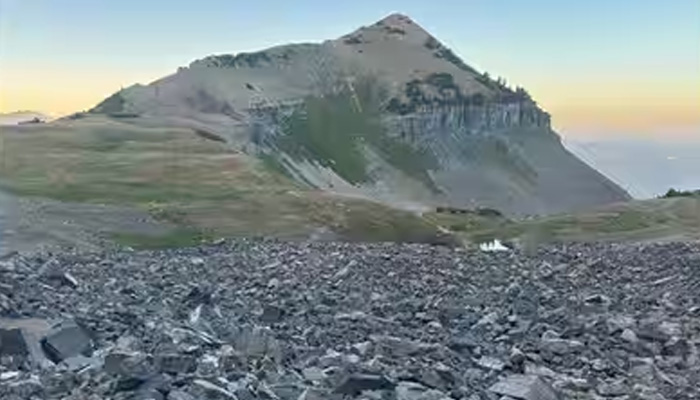
Utah’s mountains may be holding a vast hidden reserve of frozen water, with scientists estimating that rock glaciers across the state contain nearly 1 billion tons of ice.
The ice is locked inside formations known as rock glaciers, which differ from conventional glaciers because their frozen cores are buried beneath thick layers of rocks and boulders. From the surface, they can look more like piles of debris than massive stores of ice.
Researchers at the University of Utah examined the Timpanogos Glacier near Mount Timpanogos to determine how much ice is concealed beneath its rocky covering.
Gravity Measurements Reveal Hidden Ice
Measuring rock glaciers is challenging because the layers of rocks and debris can disrupt techniques such as ground-penetrating radar. Researchers instead turned to a gravimeter, which detects subtle variations in gravity caused by differences in the material underground.
The team collected 232 gravity measurements around the Timpanogos Glacier and used statistical modelling to develop a three-dimensional estimate of its underground structure. Their analysis found that the formation is roughly 83% ice and 17% rock by volume, with the ice averaging about 18.8 metres (62 feet) in thickness.
The Timpanogos rock glacier is estimated to contain around 1.5 million cubic metres of ice, equivalent to roughly 600 Olympic-sized swimming pools.
Utah’s Rock Glaciers Hold A Billion Tons Of Ice
Researchers then used the Timpanogos measurements to estimate the amount of frozen water contained in rock glaciers throughout Utah.
The state has 836 documented rock glaciers, which together are estimated to contain about 1 billion tons of ice.
The hidden reserves extend far beyond Utah. Rock glaciers across the western United States are estimated to hold nearly 12 billion tons of ice, while the worldwide total could be around 48 billion tons.
Why The Hidden Ice Matters
Scientists say understanding these underground ice reserves is becoming increasingly important as climate change alters mountain environments and causes traditional glaciers to retreat. Rock glaciers may represent an overlooked source of stored water, but warming temperatures can also affect their stability. Changes within these frozen formations could potentially create hazards for downstream communities and infrastructure.
The research offers a new way to measure these difficult-to-study formations and could help scientists better assess how much water is locked beneath rocky mountain landscapes.
Comments are closed.