
Nepal Flood Victims Get Critical Care as Express Readers Extend Helping Hand

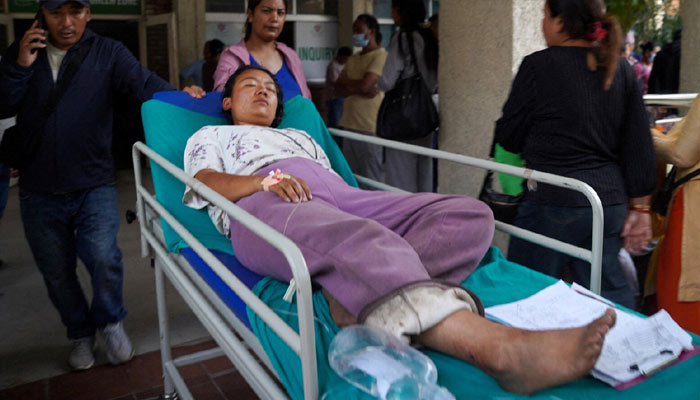
On a hilltop in Nepal’s flood-ravaged Rasuwa district, Jibjibe Rural Hospital has become more than a centre for routine healthcare.
Since the devastating flash floods hit the region late last month, the small facility has emerged as a crucial lifeline for injured survivors and traumatised residents. Inside its light-yellow building, dozens of people now wait in the corridors. Some have come for their monthly vaccinations, others for treatment of injuries, while some seek relief from everyday ailments such as an aching tooth.
Before the disaster, the hospital typically treated between 80 and 100 patients a day. That number has since climbed to 100-130, with a growing share of patients seeking care for flood-related injuries and psychological distress.
“On the day of the floods last month, we received 10 patients who were injured due to the flood,” said Dr Nirajan Bhatta, Medical Superintendent of Jibjibe Rural Hospital. The patients suffered from fractures, head injuries and blood accumulating in the chest cavity.
Five were treated at Jibjibe, while the others were referred to Dhunche, the district headquarters. The most serious cases were subsequently airlifted to Kathmandu.
But the physical injuries are only part of the hospital’s post-flood workload. Doctors are increasingly seeing people struggling with trauma, grief and acute stress after losing family members and homes.
Dr Bhatta recalled the case of a woman who arrived complaining of severe pain and discomfort. Her vital signs were normal, but doctors discovered that her father had died in the floods and that she had barely eaten in the days that followed.
“She was suffering from acute stress,” Bhatta said.
The crisis has brought back memories of the role the hospital played after Nepal’s devastating 2015 earthquake. At the time, readers of The Indian Express responded to an appeal for assistance, with contributions coming from schoolchildren, companies and retired Army personnel.
Through The Indian Express Citizens’ Relief Fund, donations helped purchase critical medical equipment worth Nepal Rs 1.2 crore for hospitals in Sindhupalchok, Rasuwa and Nuwakot. The equipment included X-ray machines, infant radiant warmers, operation theatre tables and surgical instruments.
At Jibjibe, that equipment has proved particularly valuable. The hospital now has a minor operation theatre, an X-ray machine, emergency and observation beds, an outpatient department, a dental unit, a delivery room and a laboratory.
The facility is also undergoing an expansion and is set to become a 15-bed hospital. The new building is nearly complete and is expected to be handed over by the contractor within a week, according to Harikrishan Debkota, chairman of the hospital’s management committee.
Debkota said the equipment provided through the Express-led relief effort had significantly reduced the need for residents to travel long distances for basic procedures. “With surgery equipment and OT tables here in Jibjibe, people did not have to go to Dhunche or Kathmandu, over 90 km away, for every minor procedure,” he said.
For a community still recovering from one of its worst disasters, the hospital has become a vital first line of care — treating physical injuries while helping residents cope with the invisible wounds left by the floods.
Comments are closed.