
‘Cyclone Arnab’ Goes Viral on Social Media, But It Isn’t Real: What the Trend Actually Means

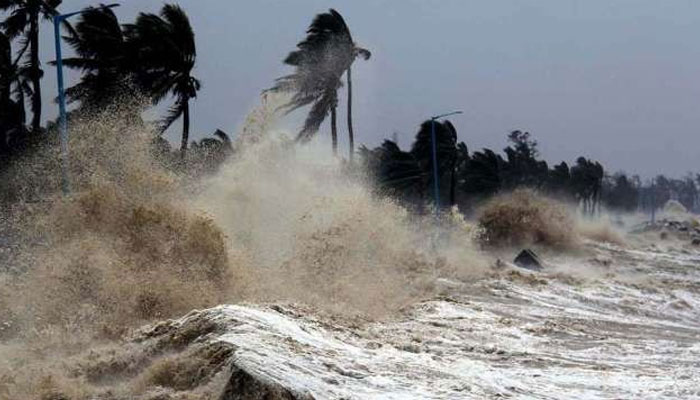
‘Cyclone Arnab’ Is Trending Online, But There Is No Such Cyclone: Here’s Why
“Cyclone Arnab” has suddenly become a talking point across social media, with posts claiming that the storm is moving towards India’s eastern coast. But there is an important catch: the India Meteorological Department (IMD) has not named the current weather system Cyclone Arnab.
The system over the Bay of Bengal is currently classified as a Deep Depression. It is capable of bringing heavy rain and strong winds to parts of Odisha, Andhra Pradesh and West Bengal, but it has not intensified enough to receive an official cyclone name.
Why Hasn’t the System Been Named a Cyclone?
The IMD uses specific wind-speed and pressure criteria to classify weather systems over the North Indian Ocean.
The classifications are broadly divided as follows:
- Depression: Maximum sustained winds of 31-50 km/h.
- Deep Depression: Maximum sustained winds of 52-61 km/h.
- Cyclonic Storm: Maximum sustained winds of 63 km/h or more.
A cyclonic storm also needs to meet the required pressure-structure criteria, including four or more closed isobars.
Since the current system remains within the Deep Depression category and its sustained winds have not reached the 63 km/h threshold, it has not entered the stage at which an official cyclone name is assigned.
Then What Is ‘Arnab’?
The confusion appears to stem from the fact that Arnab is indeed an official cyclone name—but it belongs to the regional list of names for future storms.
“Arnab”, meaning “ocean” in Bengali, was contributed by Bangladesh to the list maintained under the World Meteorological Organization (WMO) and the UN Economic and Social Commission for Asia and the Pacific (ESCAP).
The regional naming system includes contributions from countries such as India, Bangladesh, Pakistan, the Maldives and Oman. Names are assigned in a predetermined sequence when weather systems develop into cyclonic storms.
In other words, Arnab is a name waiting in the queue, not the name of the current deep depression.
- Why the Current System Is Still a Weather Threat
- Not being classified as a cyclone does not make the system harmless.
A deep depression can produce intense rainfall, strong winds, flooding and landslides, particularly when it carries large amounts of moisture towards land.
The weather system near the north Andhra Pradesh and south Odisha coast, around Kalingapatnam, has already triggered heavy rainfall and gusty winds in affected areas. Rising water levels, fallen trees and localised flooding can create significant disruption even without cyclone-level winds.
Authorities in vulnerable areas have taken precautionary measures, including closing schools, evacuating residents from risk-prone locations and deploying emergency response teams.
Don’t Let the Name Distract From the Warning
The viral “Cyclone Arnab” label can create confusion about the actual weather threat. The more important information is the official IMD forecast and warnings for rainfall, wind, flooding and landslides.
A weather system does not need to become a named cyclone to cause severe damage. For people in affected regions, following official alerts is far more important than whether the system has a cyclone name circulating on social media.
Comments are closed.