
India-China Equation Takes Centre Stage as Nepal PM Shah Makes UN Climate Pitch

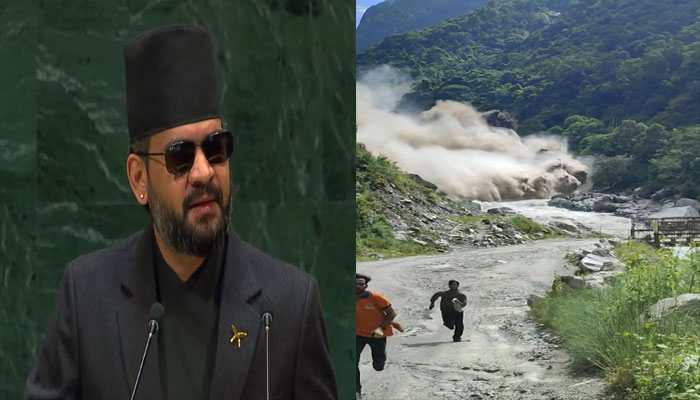
Nepal PM Balendra Shah Pushes India-China Cooperation on Himalayan Climate Risks
Nepal Prime Minister Balendra (Balen) Shah has called for closer cooperation between Nepal, India and China to tackle the growing climate and disaster risks facing the Himalayan region. Addressing the 81st session of the United Nations General Assembly in his first speech at the UNGA, Shah proposed creating a Himalayan Climate Resilience Mechanism led by the three Himalayan neighbours.
The proposal comes weeks after devastating flash floods hit Nepal, causing widespread destruction and leaving thousands dead or missing.
Shah said the proposed mechanism should facilitate the exchange of satellite data, scientific expertise and information on vulnerable glacial lakes. It should also help the three countries develop joint early-warning systems and coordinate relief efforts when disasters strike.
“The Hindu Kush Himalaya is home to nearly two billion people,” Shah told world leaders. “These mountains provide water, ecosystems, agriculture, and livelihoods to populations far beyond Nepal.”
“The Himalayas are not peripheral to the planet. They are part of the planet’s life-support system,” he added.
A Delicate India-China Balance
The proposal also comes against the backdrop of Nepal’s efforts to maintain balanced relations with India and China. Sandwiched between the two Asian powers, Nepal has traditionally sought to preserve its strategic autonomy while maintaining economic and diplomatic ties with both neighbours.
Shah’s proposed climate mechanism places India and China together in a common framework focused on a shared environmental challenge. He said climate-related disasters cannot be confined by political boundaries, pointing to the chain of events following the recent floods.
“Melting permafrost is fracturing mountain slopes beneath the glaciers and accelerating the risks of ice-rock avalanches, floods, landslides, and other cascading hazards,” Shah said. He added that the recent devastation affected areas on both sides of the Nepal-China border before floodwaters moved downstream towards India.
“Climate change does not recognise borders. Glaciers and floods do not travel with a visa stamped on passports,” Shah said.
Thanks to India and China
Shah also acknowledged the assistance provided by Nepal’s two neighbours following the disaster. “Our immediate neighbours, India and China, offered prompt and generous assistance,” he said, while also thanking other countries, UN agencies, humanitarian organisations and philanthropies for their support.
The prime minister said Nepal now faces a major reconstruction challenge, with the floods damaging roads, bridges, schools, homes, agricultural land, livelihoods and clean-energy infrastructure. He also highlighted the financial burden on Nepal, saying a country with limited resources is being forced to borrow to rebuild infrastructure damaged by a disaster it did not cause.
Floods Leave Massive Damage
The disaster was triggered by an ice-rock avalanche near the Nepal-Tibet border on August 26, unleashing flash floods that affected towns and villages across northern and central Nepal. The reported death toll has reached 1,452, while between 4,700 and 6,000 people remain missing, according to the figures cited in the assessment.
A Rapid Disaster Needs Assessment prepared by Nepal’s National Planning Commission and the National Disaster Risk Reduction and Management Authority estimated the damage and losses from the floods at around $2.69 billion.
The report estimates that Nepal will need approximately $4.77 billion for reconstruction and recovery — nearly 10% of the country’s GDP.
For Shah, the scale of the disaster has reinforced the case for greater coordination among the countries sharing the Himalayan ecosystem. His proposed mechanism would focus on sharing information, strengthening early-warning systems and improving cross-border disaster response.
Comments are closed.