
Lovlina’s Next Fight Is for Asian Games Gold, But Her Journey Tells the Bigger Story

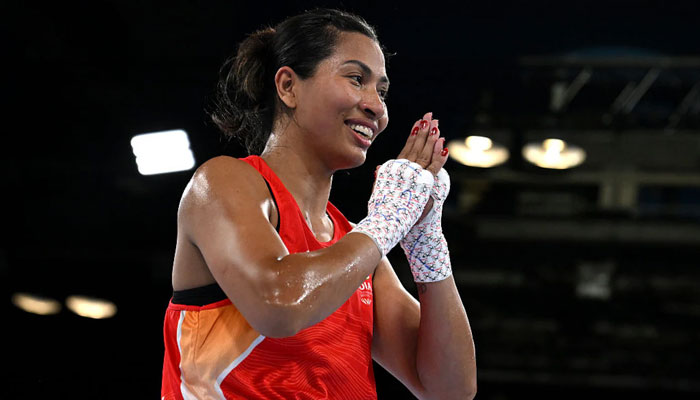
For Lovlina Borgohain, the silver medal in Glasgow was not simply a result. It was a reminder of how much can turn on a few moments inside a boxing ring.
After losing the Commonwealth Games final to Australia’s Emma-Sue Greentree, Borgohain went back to the fight—not to dwell on the defeat, but to understand it. Where could she have attacked earlier? Which openings did she fail to use? When did her rhythm disappear?
At 28, those questions have become part of the boxer she has evolved into.
Tokyo brought her an Olympic breakthrough. Paris brought disappointment. Glasgow gave her a first Commonwealth Games medal, but the silver left her with unfinished business.
Now, as she prepares to compete in the 75kg category at the Asian Games, Borgohain is carrying both the medals and the lessons of a career that has already taken her to podiums at the Olympics, World Championships, Asian Games and Commonwealth Games.
The hunger, she makes clear, has not gone away.
Turning defeat into preparation
Borgohain says the biggest lesson from Glasgow was the importance of small moments.
“At this level, small things can make a difference. I felt I had prepared well, but there are always areas where you can improve after a fight,” she said.
The defeat against Greentree has since become part of her preparation for the next challenge.
“I think I could have been more proactive in certain phases of the fight and made better use of my opportunities,” she said.
“Against a strong opponent, you cannot afford to let too many moments pass without making them count.”
For Borgohain, analysing the loss was more important than carrying it.
“I have watched the fight with my team and understood where I can improve, particularly in terms of creating opportunities and maintaining my rhythm. Losing a final is disappointing, but it also gives you a very clear idea of what you need to work on.”
That approach has helped shape the boxer she is today: one who sees setbacks as information rather than conclusions.
The road back after Paris
The period following the Paris Olympics was another test.
Borgohain had to negotiate difficult phases before finding her rhythm again. Her response was to return to the basics—training, listening to her coaches and refusing to lose belief in herself.
“I think the most important thing was not losing belief in myself. Sport is never a straight line. There are good phases and difficult phases, but you have to continue working even when the results are not immediately coming your way,” she said.
Her experience at two Olympics has also changed how she deals with the pressure surrounding major competitions.
“Before Tokyo, everything was new and there was a lot that I was experiencing for the first time. Now I understand much better what comes with competing at a major event, the attention, the expectations, the environment and the pressure,” she said.
“I have learned to focus more on the fight itself rather than everything happening around it.”
That distinction matters for an athlete representing India on the biggest stages.
“The expectations are part of representing India, and I see them as something positive. Of course, there is pressure, but I try not to carry all of it into the ring,” Borgohain said.
“Once the fight starts, it is just me, my opponent and the plan we have worked on.”
The challenge of 75kg
Borgohain’s move from 69kg to 75kg has brought another layer of adaptation.
“At 69kg, there were certain advantages in terms of my physical attributes, but at 75kg I have faced opponents who can match me more closely in terms of size, strength and reach,” she said.
That has forced her to change not only physically but tactically.
“My strength and endurance have had to improve, and tactically I have had to become more patient and smarter about how I use my movement, reach and combinations.”
The adjustment has, in her view, made her a more rounded fighter.
“The move has made me a more complete boxer.”
That evolution is important because Borgohain is not approaching the Asian Games simply as a decorated veteran.
Despite medals across the Olympics, World Championships, Asian Games and Commonwealth Games, she believes there is still plenty left to achieve.
“There are still big goals left. I am proud of everything I have achieved, but I don’t think an athlete should ever feel that the journey is complete,” she said.
“Every medal has taught me something and also made me hungrier to achieve the next one.”
Experience meets ambition
Borgohain already knows what it feels like to reach an Asian Games final. Her experience from Hangzhou gives her a clearer understanding of the environment, but she does not expect the next campaign to be any easier.
“Having already competed at the Asian Games and reached the final gives me valuable experience. I know what the environment is like and what it takes to compete there,” she said.
“At the same time, every edition is different and every opponent brings a different challenge.”
The Indian women’s boxing team also heads into the competition with confidence following its performances at the Commonwealth Games.
“There is a very positive atmosphere in the women’s boxing team. When one boxer performs well, it gives confidence to everyone because we all train together and understand the work that goes into these performances,” she said.
But Borgohain knows confidence alone cannot win a fight. At this level, the difference can come down to a handful of exchanges—and the ability to make them count.
More than the medals
For Borgohain, her association with adidas has also been about recognising the work that exists behind the results.
“Sport is about the work that happens every day, the training, discipline, recovery and the mindset required to keep improving,” she said.
She also hopes her story can reach people beyond boxing.
“Being associated with adidas has also given me the confidence that my journey and my story can inspire people beyond the boxing ring. That is something I value a lot.”
And that may be the most revealing part of Borgohain’s journey at this stage of her career.
She has already collected major medals. She has also experienced defeat, disappointment, reinvention and the challenge of moving up a weight category.
What remains is the pursuit of the next goal—and the legacy she eventually leaves behind.
“I would like people to remember the journey more than just the medals. Medals are important, but they are only one part of an athlete’s story,” she said.
“I would want people to remember that I kept fighting, kept working and did not give up when things became difficult.”
For Borgohain, that is ultimately what the journey is about.
“If my journey can inspire even one young person to believe in themselves and continue pursuing their dream, that would mean a lot to me.”
Comments are closed.