

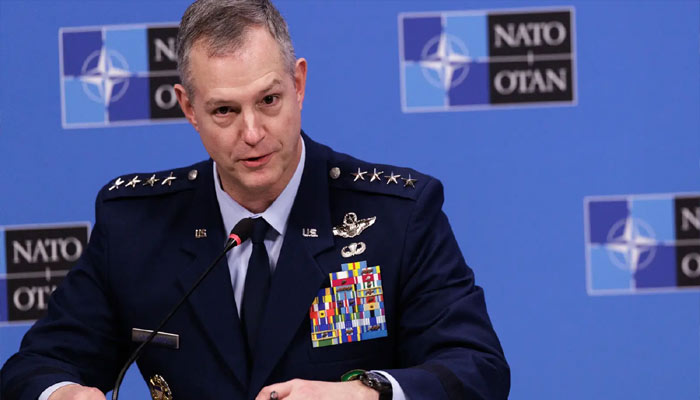
NATO’s Top General to Send Warning to Russia, Vows Readiness Against Any Attack
NATO’s senior military commander is set to deliver a warning to Russia on Monday, emphasising the alliance’s preparedness to counter any potential aggression as concerns grow over Moscow’s activities across Europe.
US General Alexus Grynkewich, NATO’s Supreme Allied Commander Europe, is expected to outline his “theory of victory” during a security conference in Warsaw. The address will focus on maintaining NATO’s military superiority, strengthening deterrence and ensuring the alliance can respond effectively if attacked.
The planned statement comes amid mounting concerns among Western governments over what they describe as Russia’s expanding campaign of hybrid operations, including alleged sabotage and interference targeting countries that support Ukraine.
Security concerns have intensified following a series of incidents across Europe, including the discovery of a drone carrying explosives at a German airport. Western officials have warned that such activities could threaten public safety and increase the risk of a wider confrontation.
Col. Martin O’Donnell, a spokesperson for Grynkewich, said the commander’s strategy is based on preserving NATO’s existing advantages and following the alliance’s established deterrence and defence plans. He added that the current international security environment requires members to prepare in advance to deter aggression and secure victory if a conflict occurs.
Established in 1949, NATO was formed to provide collective defence against the Soviet Union. Today, the alliance continues to maintain military plans aimed at protecting its members against potential threats, including a possible Russian attack.
Grynkewich’s remarks are not expected to disclose sensitive operational details or major changes to NATO’s defence strategy. Instead, the speech is intended to reinforce the alliance’s resolve and reassure member states along its eastern border that NATO remains prepared to defend them.
The alliance has consistently described itself as defensive and has denied any intention of attacking Russia. However, Western officials argue that Moscow’s alleged hybrid activities have become increasingly concerning as the war in Ukraine continues.
NATO faces a difficult challenge in responding to incidents that fall below the threshold of conventional warfare. Such operations can include sabotage and other forms of interference, making it difficult to determine an appropriate response without escalating tensions into direct conflict.
NATO Secretary-General Mark Rutte has called on member states to remain calm while continuing their support for Ukraine. He has also stressed that the alliance should not underestimate Russia, while maintaining confidence in NATO’s collective strength.
The security warning comes at a sensitive time for Europe, with uncertainty surrounding the future of US military deployments across the continent. The Pentagon is reviewing its force posture in Europe, prompting concerns among NATO members that Washington could reduce its military presence.
The findings of the review are expected to be announced towards the end of the year.
In response to growing uncertainty over American security commitments under President Donald Trump, European nations are stepping up efforts to expand military spending, modernise their armed forces and strengthen regional defence capabilities.
Grynkewich’s forthcoming address is expected to reinforce NATO’s message that the alliance is preparing for a changing security environment and remains committed to deterring aggression against its members.
Comments are closed.