
Who Will Hold the Power in Ladakh? Centre, Local Leaders Fail to Reach Consensus

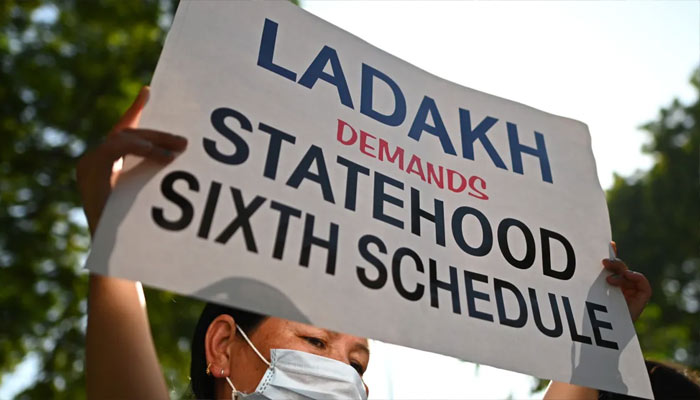
Ladakh Deadlock Continues as Centre’s Proposal Fails to Resolve Power-Sharing Dispute
Negotiations between the Union Home Ministry and representatives of Ladakh ended without an agreement on Thursday, as differences over the authority of a proposed elected legislature continued to obstruct efforts to reach a political settlement. Both sides have agreed to hold another meeting in New Delhi on October 22.
The discussions followed the Centre’s proposal to introduce a special constitutional provision, referred to as Article 371(K), to provide additional safeguards for Ladakh. However, regional leaders said the draft presented by the Ministry of Home Affairs (MHA) fell short of their expectations and left several important questions unanswered.
Representatives of the Apex Body Leh (ABL) and the Kargil Democratic Alliance (KDA), which are jointly campaigning for statehood and Sixth Schedule status, maintained that their core demands must be addressed before any agreement can be finalised.
“We have not reached any conclusion,” said Chering Dorjay Lakrook, chairman of the ABL. He reiterated that the demand for an elected legislature and constitutional protection under Article 371(K) remained central to the negotiations.
“We stand by our main demands of the legislature and Article 371(K). We don’t allow any dilution in that. We hope that the promises made by the Centre in previous meetings will be fulfilled,” Lakrook said.
Draft Proposal Leaves Major Questions Unresolved
During Thursday’s meeting in Leh, Home Ministry officials presented a draft proposal comprising approximately 15 to 20 pages and explained its contents through a PowerPoint presentation. Representatives of the two regional bodies also submitted their own proposal.
According to Lakrook, the documents revealed substantial differences in the positions of the Centre and Ladakh’s leadership, preventing the discussions from reaching a consensus.
Despite the impasse, both sides agreed to continue negotiations, with the next meeting scheduled for October 22 in New Delhi.
Sajad Hussain Kargili, co-chairman of the KDA, expressed dissatisfaction with the ministry’s draft, describing it as “unsatisfactory and unacceptable”.
He said the alliance expected to receive a digital copy of the document before examining its provisions and submitting a response by October 18.
Powers of Elected Body at the Heart of Disagreement
The most contentious issue is the extent of legislative and administrative authority that would be granted to the proposed elected body.
A senior Ladakh leader who participated in the meeting said the draft lacked clarity on several key aspects, including the institution’s name, the powers of its ministers, its constitutional standing and the subjects that would fall under its jurisdiction.
These provisions would determine how effectively elected representatives could make decisions on matters affecting the region.
Although the Centre and Ladakh’s representatives have agreed to consider an elected legislature, differences over its actual powers have prevented progress. Regional leaders are seeking a framework that provides meaningful authority rather than a body with limited responsibilities.
Statehood and Sixth Schedule Demands Remain Unresolved
The ABL represents Leh, while the KDA represents Kargil. Together, the organisations have been pressing for statehood and inclusion of Ladakh under the Sixth Schedule of the Constitution.
Their demands have gained momentum since Ladakh became a separate Union Territory without a legislature following the 2019 reorganisation of the former state of Jammu and Kashmir.
The Centre has not accepted either demand so far. Instead, it has proposed a separate constitutional safeguard under Article 371(K), along with a Union Territory-level elected body, as an alternative governance arrangement.
The proposed framework is intended to address concerns about protecting local interests and establishing an appropriate administrative structure. However, the lack of agreement over the proposed legislature’s authority remains a major hurdle.
For Ladakh’s representatives, the issue goes beyond the creation of an elected institution. They want clarity on whether it would possess sufficient powers to influence governance and safeguard the region’s interests.
Fresh Talks Scheduled for October 22
The next round of negotiations is expected to take place after Ladakh’s representatives examine the Centre’s draft and communicate their objections.
The outcome will depend on whether both sides can agree on the legislature’s constitutional status, administrative responsibilities and decision-making powers.
For now, the latest meeting has failed to bridge the divide between the Centre’s proposed arrangement and the demands of Ladakh’s leadership. The October 22 discussions will provide another opportunity to determine whether a mutually acceptable framework can be reached.
Comments are closed.