
Rebeca Grynspan Emerges as Key Contender for Next UN Chief as Race Intensifies

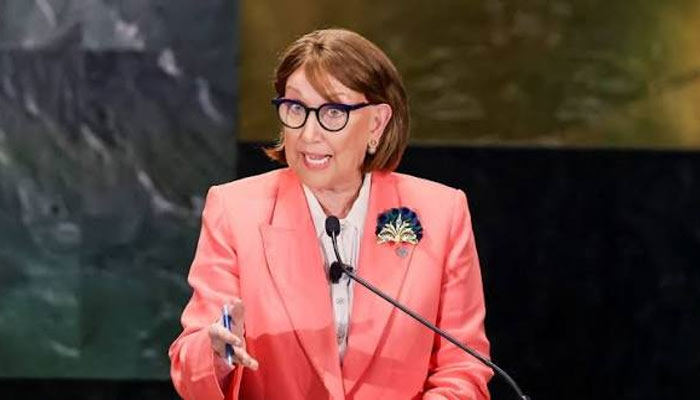
Grynspan Tops UN Chief Race, but Security Council Divisions Leave Outcome Uncertain
Former Costa Rican Vice President Rebeca Grynspan has maintained her lead in the contest to become the next United Nations secretary-general, but a fresh informal poll by the UN Security Council has failed to identify a candidate with sufficient backing from the council’s most influential members.
Grynspan emerged ahead in Friday’s sixth secret ballot, receiving nine votes in support, five against and one expressing no opinion. However, two of the five opposing votes came from permanent members of the Security Council, whose objections can block a candidate’s appointment.
The results underline the challenges facing the selection process as the 15-member council seeks a successor to Antonio Guterres, whose term expires on December 31.
No Candidate Has Secured Decisive Support
The latest ballot showed that opposition from permanent members remains a major hurdle for all contenders. Russia, China, the United States, France and the United Kingdom each hold veto power over the Security Council’s recommendation for the next secretary-general.
Guyana’s UN ambassador Carolyn Rodrigues-Birkett received eight votes in favour, six against and one expressing no opinion. International Atomic Energy Agency chief Rafael Grossi recorded a broadly similar result, although his bid received support from one fewer permanent member.
Four additional former UN officials and senior diplomats are also competing for the position, but their latest results showed greater opposition than support.
The selection process requires at least nine affirmative votes from the 15 council members and no opposing vote from any of the five permanent members. Friday’s ballot used colour-coded papers for the first time, making it easier to identify opposition from countries with veto powers.
New Candidates Could Enter the Contest
Although Grynspan has led four of the five informal polls conducted in recent months, her position remains uncertain because she has yet to secure the backing needed to overcome the permanent members’ objections.
Several senior figures, including serving and former foreign ministers and national leaders, are reportedly considering entering the race. Their participation could alter the contest, although new candidates would have limited time to build support among council members.
US Ambassador to the UN Mike Waltz said countries were free to nominate additional contenders after Friday’s vote.
“Countries, if they want to put more candidates in, that’s certainly within their sovereign rights,” he said.
The process has previously required multiple rounds of negotiations. In 2016, the Security Council conducted six informal polls before selecting Guterres, illustrating the difficulty of reaching agreement among its members.
Grynspan Prepared for Possible Opposition
Speaking to Reuters on Thursday, Grynspan said she would not be surprised if a permanent member opposed her candidacy. She added that an opposing vote would not necessarily bring her campaign to an end, noting that negotiations could continue.
“The game is not over — we will have to continue working,” she said.
The Costa Rican economist has also called for substantial reforms within the United Nations. She argues that the organisation has become too cautious and that its next leader must be prepared to take diplomatic risks, learn from setbacks and continue pursuing solutions.
Her proposals include reducing senior-level positions, cutting bureaucratic procedures and improving coordination among UN agencies to eliminate duplication.
Grynspan has cautioned that financial reductions alone will not address the institution’s deeper problems, particularly its declining political influence and shrinking resources.
Next UN Chief Faces Multiple Global Challenges
The incoming secretary-general will inherit an organisation grappling with several wars, financial pressures and strained relations among major powers. Reduced US contributions and Washington’s withdrawal from dozens of UN agencies have added to concerns about the organisation’s ability to fulfil its mandate.
The selection also carries historic significance: no woman has ever served as UN secretary-general since the organisation was founded more than 80 years ago.
With Guterres set to leave office on December 31, the Security Council must work towards a recommendation that can command sufficient support. Grynspan currently leads the informal vote count, but opposition from permanent members leaves the outcome unresolved.
The coming weeks will determine whether she can overcome those objections or whether the council will turn to another candidate capable of securing broader agreement.
Comments are closed.