
Surjit Bhalla Flags 70 Lakh Unexplained Names in Analysis of 13 Crore Voter Deletions

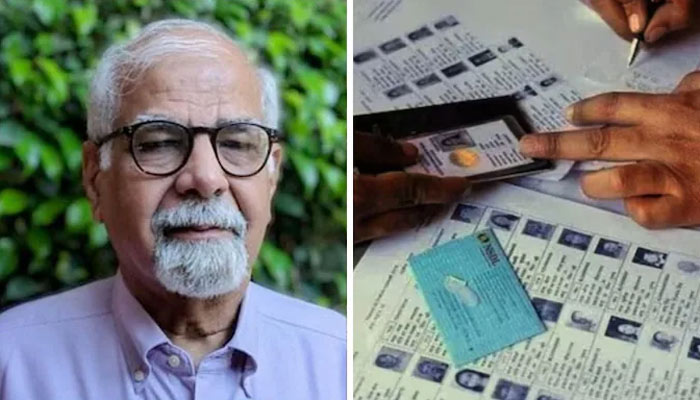
Surjit Bhalla Estimates 70 Lakh Unexplained Voter Deletions Amid 13 Crore Names Removed Under SIR
The Election Commission’s Special Intensive Revision (SIR) of electoral rolls has sparked a nationwide debate, with approximately 13 crore names removed during the draft-stage revisions across three phases. However, economist Surjit Bhalla has argued that the headline figure does not necessarily represent the number of eligible voters wrongly excluded from the electoral rolls.
In a blog published on Saturday, Bhalla estimated that around 70 lakh eligible voters may have been removed without a clear explanation in states where the revision process has been completed. His assessment draws on population projections, official birth and death statistics, and the Election Commission’s voter registration data from before the SIR exercise.
Bhalla stressed that the 13 crore figure includes deletions for legitimate reasons, such as deaths, migration and duplicate registrations. It also covers states where the final electoral rolls have not yet been published.
His analysis suggests that the number of potentially unexplained deletions is substantially lower than the overall figure cited in the political debate. However, he cautioned that an unexplained deletion does not automatically establish that a voter was wrongly removed.
“Unexplained” does not prove that every one of the seven million voters was removed incorrectly, Bhalla noted, while emphasising that even a comparatively small number of exclusions can have serious consequences for those affected.
How Bhalla Calculated the Number of Unexplained Deletions
Bhalla based his estimate on the proportion of eligible adults who are not registered as voters, using pre-SIR Election Commission data for younger adults as a starting point.
According to his calculation, approximately 7.5 per cent of adults aged 18–29 were unregistered. After accounting for a further estimated 1 per cent among older adults, he placed the overall non-registration rate at around 8.5 per cent.
Using these assumptions, Bhalla established a benchmark of approximately 92.2 crore names for a clean national electoral roll. He then applied the methodology to individual states, accounting for differences in population and registration patterns.
Across nine major states with final SIR rolls, his calculations suggested that an appropriate electoral roll would contain around 53.51 crore names, compared with approximately 52.78 crore on the published rolls. This represented a shortfall of nearly 73 lakh names.
After accounting for an estimated five lakh non-citizens whose removal could be legitimate, Bhalla arrived at a figure of approximately 70 lakh potentially unexplained exclusions.
The estimate is based on information available up to October 16, 2026. It is Bhalla’s own analytical calculation and not an official count published by the Election Commission.
He further estimated that approximately 5.1 crore of the 5.8 crore net deletions across states with final rolls were justified. His conclusion was that most removals had a legitimate basis, while a smaller number required further examination.
Bhalla Says Electoral Roll Errors Are Not New
Bhalla placed the current controversy in the context of previous electoral rolls, arguing that discrepancies between voter lists and estimates of the eligible adult population have existed for decades.
He noted that the 2004 electoral roll contained approximately 2.8 crore more names than the estimated adult population, representing an excess of 4.4 per cent. In 2014, the electoral roll was around 3.1 per cent higher than the estimated adult population.
Bhalla argued that compiling and verifying a voter list covering nearly a billion people is inherently challenging, particularly in a country with substantial migration and a large population of economically vulnerable workers.
Nevertheless, he acknowledged concerns about the implementation of the SIR exercise. These include the short time available for verification, the documentation requirements imposed on poor and migrant voters, and notices issued over what the Election Commission describes as “logical discrepancies”.
He also raised questions about the introduction of a compulsory declaration on Form 6 for new voter registrations. The declaration asks applicants whether they, their parents or their grandparents appeared on an earlier SIR electoral roll. The legality of this requirement remains a matter of judicial scrutiny, according to the analysis.
West Bengal Emerges as a Major Exception
Although Bhalla’s overall estimate suggests a relatively small proportion of potentially unexplained deletions nationally, his state-level calculations identify West Bengal as a significant outlier.
The state’s electoral roll declined from approximately 7.66 crore names to 6.77 crore, a reduction of around 11.6 per cent. Bhalla estimated that a clean roll should contain approximately 7.33 crore names, implying a gap of roughly 56 lakh.
His assessment places the possible number of eligible voters removed without adequate explanation between 40 lakh and 60 lakh, equivalent to approximately 6–7 per cent of the state’s adult population. He acknowledged that uncertainty in the underlying assumptions affects the estimate.
The adjudication of voters flagged for “logical discrepancies” has also attracted attention. According to Bhalla’s account, judicial officers removed 27 lakh names from the 60 lakh cases referred for adjudication in April 2026. Muslims accounted for approximately two-thirds of those deletions, he said.
The Election Commission told the Supreme Court in September that 22.2 lakh appeals had been filed seeking the restoration of deleted names. Bhalla reported that approximately 93 per cent of the appeals decided by the time of his analysis had resulted in findings that the voters were eligible.
However, only around 1.3 lakh appeals had been decided at that stage. Bhalla therefore treated the figures as an indication that some exclusions could warrant further scrutiny, rather than definitive proof that all disputed deletions were wrongful.
Bihar Presents a Different Electoral Roll Challenge
Bihar, where the SIR controversy first gained national attention, presents a different pattern in Bhalla’s analysis.
He estimated that the state’s final electoral roll contained approximately 60 lakh more names than his benchmark for a clean roll. He attributed much of this difference to migrant workers who live and work in other states while remaining registered as voters in Bihar.
The finding highlights a central challenge in electoral registration: distinguishing between legitimate registrations maintained by people who migrate for work and entries that should be removed because they are duplicates or otherwise invalid.
Bhalla’s assessment does not establish that every excess entry in Bihar represents an ineligible voter. Rather, it reflects the difference between the published roll and his population-based estimate.
Debate Over SIR Continues
Bhalla’s analysis presents two conclusions that coexist: electoral rolls require periodic verification, but the process must also safeguard the voting rights of eligible citizens.
While he argues that a substantial proportion of the deletions were justified, his estimates point to possible unexplained exclusions in some states, particularly West Bengal. The figures remain dependent on assumptions about population, registration rates and legitimate removals.
The central question, therefore, is not simply how many names were deleted, but whether every deletion was supported by adequate verification and whether eligible voters have an effective opportunity to appeal.
As Bhalla’s analysis indicates, a smaller estimate of potentially unexplained exclusions does not eliminate the need to investigate disputed cases and ensure that eligible citizens are not deprived of their right to vote.
Comments are closed.