
Former IMF Official Questions Pakistan’s Claim of a ‘Historic Milestone’ in Global Financial Leadership

‘Protocol, Not Power’: Ex-IMF Director Rebuts Pakistan’s Claim of Global Finance Milestone
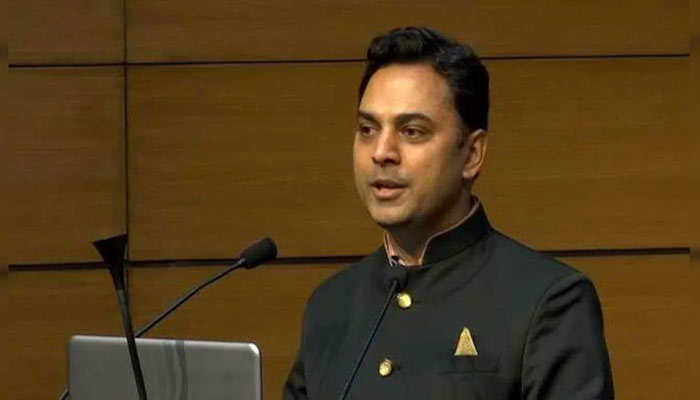
Former International Monetary Fund (IMF) executive director Krishnamurthy V Subramanian has disputed Pakistan’s claim that its selection to chair the IMF and World Bank Boards of Governors marks a return to global financial leadership, describing the role as a rotating procedural responsibility rather than a position of significant influence.
In a post on X, Subramanian said Pakistan’s appointment to preside over the 2027 IMF-World Bank Annual Meetings should not be portrayed as a major shift in its standing in international finance.
“Claim: ‘Pakistan is heading back to the top table of global finance after 74 years!’ Reality: Pakistan will chair the IMF-World Bank Annual Plenary in 2027. This chair is purely ceremonial and rotates annually,” he wrote.
He cited Paraguay and Cabo Verde as examples of countries associated with the rotating chairmanship, concluding that the position represents “protocol, not power”.
Islamabad Describes Appointment as Historic Milestone
Pakistan has been selected to chair the Boards of Governors of the IMF and the World Bank Group in 2027, returning to the position for the first time since 1953.
Pakistan’s Minister for Economic Affairs, Ahad Khan Cheema, who also serves as the country’s governor to the World Bank, is expected to take up the role, according to a statement issued by Islamabad.
The Ministry of Economic Affairs described the appointment as a “historic milestone”, saying it would provide Pakistan with an opportunity to contribute to international discussions on economic and development issues and promote constructive engagement among member countries.
Subramanian’s remarks challenge that interpretation, highlighting the distinction between presiding over an annual gathering and exercising substantive influence over the policies of global financial institutions.
India’s G20 and BRICS Presidencies Are Different, Says Subramanian
In another post, Subramanian questioned comparisons between Pakistan’s upcoming chairmanship and India’s presidencies of the G20 and BRICS.
He argued that India’s G20 presidency helped shape the agenda of a major forum for international economic cooperation, while its BRICS presidency advanced discussions among emerging economies.
Pakistan’s role, he said, would primarily involve presiding over an annual meeting rather than directing a broader international platform.
The comparison highlights the differing responsibilities associated with rotating institutional chairmanships and presidencies that involve setting priorities and shaping discussions among member countries.
IMF Programmes Remain Central to Pakistan’s Finances
Pakistan continues to receive support from the IMF through two major financing arrangements: a USD 7-billion Extended Fund Facility (EFF) and a USD 1.4-billion Resilience and Sustainability Facility (RSF).
The EFF is intended to address the country’s balance-of-payments requirements and support economic reforms. The RSF provides longer-term financing aimed at helping Pakistan manage climate-related risks and strengthen economic resilience.
The country is also expected to receive around USD 1.2 billion following an agreement between IMF staff and Pakistani authorities on the latest reviews of the two programmes. The disbursement remains subject to approval by the IMF Executive Board.
Pakistan’s upcoming chairmanship is therefore drawing attention both to its role in international financial forums and to its ongoing reliance on IMF assistance to support economic reforms and financial stability.
Comments are closed.