
Trump Questions JD Vance’s 2028 White House Prospects After Midterm Defeat: ‘Maybe He Won’t Run’

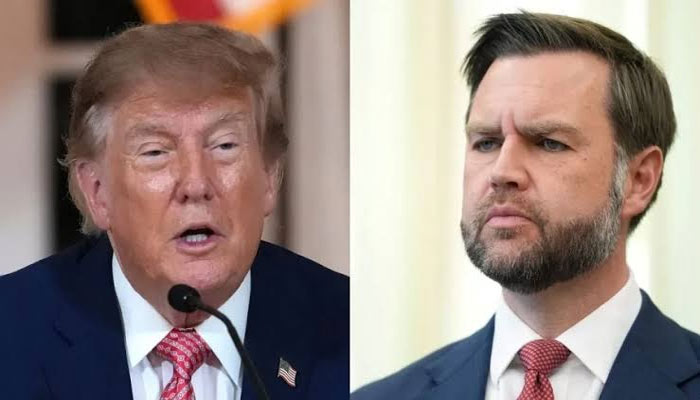
Trump Leaves JD Vance’s 2028 Presidential Bid Uncertain After GOP’s Midterm Rout
US President Donald Trump has raised questions about Vice President JD Vance’s political future, saying he is unsure whether Vance will seek the presidency in 2028. The remarks come amid growing uncertainty within the Republican Party following its heavy losses in the 2026 midterm elections.
Addressing reporters at the White House on Wednesday, Trump said he had spoken with Vance about several issues but did not know whether the vice president planned to enter the next presidential contest.
“I speak to him about a lot of things, but I mean, we’ll see what happens. You don’t know who’s talking about running,” Trump said.
Suggesting that the field of potential candidates remained unclear, he added: “Maybe nobody’s going to run. Maybe he won’t run. I don’t know who’s going to run.”
Vance has frequently been mentioned as a leading contender to succeed Trump and had earlier indicated that he would make a decision about his 2028 ambitions after the midterm elections. However, his latest comments on the administration’s Iran policy have added uncertainty to the Republican succession debate.
Vance Points to Iran War as Key Reason for GOP Defeat
In a post on X on Wednesday, Vance openly blamed the ongoing US-Israel war against Iran, which began in February, for the Republican Party’s poor election performance.
“The real reason we lost is obvious to almost everyone,” the vice president wrote, arguing that the conflict had played a central role in the outcome. He also referred to Trump’s own acknowledgement of the war’s electoral impact.
Vance questioned whether the military campaign had justified the political consequences, particularly the Republicans losing control of the Senate.
“If you’d like to argue it was worth it, that losing the Senate for the next 6 years was worth it, then do so. Argue it was a worthwhile cost to pay. Agree or disagree, that’s at least honest,” he said.
He identified four major concerns shaping voter sentiment: opposition to the Iran conflict, the rising cost of living and inflation, calls for an America-first policy, and dissatisfaction with the US relationship with Israel.
Trump Defends Military Action Despite Election Fallout
Trump acknowledged that the Iran war had damaged Republican electoral prospects, partly because the conflict pushed petrol prices higher in the short term. Nevertheless, he rejected the suggestion that the military campaign should have been avoided.
Responding to Vance’s remarks, Trump said he would make the same decision again, maintaining that the operation was necessary to prevent Iran from obtaining nuclear weapons.
“I can tell you that as far as that war is concerned, I would have done nothing different,” Trump said. He also claimed that US operations had significantly weakened Iran’s military strength.
Democrats Take Control of Both Chambers of Congress
The midterm results delivered a major setback to Republicans, as Democrats secured control of both the House of Representatives and the Senate. Election projections indicated that the Democrats were heading towards at least 234 House seats and 54 Senate seats.
The scale of the defeat also highlighted Republican weaknesses in constituencies that had supported Trump in the 2024 election.
Vance’s public criticism of the Iran campaign and Trump’s reluctance to offer clarity on his 2028 plans have raised fresh questions about the vice president’s standing as a potential successor.
Senator Ted Cruz and other Republican figures could also feature in discussions about the party’s next presidential nominee, setting the stage for an early contest over its post-Trump direction.
Comments are closed.