
Housing Crisis Sparks Mass Protests in Barcelona and Madrid as Spanish Workers Join Nationwide Strike Ahead of Elections

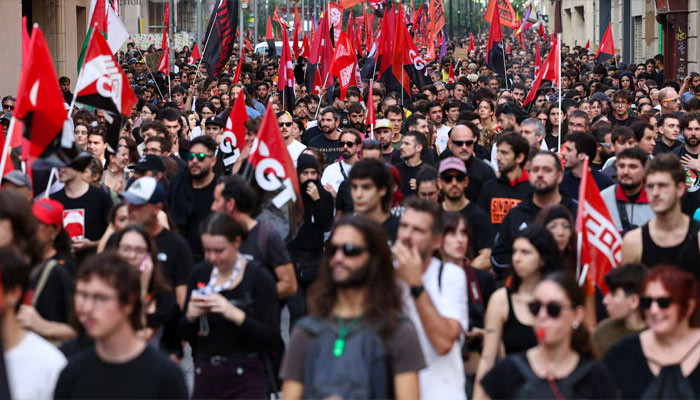
Spain Witnesses Historic General Strike as Housing Crisis Fuels Protests Across Barcelona and Madrid
Spain faced widespread disruption on Wednesday as millions of workers joined a nationwide strike over rising rents, escalating property prices and the growing housing affordability crisis. Thousands of people took to the streets of Barcelona, Madrid and other cities, demanding stronger government action to protect tenants and make housing more accessible.
The industrial action, organised under the slogan ‘Salaries. Housing. Prices.’, was Spain’s first general strike in 14 years. It was also the first nationwide strike primarily driven by public anger over housing costs.
The protests come at a politically significant moment, with Spain preparing for a November 29 general election. Prime Minister Pedro Sánchez’s left-wing coalition is attempting to bring housing and workers’ welfare back to the centre of the electoral debate as opinion polls indicate growing support for the opposition.
BARCELONA SEES LARGE DEMONSTRATIONS
Barcelona witnessed one of the biggest gatherings, although estimates of participation differed sharply. Housing activists claimed that nearly 400,000 people joined the march, while municipal authorities estimated the crowd at around 55,000.
Several shops along the city’s prominent Paseo de Gracia shopping avenue had closed or boarded up their premises ahead of the demonstrations. Protesters marched behind a large banner reading ‘Live. Not Just Survive’, highlighting the difficulties faced by ordinary residents.
The main demonstration remained peaceful, but tensions emerged afterwards when some protesters damaged the windows of major retail stores. Police personnel in riot gear subsequently moved into the area.
Public transportation was also affected, with Barcelona’s metro and bus services suspended outside rush-hour periods. Road traffic remained relatively light, although several smaller businesses continued operating.
MADRID PROTESTERS TAKE TO STREETS AMID HEAVY RAIN
In the Spanish capital, thousands of demonstrators marched along Paseo del Prado despite persistent rainfall. Earlier, protesters had blocked Gran Vía, one of Madrid’s busiest central roads, before police intervened to clear the route.
The strike received support from major trade unions, which reported significant disruptions in industrial and transport-related sectors.
CCOO and UGT, the two principal unions behind the action, reported participation levels of 90 per cent in the automotive and port industries, 85 per cent in meat processing, 82 per cent in waste collection and 75 per cent in the energy sector.
Several educational institutions also remained closed, while Spain’s airport operator AENA reported the cancellation of approximately 5 per cent of scheduled flights.
However, business organisations disputed the unions’ claims of widespread participation, pointing to lower turnout in retail outlets and restaurants. Madrid’s regional administration, governed by the conservative Popular Party, described the strike as a failure and estimated public-sector participation in the region at just 9 per cent.
Police recorded 29 arrests nationwide in connection with strike-related incidents, including nine in Madrid. Reports also emerged of burning tyres at roadblocks in Barcelona and clashes between demonstrators and police near Madrid’s wholesale market.
SOARING RENTS SPARK GROWING PUBLIC ANGER
At the heart of the nationwide unrest is Spain’s worsening housing crisis. Average rents have nearly doubled over the past decade, placing considerable pressure on household budgets and making homeownership increasingly unaffordable.
Public anger intensified following the eviction of an 87-year-old woman, known as Maricarmen, from her Madrid home last month. Her subsequent death prompted widespread outrage and made her a symbol of the housing difficulties faced by vulnerable residents.
Housing campaigners subsequently mobilised support for nationwide protests, receiving backing from trade unions.
The demonstrators are demanding automatic lease renewals, stronger tenant protections and action against property speculation. Labour organisations have also called for increased investment in public housing and a fresh minimum-wage agreement.
ELECTION CAMPAIGN TURNS TOWARDS HOUSING
The strike has created a new political challenge ahead of Spain’s November 29 election. Sánchez’s Socialist Party and its left-wing allies are hoping that the demonstrations will bring attention back to housing affordability and social welfare.
The government has also been dealing with criticism following a deadly high-speed train collision in October that claimed 69 lives, Spain’s second fatal rail disaster of the year.
Political analyst Oriol Bartomeus of the Autonomous University of Barcelona said the strike could provide an opportunity for left-wing parties to refocus the election campaign on housing, provided the demonstrations did not descend into violence.
Opposition parties, including the Popular Party and far-right Vox, have criticised the unions, accusing them of using the industrial action to support Sánchez’s political interests.
With voting scheduled for November 29, the housing crisis and the government’s response to workers’ demands are emerging as significant issues in Spain’s electoral debate.
Comments are closed.