
Blinken Draws India-Pakistan Distinction, Backs India’s Right to Defend Itself

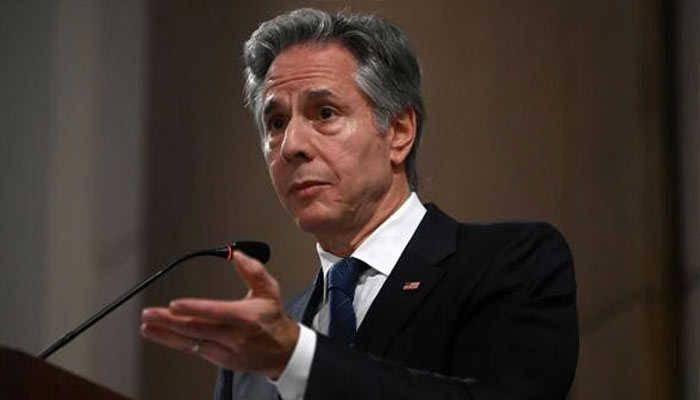
Blinken Backs India’s Right to Self-Defence, Says US Must Stop Viewing New Delhi Through Pakistan Lens
Former US Secretary of State Antony Blinken has called for a zero-tolerance approach towards terrorism and backed India’s right to defend itself, arguing that Washington should no longer assess its relationship with New Delhi through the lens of Pakistan.
Speaking at the Hindustan Times Leadership Summit 2026 in New Delhi, Blinken described India-US relations as a global partnership shaped by shared strategic and technological interests. In contrast, he characterised America’s relationship with Pakistan as largely regional in nature.
Emphasising the need for a firm stand against terrorism, Blinken said the United States must respect India’s right to protect itself. He also stressed that Washington should support New Delhi’s security interests while continuing diplomatic efforts to prevent tensions between India and Pakistan from escalating into a wider conflict, given that both countries possess nuclear weapons.
Blinken acknowledged that previous US administrations had sometimes avoided taking a stronger position on Pakistan’s civil-military establishment because of strategic considerations. He cited the Cold War and America’s military involvement in Afghanistan following the September 11, 2001, attacks as examples of periods when Washington’s interests influenced its approach towards Islamabad.
He said the United States could play a greater role in encouraging a better balance between civilian and military institutions in Pakistan, but ultimately, decisions about the country’s political system and governance must rest with its people.
Underlining the changing nature of Washington’s approach towards New Delhi, Blinken said the time had come to separate India’s relationship with the US from its dealings with Pakistan.
TECHNOLOGY TO SHAPE THE NEXT PHASE OF INDIA-US RELATIONS
Discussing the growing strategic partnership between the two countries, Blinken said India and the United States had travelled a long way from decades of diplomatic differences to developing closer cooperation.
He identified the civil nuclear agreement as a major milestone in transforming bilateral relations and said emerging technologies would play an increasingly important role in taking the partnership forward.
Blinken highlighted several areas with significant potential for cooperation, including semiconductor manufacturing, artificial intelligence, space exploration and quantum technology.
He said collaboration in these sectors, particularly in securing AI supply chains and strengthening semiconductor production, could deepen economic and strategic ties between the two democracies.
However, the former US Secretary of State cautioned Washington against assuming that India would automatically support American positions on every international issue. He said New Delhi’s strategic autonomy must be respected and that both countries needed stronger trust and effective mechanisms to address disagreements.
BLINKEN ON INDIA’S RELATIONSHIP WITH RUSSIA
Addressing India’s longstanding ties with Moscow, Blinken said Washington recognised the historical importance of the India-Russia relationship and did not expect New Delhi to completely sever its engagement with Russia.
Instead, he suggested that India should gradually diversify its sources of energy and military equipment to reduce excessive dependence on Moscow.
He also discussed recent differences between India and the United States over trade tariffs and New Delhi’s continued purchases of Russian energy.
Criticising Washington’s approach to the issue, Blinken described American objections to India’s Russian energy purchases as somewhat hypocritical, pointing out that the US itself had granted waivers on sanctions affecting Russian energy.
His remarks highlighted the need for a more pragmatic approach to India-US relations, with strategic cooperation and mutual understanding taking precedence over disagreements on individual international issues.
Comments are closed.