
From Pokhran-II to the Nuclear Deal: Key Omissions in Sonia Gandhi’s Memoir

From Pokhran to the Nuclear Deal: Why Sonia Gandhi’s Memoir Skips a Defining Chapter of UPA Rule
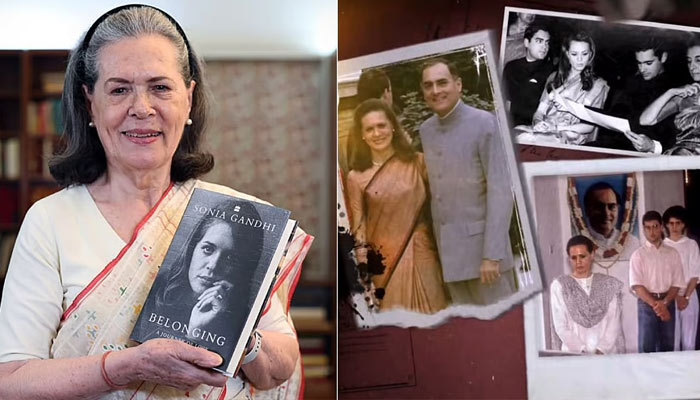
Sonia Gandhi’s memoir, Belonging: A Journey of Love, offers a personal account of her journey from Italy to becoming one of the most influential figures in Indian politics. It explores family relationships, personal tragedies, the political legacies of Indira Gandhi and Rajiv Gandhi, and the challenges that shaped the Congress Party over several decades.
However, amid its extensive recollections of India’s political history, one of the most consequential developments of the United Progressive Alliance (UPA) era is conspicuously missing: the Indo-US Civil Nuclear Deal.
The omission is particularly striking because the agreement was arguably the biggest foreign policy achievement of Prime Minister Manmohan Singh’s government. It also triggered the most serious political crisis of UPA-I, bringing the government close to losing power and creating a major confrontation with its Left allies.
The Nuclear Deal That Nearly Toppled the Government
The political confrontation over the nuclear agreement reached its peak in July 2008, when the Left parties withdrew support from the UPA government over its growing strategic engagement with the United States.
The government was subsequently forced to seek a confidence vote in Parliament on July 22, 2008. The motion was passed by 275 votes to 256, allowing Manmohan Singh’s administration to survive and continue with the agreement.
The controversy went far beyond a disagreement over energy policy. It exposed deep divisions within the ruling coalition, strained relations between the Congress and the Left and placed the government’s political future at stake.
Manmohan Singh remained firmly committed to the agreement, arguing that it was essential for India’s energy security, technological advancement and international standing.
Sonia Gandhi, despite initially expressing reservations about aspects of the agreement, eventually stood firmly behind the Prime Minister. During the political confrontation, she publicly declared that the nuclear deal was good for India and supported the government’s decision to proceed.
Yet, despite her central position in the Congress leadership during this period, her memoir offers no account of the negotiations, the confrontation with the Left or the dramatic confidence vote that determined the government’s survival.
How the Agreement Changed India’s Global Standing
The Indo-US nuclear agreement was significant because it helped India overcome decades of restrictions on international nuclear commerce following its nuclear tests.
India had faced international isolation after conducting nuclear tests in 1974 and 1998. Despite its growing energy requirements and expanding technological ambitions, restrictions prevented the country from accessing several international civilian nuclear technologies and fuel supplies.
The agreement with Washington changed that situation by opening the way for international civilian nuclear cooperation.
It also represented a major shift in India’s relationship with the United States. Despite remaining outside the Nuclear Non-Proliferation Treaty (NPT), India secured international recognition as a responsible nuclear power and gained access to global civilian nuclear commerce.
For Manmohan Singh, the agreement represented an opportunity to strengthen India’s energy capabilities while positioning the country more prominently in the emerging international order.
Given its long-term strategic consequences, the absence of any meaningful discussion of the agreement in Sonia Gandhi’s memoir is difficult to ignore.
Pokhran Finds Only a Passing Mention
The omissions are not limited to the civil nuclear agreement. India’s broader nuclear history also receives relatively little attention in the memoir.
The 1974 Pokhran nuclear test, conducted under Indira Gandhi, marked a major turning point in India’s strategic journey. The 1998 Pokhran-II tests under Atal Bihari Vajpayee further established India’s nuclear capabilities, although they also triggered international sanctions.
These developments eventually contributed to the diplomatic circumstances that made the Indo-US nuclear agreement possible.
Sonia Gandhi does refer to the devastation caused by the atomic bombings of Hiroshima and Nagasaki and discusses Jawaharlal Nehru’s commitment to global disarmament. She also recalls Rajiv Gandhi’s 1988 proposal at the United Nations for a time-bound plan to achieve a nuclear-weapons-free world.
Another passage describes former US President Bill Clinton’s 2000 visit to India and his concerns about Kashmir as a potential nuclear flashpoint.
However, these references largely concern nuclear weapons, disarmament and international relations rather than India’s own nuclear programme.
The closest the memoir comes to acknowledging the 1974 Pokhran test is a brief reference to the ‘explosion of a nuclear device’ while discussing how some foreign countries viewed Indira Gandhi following the liberation of Bangladesh.
There is no substantial examination of the circumstances behind the test, the international response or its long-term consequences for India’s strategic identity.
An Absence That Raises Historical Questions
Of course, memoirs are personal accounts, and authors have complete discretion over which experiences they choose to include. They cannot be expected to document every major political development.
Nevertheless, some omissions stand out because of the historical importance of the events involved.
The Indo-US Civil Nuclear Deal was not simply another diplomatic agreement. It was a defining moment for the UPA government, a major test of coalition politics and a turning point in India’s engagement with the international nuclear establishment.
It was also the issue over which Sonia Gandhi publicly backed Manmohan Singh when his government faced the possibility of collapse.
Interestingly, a future sequel to her memoir could revisit this chapter, particularly in light of subsequent developments in India’s nuclear policy. The NDA, which opposed aspects of the original agreement, eventually passed the SHANTI Act in 2025, endorsing several principles associated with the earlier nuclear cooperation framework.
India’s growing clean-energy requirements have also ensured that nuclear power remains an important area of policy discussion across political parties.
Ultimately, the absence of the nuclear deal from Belonging leaves an important gap in the account of the UPA years. Pokhran receives only a passing reference, while the agreement that ended India’s nuclear isolation and nearly brought down the Manmohan Singh government is not mentioned at all.
For political historians and readers seeking to understand one of the most consequential periods in modern Indian politics, this silence may prove as significant as the events Sonia Gandhi has chosen to recount.
Comments are closed.