

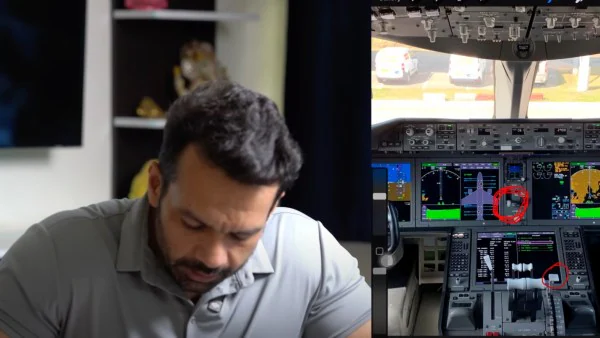
Following the tragic crash of Air India Flight 171 that killed more than 270 people in Ahmedabad on June 12, popular aviator, YouTuber, and aviation whistleblower Gaurav Taneja, known as Flying Beast, has raised alarming concerns about systemic failures in India’s aviation sector. Speaking on the podcast Prakhar Ke Pravachan and through his social media platforms, Taneja declared that “sab kaand khulenge” — everything will be exposed — as internal audits and investigations begin.
Taneja, a former commercial pilot himself, claimed that there is widespread unrest among pilots and fear among ground staff as questions mount over safety practices, pressure to suppress fault reporting, and risky operational decisions.
Industry on Edge: Pilots Refusing Flights
“Pilots are upset and scared. They are snagging aircraft, grounding them, calling in sick, and refusing to fly unless they are given a perfectly functioning aircraft,” Taneja said. “They are drawing a line — they don’t want to risk their lives or those of passengers by flying anything less than airworthy.”
He emphasized that most pilot-related errors stem from broader systemic issues — particularly illegal rostering practices, lack of rest periods, and poor maintenance standards. Taneja argued that blaming individual pilots without addressing these root causes is both unjust and dangerous.
Ground Staff Under Pressure to Stay Silent
In one of the more troubling revelations, Taneja described how ground engineers often ask pilots not to report technical issues in official logs to avoid delays and scrutiny. Instead, they are advised to submit in-flight reports after takeoff, when the aircraft is already airborne and repairs are no longer possible.
He recalled a personal incident where, during a pre-flight inspection, he spotted blood on an aircraft wing, possibly from a bird strike. Despite raising concerns, the ground crew allegedly told him, “We’ll clean it up. Just take the aircraft.” Taneja refused, insisting on proper inspection and logging of the incident.
Systemic Failures Beyond One Crash
According to Taneja, the crash of Flight 171 may only be the beginning of broader revelations within the sector.
“When audits happen, it’s never just about the one flight. Entire networks of negligence begin to unravel. The problem is bigger than just one crash — it’s about a dangerous industry culture,” he warned.
He highlighted the practice of fatigue-inducing schedules, where pilots are allegedly pushed beyond regulatory duty limits and mentally overloaded, increasing the risk of human error in high-stress environments.
Black Box Questions and Lack of Transparency
Taneja also expressed concern over India sending crash black boxes abroad for analysis, suggesting this may reduce transparency or limit domestic accountability. He questioned whether allowing manufacturers or foreign agencies to analyze the data could create conflicts of interest.
Although initial reports speculated a rare dual-engine failure, Taneja noted it was more likely a complex mix of operational stress, miscommunication, and equipment strain. “If both engines had failed at once, the aircraft might not have even lifted off,” he said, adding that one engine might have been underperforming and led to delayed takeoff and critical failure.
Demand for Reform
Taneja’s statements have resonated with aviation professionals and frequent flyers alike, prompting renewed calls for reform in civil aviation practices, especially around:
-
Pilot rostering and fatigue management
-
Fault reporting integrity
-
Ground staff autonomy and engineering accountability
-
Transparency in accident investigation processes
While investigations into the Air India 171 crash continue, industry experts believe Taneja’s warnings highlight long-ignored truths within the sector.
The tragedy of Flight 171 has not only shaken public confidence in Indian aviation but also peeled back layers of pressure, silence, and compromise that aviation insiders like Gaurav Taneja claim have become normalized. With pilots speaking out, audits underway, and whistleblowers raising alarms, the coming months may prove pivotal in either renewing trust in Indian aviation — or exposing cracks that run far deeper than a single incident.
Taneja’s final word sums up the urgency of the moment: “This isn’t just about one flight. It’s about how long we can ignore what’s been going wrong — before it happens again.”
Comments are closed.